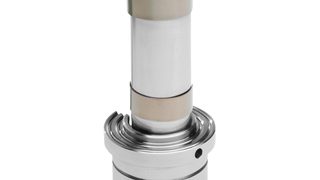
Hasco mono nozzles with inch radii for US and UK markets
Hasco has expanded its mono-shot Single Shot H6300/… and Vario Shot H6200/… hot runner nozzle range with inch radii ¾" and ½", adapted to US and UK standards.
Hasco has expanded its mono-shot Single Shot H6300/… and Vario Shot H6200/… hot runner nozzle range with inch radii ¾" and ½", adapted to US and UK standards.

The “Pleiades” university competition – Plastic European Innovation Award for Design and Sustainability – in Italy links the plastics industry with IUAV University, promoting durable plastic products, design and injection moulding as part of the circular economy.

SüdpacK Medica will present at Pharmapack 2026 in Paris the recyclable blister concept Pharmaguard, the low-particle Medguard packaging portfolio, and the new Medhub service for ordering pre-made medical pouches.
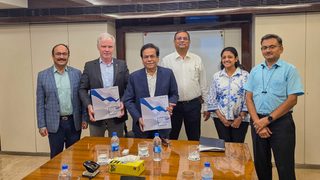
Dhunseri Poly Films has ordered from Brückner Maschinenbau a BOPET film production line with a designed speed of 700 m/min for its plant in Panagarh, West Bengal, India.
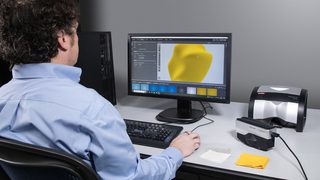
X-Rite and Rhopoint launch the Rhopoint Pantora Aesthetix system, combining color and surface appearance measurement in a single workflow to enable creation of realistic digital twins of complex materials.

Phuong Anh Do offers longstanding experience in the trade fair sector and has access to a well-developed network. We talked with her about her perspectives, the die casting industry, and the future of Euroguss.
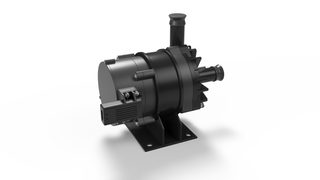
BASF has developed a polyamide with increased hydrolysis resistance for use in pumps and valves of cooling systems in electric and commercial vehicles, meeting extended service life requirements.
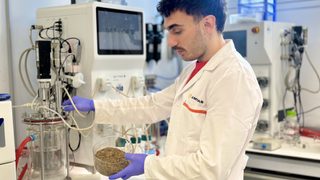
The Biovalsa project, coordinated by AIMPLAS and co-funded by IVACE+i and ERDF, develops processes for producing bioplastics from agricultural waste such as rice straw and citrus pruning residues.

Barmag's eFK EvoSmart texturing machine, unveiled at ITMA Asia + CITME 2025, is gaining wide adoption among yarn producers thanks to reduced energy consumption and lower maintenance requirements.
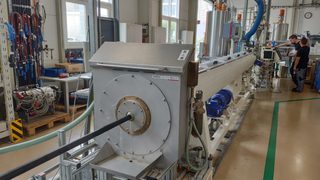
In the EWS.MWCNT project, the SKZ center and its partners are developing geothermal probes made of PE100-RC pipes modified with multi-walled carbon nanotubes to increase thermal conductivity, improve ground source system efficiency and enhance market acceptance.

Packaging Innovations & Empack 2026 approaching fast
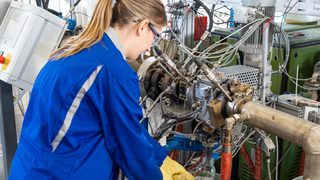
SKZ and Fraunhofer IFAM are implementing the CloseT project to develop an industrial continuous chemical recycling process for mixed textile fibers using solvolysis.