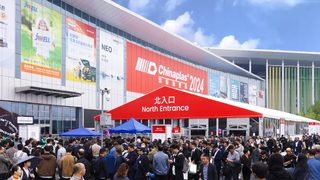
Chinaplas 2026: harnessing the “15th Five-Year Plan” to usher in a new era
Chinaplas 2026 under the shadow of China's 15th Five‑Year Plan
Chinaplas 2026 under the shadow of China's 15th Five‑Year Plan
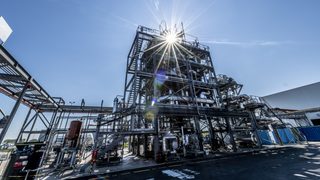
Borealis will acquire a 10% stake in BlueAlp and transfer its majority share in Renasci to the company to accelerate the development of chemical recycling technology and the production of circular feedstock for the packaging industry.
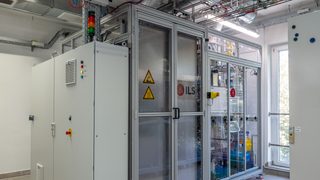
Borealis is a partner in the EU-funded Electro project, which aims to develop electrified thermochemical processes to convert hard-to-recycle plastic waste into high-quality olefins.
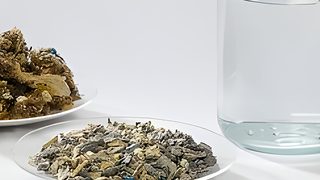
ETH Zurich, in collaboration with BASF, reports that co-gasifying automotive shredder residue with biomass can cut greenhouse gas emissions versus incineration and yield synthesis gas for chemicals, offering policy-relevant insights as the EU prepares new rules on end-of-life vehicles.
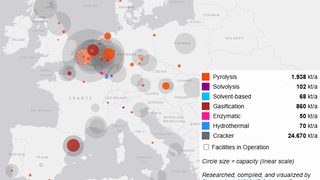
Fraunhofer Umsicht has published an interactive map of chemical recycling in Europe, showing 2.8 Mt per year planned capacity versus 0.29 Mt per year in operation. Pyrolysis dominates the project pipeline, while no gasification plants are operational.
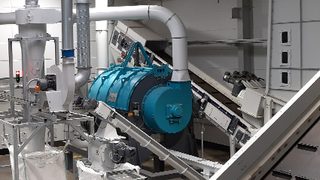
Together with its subsidiary Pla.to, Vecoplan is expanding its dry-cleaning technology offering, from shredding to washing, preparing fractions for mechanical and chemical recycling. The company will present its largest dry-cleaning system to date at K.
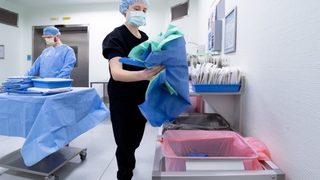
SABIC, a global leader in the chemical industry, has collaborated with Zuyderland medical center in The Netherlands to help transform medical plastic waste into new contact sensitive packaging materials.
Syensqo has introduced a proprietary chemical recycling process that depolymerizes polyarylethersulfone from post-industrial and post-consumer streams into purified monomers for reuse. The company says the monomers can be reintegrated into PSU, PPSU and PESU, supporting circularity.
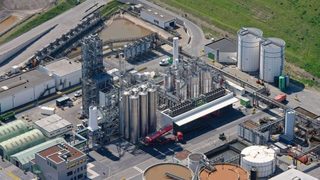
Ineos Styrolution has received the first truckloads of recycled styrene monomer at its Antwerp site, supplied by Indaver from its newly inaugurated depolymerisation plant. The commercial-scale delivery, a first in Europe, will feed high-quality polystyrene and other styrenics, including food-grade uses.
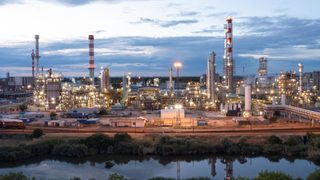
MOL Group has completed its first ISCC PLUS-certified production run with circular feedstock at Tiszaújváros, converting post-consumer plastic waste-based feedstock into PE and PP. The pilot applied a mass balance approach on the steam cracker and downstream polymerization.
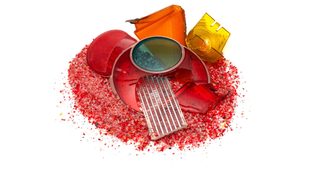
Röhm’s Europe-wide PMMA recycling alliance reports significantly higher recovery rates and delivers a taillight demonstrator with 30% mechanically recycled content, developed with Valeo and the Renault Group’s consortium The Future Is Neutral.
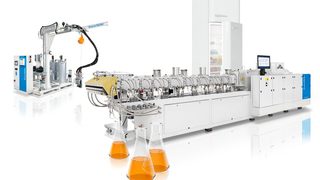
KraussMaffei and partners BASF, Rampf and Remondis are industrializing a continuous chemical recycling process for PU insulation foams with up to 30% contamination, producing recycled polyols for rigid foams. The company will also showcase a digitally prepared RimStar metering machine at K 2025.