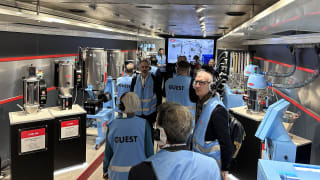
Stella Pack from Lubartów, operating on the market for over 30 years and currently part of the international Sarantis Group, is implementing the largest investment in its history. The programme worth around EUR 15 million, i.e. approximately PLN 65 million, is intended to ensure the company’s raw material self-sufficiency, increase the scale of plastics recycling and generate new jobs in the region. The project includes both the expansion of technological capacity and the reorganisation of production processes at the plants in Poniatowa and Chlewiska, aimed at more efficient use of film and plastic waste.
The scope of the investment covers the upgrade of the existing infrastructure and the implementation of technological solutions geared towards full material self-sufficiency of the company. The objective is not only to increase the production volume of refuse sacks and packaging, but also to reduce the environmental impact of operations by closing the internal loop of raw materials. The project’s implementation is expected to directly reduce the use of virgin plastics through wider use of regranulate produced from the company’s own waste streams. At the same time, infrastructure investments take into account improved working conditions, including the safety and comfort of employees involved in recycling and processing operations.
In-house regranulate as the basis for material self-sufficiency
An important element of Stella Pack’s strategy is the development of in-house regranulate production used in the manufacture of refuse sacks. The raw material is produced from film and plastic waste, which, after cleaning and processing, is returned to circulation as a full-value material. In this way, the company reduces its demand for virgin raw materials and at the same time increases the security of raw material supply for its own production lines.
The company stresses that the resulting regranulate is characterised by a quality comparable to virgin plastics and is used for the production of refuse sacks and packaging within the Sarantis Group. This solution is in line with the principles of the circular economy, in which plastics are reprocessed into full-value products instead of being landfilled.
Modernisation of the plants in Poniatowa and Chlewiska
Stella Pack’s largest recycling plant is located in Poniatowa. As part of the ongoing programme, new proprietary production lines are being implemented there, based exclusively on components sourced from the European market. The use of these solutions is expected to enable a fivefold increase in efficiency compared to the current level. This means a significant increase in the plant’s throughput in the field of plastics waste recycling.
The plant in Chlewiska, in turn, is undergoing a transformation towards a high level of automation. Existing processes based on manual sorting are being replaced with modern, automated technology, which is intended to achieve production capacities similar to those in Poniatowa. Both locations have gained new halls and technical facilities, as well as installations improving working comfort and safety. The modernisation therefore covers both the technological and organisational aspects of the plants’ operation.
Impact of the investment on the labour market and the circular economy
The expansion of Stella Pack’s recycling and production capacity is associated with an increase in employment. A total of nearly 75 new jobs are to be created at the plants in Poniatowa and Chlewiska. These relate primarily to technical and production positions connected with operating the new technological lines and maintenance. The company notes that development is possible thanks to the competence and long-standing experience of the existing staff, which forms the foundation of the changes being implemented.
By processing waste that would otherwise be sent to landfill, Stella Pack is strengthening its contribution to the circular economy. The development of recycling of film and plastic waste and its subsequent use in the production of refuse sacks and packaging makes it possible to reduce the amount of waste sent for disposal and also helps to cut CO2 emissions. This is consistent with the company’s environmental objectives aimed at reducing the environmental footprint of its production processes.

The role of the research and development department in the project
The Research & Development department of Stella Pack plays a key role in the implementation of the investment programme. It is responsible for the development and deployment of technological innovations on the production lines, including solutions that improve recycling processes and enhance the performance properties of the regranulate. The integration of R&D activities with the modernisation of the machinery park is intended to enable further process optimisation and to maintain stable quality parameters of the secondary raw materials produced.
In the context of investment in raw material independence, it is particularly important to adapt technologies to the variability of incoming waste streams and to develop processing parameters that allow the production of regranulate with consistent quality. Support from the research and development department in this area is crucial for the effective utilisation of the upgraded recycling infrastructure.
The strategic nature of investment in raw material independence
Vice President of Stella Pack S.A., Tomasz Tramś, points to the long-term nature of the planned changes and their importance for the company’s competitive position:
"The decision to invest over PLN 60 million was very bold and at the same time strategic. It is the best option for a long-term ability to compete on the market. This is precisely why Stella Pack is focusing on development in the Lublin voivodeship. The year 2025 will mark the closing of our supply chain and, through production integration, will allow us to fully control and decouple our production process, while significantly increasing the efficiency of the plants in Poniatowa and Chlewiska."
The planned completion of the project in 2025 is expected to result in full integration of plastics recycling and processing within Stella Pack, which in practice translates into greater control over raw material quality, supply stability and material costs. In a context of market volatility in the plastics sector and increasing environmental requirements, investment in raw material independence is an element of building the company’s resilience to fluctuations in the supply and prices of virgin raw materials.