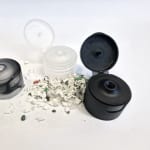
Since 2015, Rondo Plast, part of the Polykemi Group, has regularly purchased production scrap from Modulpac's plant. This concerns scrap and by-products of polypropylene (PP) and polyethylene (PE) generated in the manufacture of caps, jars and lids. The cooperation between the two companies contributes to more resource-efficient use of plastics, reduces the amount of waste sent for incineration and provides a practical example of a functioning circular economy in the plastics processing industry.
Rondo Plast uses the purchased scrap as feedstock for its own recyclate production. Both polymers, PP and PE, are key materials in the company's portfolio and are in high demand among customers. This makes it possible to return the Modulpac scrap stream to the value chain in the form of full-value secondary plastics, rather than treating it solely as material for thermal treatment. The cooperation is based on ongoing operational contact and on aligning scrap handling methods with the quality requirements imposed on recyclates.
Growing demand for recyclates
Modulpac supplies Rondo Plast with production scrap and by-products of PP and PE generated in the manufacture of packaging components such as caps, jars and lids. As Rondo Plast emphasizes, both materials are central to its production and rank among the most sought-after grades among customers.
Patrik Lindqvist, Category Manager Recycled Materials at Rondo Plast, points to a clear expansion of the recycled plastics market: "Over the past ten years we have seen increasing demand for recycled plastic materials. The demand primarily concerns PP, but also engineering plastics such as PC, ABS, PA6 and PA66." This indicates that interest in recyclates covers both standard packaging polyolefins and more demanding applications, where virgin materials have so far dominated.
Knowledge exchange improves material quality
From the outset, relations between Modulpac and Rondo Plast have been based on close contact, open dialogue and two-way exchange of process knowledge. Patrik Lindqvist stresses that both sides share a common objective of reducing waste volumes: "Everyone wants to minimize waste, no one is uninterested in optimizing material use. What we do is familiarize ourselves with the supplier's process, explain our own, and then support our suppliers, in this case Modulpac, in managing their scrap so that the leftover material that is generated can be sold to us instead of being incinerated, thereby creating economic value."
The result of this approach is an orderly scrap management system at Modulpac and the ability for Rondo Plast to obtain secondary raw material with predictable characteristics. Through transparent cooperation rules, Modulpac has established efficient scrap handling, and Rondo Plast has gained a supplier capable of delivering plastics that are free from contamination and sorted by polymer type.
As Lindqvist underlines, Rondo Plast highly values Modulpac's readiness to adapt to quality and organizational requirements: "Modulpac's willingness to collaborate is highly valued by us. Their efficient handling is essential for our ability to upgrade and refine by-products into high-quality recycled plastic."

Material waste from Modulpac’s production of caps, jars and lids is reused in Rondo’s products.
Benefits of structured scrap management
The model developed by Modulpac and Rondo Plast shows how by-products from processing operations can be returned to the value chain and help increase the circularity of plastics. According to Patrik Lindqvist, recognizing the recycling potential of plastics and the quality of recyclates is crucial for the development of a circular economy: "For circularity to become a reality, it is important to recognize that plastic can be recycled, and that recycled plastic can meet very high-quality standards. Unfortunately, recycled sources still suffer from an undeserved negative reputation."
Lindqvist notes that many companies still send plastic waste for incineration, failing to use its potential as a fully fledged secondary raw material. If more companies recognized the opportunity to sell their scrap instead of sending it to incineration, measurable environmental and economic benefits could be achieved. As he points out: "The obvious effect of more efficient scrap management would be a reduction in the amount of material sent to incineration and making plastic an even more circular material, something it has great potential to be."
The cooperation between Modulpac and Rondo Plast demonstrates that with appropriate organization of scrap logistics and clearly defined quality requirements, it is possible to create stable streams of secondary raw material. Such a system improves resource efficiency, reduces the share of waste sent for incineration and supports the development of the recyclates market as a fully fledged alternative to virgin materials in the plastics and packaging industry.