Two years have passed since the Antwerp Declaration was signed, and the key assumptions for restoring the competitiveness of European industry, including the chemical sector, largely remain at the level of declarations. Some initiatives have been launched, such as the Clean Industrial Deal and work on regulatory simplification, but the pace of implementation is assessed as insufficient in the context of a deteriorating economic and geopolitical situation. During this time, the European chemical industry has increasingly felt the impact of trade tensions, cost pressure and unequal competitive conditions in the global market, which is reflected in decisions to close installations and scale back investments in new production capacities.
The European industrial base is steadily shrinking. Since 2022, the rate of industrial plant closures in Europe has increased sixfold, and production capacities of around 37 million tonnes have been shut down in total. At the same time, announced new investments do not compensate for these losses. The estimated annual capacity of new production projects has fallen from around 2.7 million tonnes in 2022 to around 0.3 million tonnes in 2025. This means that Europe is not only losing existing installations, but also failing to build sufficient production capacity for the future, which raises growing concerns about the region's long term competitive position and its economic security.
The importance of the chemical industry for the EU economy
Weakening the European chemical base is not a problem limited to this sector alone. The chemical industry is a foundation for a number of key branches, including energy, defence, construction, pharmaceuticals, agriculture, automotive and advanced technologies. It is also particularly sensitive to disruptions in the supply of raw materials, energy and logistics infrastructure. The loss of production capacity in chemicals therefore affects the stability of strategic value chains across the entire European Union economy.
According to industry representatives, the core issue remains the gap between political ambitions and the pace of practical implementation. As emphasised by Dr Eng. Tomasz Zieliński, President of the Board of the Polish Chamber of Chemical Industry, who attended the European Industry Summit 2026 in Antwerp, there has been broad agreement on the direction of action for years, but progress is not sufficiently fast or coordinated.
"For years there has been broad agreement that Europe needs to rebuild industrial competitiveness, stimulate demand, develop innovation and attract investment. These objectives consistently appear in strategies, documents and debates at all levels. The problem, however, is that the pace and scale of actual measures still do not match the declared ambitions, both at EU and national level. This gap between direction and implementation is increasingly reflected in the condition of European industry. Europe must already today take concrete action on energy costs, fair international trade and demand for European products, this is how we will ensure high quality jobs for the next generation" said President Zieliński.
Competitiveness priorities discussed at the European Industry Summit 2026
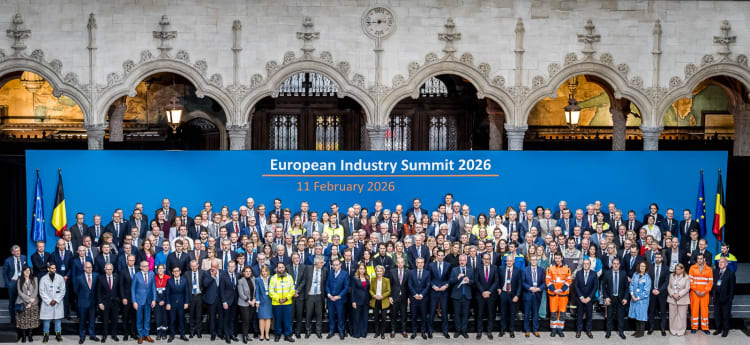
The conclusions from recent debates in European industry, including discussions held at the European Industry Summit 2026, indicate that there is no resilient, secure or strong Europe without a strong European industrial base. Without rapid and determined decisions, Europe will continue to lose its industrial capacity. Around 500 business leaders and the President of the European Commission, Ursula von der Leyen, took part in the event.
The summit was held under the auspices of Belgian Prime Minister Bart De Wever, German Chancellor Friedrich Merz, French President Emmanuel Macron, Dutch Prime Minister Dick Schoof, Austrian Chancellor Christian Stocker Senior and European Union leaders, including Executive Vice Presidents Teresa Ribera and Stéphane Séjourné. Commissioner Wopke Hoekstra also joined the discussions and highlighted the need for political engagement to address the European industrial crisis.
In connection with the informal meeting of EU leaders in Alden Biesen held the day after the event, the Polish Chamber of Chemical Industry, together with European organisations and industry leaders, is calling for action in several key areas that have been the subject of dialogue with public authorities for years. The Chamber also sent a letter on this matter to the Polish Prime Minister Donald Tusk.
During the European Industry Summit 2026, PIPC representatives addressed key issues related to maintaining and rebuilding the competitiveness of the European chemical industry. In conversations held alongside the event, they pointed in particular to:
- the urgent need to strengthen the sector's competitiveness in the face of growing cost pressure,
- the impact of high energy and emission costs on investment decisions and on maintaining production capacity in Europe,
- the importance of effective mechanisms to protect against carbon leakage,
- the need to assess the feasibility of adopted transition targets in the current economic and geopolitical conditions,
- the need to strengthen EU trade instruments and ensure a level playing field in relation to imports,
- the role of the chemical industry as the foundation of the EU's strategic value chains, from energy and defence to agriculture and pharmaceuticals.

Regulatory framework and emission costs versus investment decisions
One of the key challenges for the European chemical industry is the way regulations are designed and implemented. An increasingly complex regulatory environment has a direct impact on business operating costs, investment decisions and the ability of companies to compete globally. The climate and energy transition goals remain unchanged, but achieving them requires more coherent and stable regulatory frameworks and greater consistency in the national implementation of EU rules.
Cost pressure is further reinforced by burdens arising from climate policy, particularly under the EU ETS system. In sectors such as the chemical industry, the maintenance of free emission allowances remains one of the conditions for keeping production in Europe and for financing modernisation investments. According to PIPC, limiting support mechanisms in the absence of available technological alternatives may lead not to a reduction in global emissions, but to the relocation of production outside Europe, while at the same time weakening the region's economic security and competitiveness. It is therefore necessary to align the pace of transition with the real investment capabilities of companies.
In PIPC's view, if climate goals are to go hand in hand with maintaining production in Europe, the future reform of the EU ETS should be based primarily on a feasible emission reduction pathway and appropriately adjusted benchmarks. Among the demands put forward by the Chamber is the maintenance of free EU ETS allowances for strategic sectors, such as the chemical industry, as well as for sectors covered by the CBAM mechanism.
"Today, the European chemical industry needs not only new regulations, but also a review and adjustment of existing regulatory frameworks to the realities of global competition. This concerns, among other things, the functioning of the EU ETS, the pace of phasing out free allowances, as well as the feasibility of the targets set in the RED III directive and other transition acts. If Europe wants to maintain production and jobs, regulations must support the transition in a predictable and competitive way" commented Klaudia Kleps, Director of the Advocacy and Legislation Division at PIPC, who was present in Antwerp.
Market protection and demand for European chemical products
Unequal competitive conditions in international markets are an additional challenge. The European chemical industry competes with producers from outside the European Union who benefit from lower energy costs, do not bear comparable emission costs and operate in less stringent regulatory environments. These differences translate into cost advantages for competitors in other regions of the world.
Existing market protection instruments, as PIPC points out, are largely reactive. They are activated with a significant delay and applied on a scale that is not commensurate with the actual extent of market distortions. In the industry's assessment, this means that European companies often face the consequences of unfair trade practices and global overcapacity without a sufficiently rapid and effective response from trade policy.
"It is crucial to strengthen and adapt the EU's set of trade instruments so that it can react quickly and effectively to unfair trade practices, circumvention of rules and global overcapacity. Urgent action is needed at the EU borders to enforce existing regulations and ensure that imports meet EU standards, enabling European companies to compete on genuinely equal terms" summed up President Zieliński.
PIPC is calling for a systemic approach to market protection, including, among other measures, continuous monitoring of import levels and mechanisms for rapid response to trade disruptions. Such solutions are seen as part of a responsible economic security policy aimed at maintaining production capacities in Europe and the resilience of supply chains, including in the strategically important chemical sector.