Delta Tecnic, a company specialising in the production of masterbatches for the cable and PVC industries, announces its participation in the international Wire Düsseldorf 2026 trade fair, which will take place from 13 to 17 April at the Düsseldorf Exhibition Centre. The company will present solutions developed to address the key challenges currently facing cable manufacturers, such as miniaturisation of designs, increasing thermal requirements, service life, as well as process stability and production efficiency. In a context where it is necessary to meet increasingly demanding standards and ensure high repeatability of parameters, Delta Tecnic focuses on improving colour consistency, process stability and cable performance under real manufacturing conditions.
The company’s stand will be located in hall 9, number A22. Wire Düsseldorf is Europe’s leading trade fair for the wire and cable industry, providing a platform for the presentation of material, technological and process solutions along the entire value chain, from raw materials to finished products. The participation of Delta Tecnic reflects the growing market demand for specialised colour concentrates and additives that enable the required properties to be achieved while optimising processing operations.
Solutions tailored to cable segments
The portfolio of Delta Tecnic solutions presented at Wire 2026 is structured according to key cable application segments, taking into account specific material and process requirements in each market area.
Telecommunications and fibre optic cables
In the telecommunications sector, particularly for fibre optic cables, ongoing miniaturisation of designs requires maintaining adequate opacity and clear colour identification at ever smaller wall thicknesses. Under these conditions, any deviation in pigment dispersion directly affects the quality of the final product.
Delta Tecnic will present high-concentration masterbatch technology with reduced pellet size, designed to improve dispersion and dilution in PVC and polyolefin compounds. These solutions are intended to ensure the required opacity and colour consistency in thin-walled tubes, facilitating more compact cable designs without compromising performance.
Automotive sector
In the automotive industry, especially in the case of electric and hybrid vehicles, cables are exposed to extreme temperature conditions, where colour stability of outer sheaths is crucial for wire identification and long-term durability. Materials used in wiring harnesses must meet the requirements of the relevant thermal classes and the quality specifications of vehicle manufacturers.
Delta Tecnic will present masterbatch solutions capable of maintaining stable colour across a wide range of thermal classes, from T2 (-40°C to +105°C) to T6 (-40°C to +200°C). The developed formulations are aimed at ensuring the required cable performance even under intensive operating conditions, at elevated temperatures and varying loads.
Cables for the energy sector
In energy applications, including the photovoltaic sector, cables must guarantee reliable performance under demanding outdoor conditions. Exposure to UV radiation, increased humidity and temperature variations can, in the long term, affect the mechanical and aesthetic properties of cable jackets.
Drawing on more than 40 years of experience, Delta Tecnic will present its range of masterbatches for power cables, with formulations compatible with PE and EVA. They have been developed to provide high colour stability and consistent properties during processing. These solutions are optimised for low dosages, which helps to increase production efficiency, reduce material consumption and ensure uniform performance in demanding outdoor applications.
Specialty and technical cables
For specialty cables, used among others in demanding industrial environments or under extreme temperature and chemical exposure, material stability and precision of dispersion are critical. Errors in this area can lead to a reduction in electrical, mechanical or resistance properties of the entire cable system.
Delta Tecnic will present masterbatch solutions for technical materials such as fluoropolymers (FEP, ETFE and PFA), as well as HFFR and TPU compounds. The company highlights its high level of expertise in formulation development and dispersion control in such material systems, which are used for example in industrial, automation and high chemical and thermal resistance cable applications.

Quality Lab – quality in relation to cable challenges
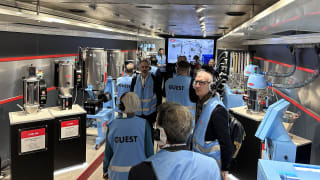
At this year’s trade fair, Delta Tecnic will present the Quality Lab concept, an interactive area designed to visually and comparatively demonstrate the influence of key masterbatch parameters on cable end-use properties. In particular, it concerns variables such as dispersion, bulk density and compatibility with different polymers.
The Quality Lab is intended to show how these parameters translate into performance in target cable applications. The technical content presented is meant to highlight the real impact of a properly selected formulation on key aspects such as colour consistency, homogeneity of the sheath structure and efficiency of the production process. Masterbatch solutions with controlled dispersion and bulk density can contribute to more stable extrusion, reduced surface defects and lower scrap rates.
Material and process efficiency versus sustainability
Sustainable development in the cable industry largely depends on the efficiency of manufacturing processes and the optimisation of material consumption at every stage of production. Activities in this area include both formulation selection and dosing methods, as well as the impact on line stability.
Delta Tecnic develops masterbatches designed for use at low dosages, while improving process stability and reducing production variations. This approach supports minimising waste and rework, which has a direct effect on material and energy efficiency. Reducing downtime and production scrap translates into lower raw material usage and a reduced environmental impact.
For cable manufacturers, this means the possibility of reducing their environmental footprint while optimising costs and simplifying production management. The use of high-concentration masterbatches, optimised for dispersion and compatibility with specific polymers, can support the move towards more efficient and sustainable production without sacrificing the required service properties of the products.