The development of e-mobility is significantly increasing the requirements for plastics used in components that are in contact with operating fluids. This particularly applies to parts in cooling systems, where frequent battery charging processes, with batteries kept within a narrow temperature range, translate into a much longer required operating time for plastics under elevated temperature conditions. For under-the-hood components in electric and hybrid vehicles, such as pumps and valves, the desired service life at operating temperature has increased to 45,000–55,000 hours, whereas in conventional combustion engines a typical requirement was around 5,000 hours. Such a substantial extension of the service life sets new challenges for engineering materials in terms of thermal and chemical ageing resistance, including resistance to water–glycol mixtures used as coolants.
Until now, the durability of plastics used in the engine compartment was most often assessed in air-heat conditions, without directly taking into account the influence of a liquid environment. BASF is now transferring proven test methods to hydrolysis storage conditions, that is ageing in water–glycol mixtures, which better reflect the real operating conditions of cooling system components. In these tests, the Arrhenius equation is used, which describes the relationship between reaction rate and temperature. Applying this relationship makes it possible to predict the material's service life under operating conditions based on results obtained in accelerated tests at higher temperatures.
New generation of Ultramid polyamide for the automotive sector
As part of a series of tests launched in August 2020, a polyamide from BASF's latest generation of materials was evaluated. The Ultramid tested is characterized by optimized hydrolysis resistance, which is crucial in long-term contact with water–glycol mixtures at elevated temperature. The material is additionally reinforced with glass fibers, which enables it to achieve the required mechanical properties in structural applications in the under-the-hood area.
This polyamide has also been adapted for laser marking, which facilitates component identification and traceability in the supply chain and in service. Its low halogen content ensures that the material meets the requirements in force in the automotive sector, including those related to future regulations and OEM guidelines. The combination of properties, including hydrolysis resistance, laser markability, glass fiber reinforcement and reduced halogen content, has been developed with current and future demands of the automotive market in mind.
Projected service life above 100,000 hours
The results of long-term tests conducted in water–glycol mixtures using an approach based on the Arrhenius equation indicate that the properties of the tested polyamide can be extrapolated to a period exceeding 100,000 hours after five years of testing. This means that the material provides a significant safety margin compared to the current service life requirements for components used in electric vehicles and trucks operating in cooling systems for batteries and other assemblies.
For the automotive industry, in particular for manufacturers of passenger cars and trucks, these results form a basis for assessing the risk associated with long-term operation of plastic parts under new operating conditions. The use of extrapolated test data enables earlier implementation of material solutions in serial projects, while maintaining the required reliability of components throughout the vehicle's service life.
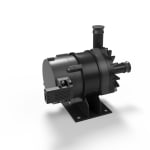
BASF's Ultramid polyamide is used, among others, in parts such as pumps and valves in cooling systems, where long-term contact with water–glycol mixtures at elevated temperature is a key design factor.