Aimplas and Fakolith are carrying out the SAFE-ED Coatings project in response to regulatory changes concerning bisphenol A and other endocrine-disrupting substances. The aim of the initiative is to develop up to four coating systems intended for applications involving direct and indirect contact with food, beverages and drinking water, as well as for construction applications. The project is intended to reduce the migration of these substances to an undetectable level, below 1 ppb, or eliminate it entirely, while maintaining the required functional properties of the coatings. The initiative is a response to growing scientific and regulatory pressure surrounding BPA and its derivatives, which are classified as persistent compounds capable of affecting the hormonal and reproductive systems of humans and animals. In Europe, the European Food Safety Authority has recommended reducing the tolerable daily intake of BPA by 100,000 times, while the US FDA is also assessing new limits. At the same time, regulations such as EU Directive 2020/2184, Spain's Royal Decree 3/2023 and work being carried out by ECHA point to further tightening of restrictions for many industrial and consumer applications.
Sectors using bisphenol-based resins and additives, including epoxy coatings, are expected to be particularly affected. SAFE-ED Coatings, coordinated by Fakolith with the participation of Aimplas, the Plastics Technology Centre, is intended to provide a technical, health and regulatory response to the new market situation. The systems under development are to be intended for surfaces used in construction and civil engineering, food industry installations involving indirect contact, as well as for direct contact with drinking water and with food and beverages.
Scope of work and project assumptions
Marta García, R&D&I director at Fakolith, said: "The speed at which legislation is evolving means that many existing solutions are becoming obsolete. The coatings sector needs safe and functional alternatives, and SAFE-ED Coatings will make it possible to anticipate these changes with technologies that can be implemented in industry and properly certified solutions ready for market introduction."
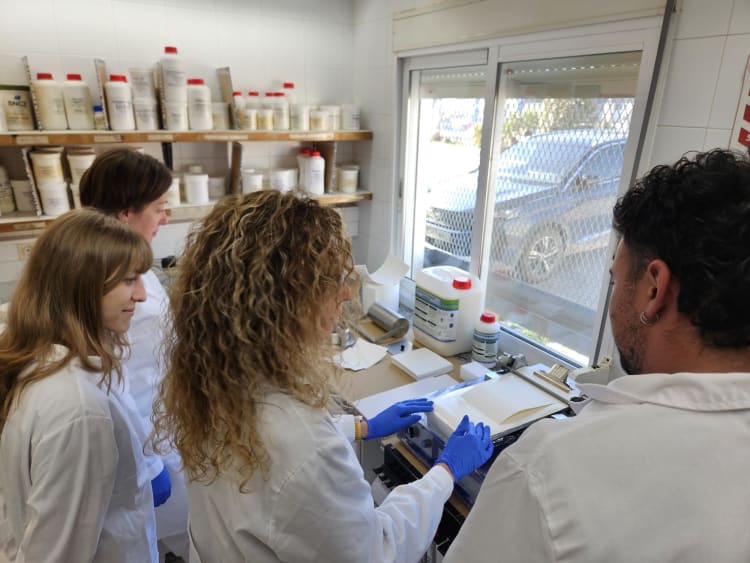
Meanwhile, Mª Carmen Moreno, researcher at the Food Contact and Packaging Laboratory at Aimplas, explained: "We are adapting and expanding our testing methodologies for coatings in order to meet the new regulatory limits."
Fakolith, which specialises in coatings for surfaces in direct and indirect contact with food, beverages and drinking water, is responsible for the development and formulation of the new systems. The work focuses on the principles of elimination, reduction and encapsulation of endocrine-disrupting substances. The project started with a pool of 80 raw materials, of which at least 60, or 75%, are expected to meet the requirements for direct food contact while maintaining the functionality required for the new coating systems.
Methodology and regulatory significance
Aimplas contributes expertise in legislation and risk assessment to the project. The technology centre has analysed the regulatory documentation of the raw materials, defined the necessary tests in line with current regulations and planned updates, and is also applying advanced methodologies to adapt standards relating to coatings and achieve increasingly stringent regulatory limits below 1 ppb.
According to the information presented by the project participants, SAFE-ED Coatings is expected to have a direct impact on sectors particularly exposed to the new restrictions, such as the food industry, construction, civil engineering, healthcare and drinking water infrastructure. The project is expected to help improve the safety of surfaces that come into direct and indirect contact with food, beverages and drinking water by drastically reducing or eliminating the migration of endocrine-disrupting compounds.
The project is also intended to support the incorporation of more sustainable alternatives based on bio-based raw materials, ensure the operational continuity of industrial applications affected by recent bans and restrictions concerning bisphenols, and facilitate knowledge transfer to manufacturers, applicators and the entire specialised coatings value chain. The project is scheduled for completion at the end of 2026. It is funded by the European Union, NextGenerationEU under the Recovery, Transformation and Resilience Plan, with support from Spain's State Research Agency, AEI, operating under the Spanish Ministry of Science, Innovation and Universities.