Sustainable development is becoming a key competitiveness factor in the cosmetics industry, with packaging playing a central role in this process. Interpack, as the world’s leading trade fair for processing and packaging solutions, brings together decision makers and experts from many sectors, including cosmetics, and shows how manufacturers, machine builders and material suppliers are turning environmental and regulatory requirements into market-ready solutions. Particular importance is attached to reducing the carbon footprint, complying with increasingly stringent regulations such as the EU Packaging Regulation, and switching to recyclates and fibre-based raw materials. New concepts for plastic and aluminium packaging, refill solutions, paper-based projects and decoration technologies that reduce plastic consumption are appearing on the market.
Refill and PCR as the future direction of cosmetic packaging
In the segment of plastic packaging, solutions that are recyclable, lightweight and based on PCR are gaining importance. Interpack exhibitor Greiner Packaging formulates the vision of future cosmetic packaging as recyclate-based, with a reduced carbon footprint and designed for reuse. The company’s design and prototyping unit DesPro has developed a series of refill concepts, including the Trigger Refill multi-dosing bottle with an integrated dosing unit that enables precise millilitre-level dispensing.
Greiner Packaging’s second solution is a refill funnel called Refill Funnel, intended for concentrates of soap, dishwashing liquid or shampoos. The concept is based on a funnel-shaped package whose base is sealed with a strip. The funnel is placed on an empty bottle, then the lower strip is removed to the side and the main sealing film is peeled off from the top. The resulting air flow allows the concentrate to be completely emptied from the packaging into the bottle, after which water is added through the funnel to minimise product losses. In the production process of this type of packaging, up to 100 percent rPET can be used.
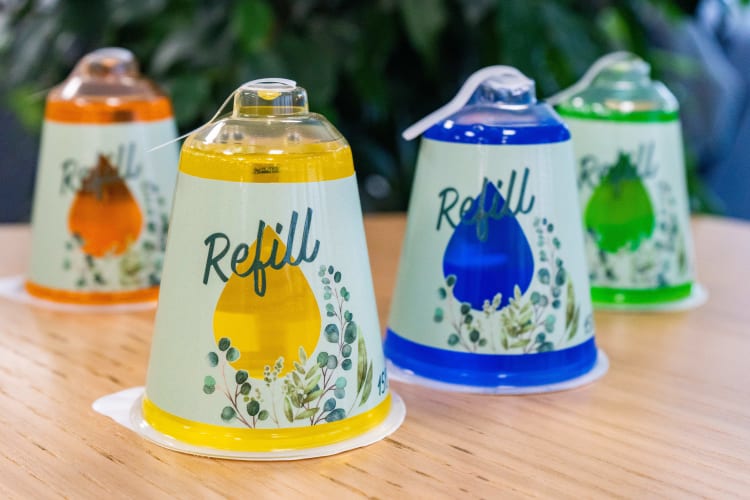
The refill funnel allows complete and rapid emptying via an airflow principle. Image: Greiner
Cosmetic tubes: functionality and new applications
According to the European industry association Etma, tubes account for around 50 percent of packaging production in the European cosmetics sector. Manufacturers are increasingly focusing on the functional added value offered by this type of packaging. Tubes provide precise dosing, hygienic protection for sensitive formulations and the option of integrating smart caps, roll-on systems or applicators.
A current example of development work is a joint project by Interpack exhibitor PackSys and the Tubex Group. The partners have developed an aluminium tube with a screw-on brush applicator that enables precise application of liquid formulations to the skin or nails. Thanks to its excellent barrier properties, aluminium provides effective protection against oxygen ingress and extends the shelf life of products that are sensitive to oxidation.
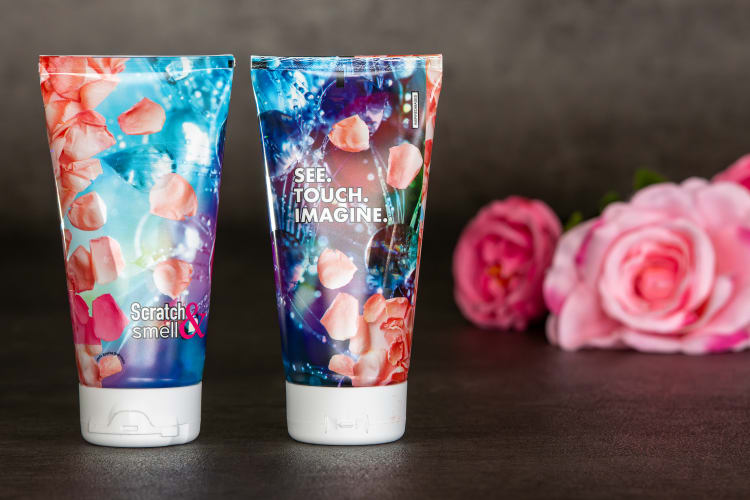
The plastic laminate tube from an Italian manufacturer features a lacquer with scented microcapsules that release a rose fragrance when rubbed. Image: Etma
Growing role of paper-based packaging in cosmetics
Product packaging is a significant component of Scope 3 emissions generated by companies in the cosmetics industry. In addition to reducing the use of plastics, increasing attention is being paid to fibre-based materials. The Pulp in Action consortium, which brings together 50 stakeholders from the cosmetics sector, aims to accelerate the development of paper-based primary packaging. The first prototypes include waterproof paper tubes for shower gels as well as refill pouches and portion sachets with a high content of paper fibres. Bio-based coatings provide the required barrier properties against moisture and fats.
Change is also visible in the luxury segment. A US packaging manufacturer has developed a patented refill jar made from moulded cellulose for Guerlain’s luxury skincare product “Orchidée Impériale”. This solution demonstrates that sustainable materials are gaining acceptance in the highest price segment as well.
Flexible packaging lines for increasing diversity
At the upcoming Interpack, machine manufacturers in Düsseldorf will present new solutions for filling and packaging cosmetics, with a particular focus on flexibility. The growing number of packaging variants requires systems that can be quickly changed over and handle a diverse portfolio of formats and closure types. The Marchesini Group offers complete packaging lines, including the AXO 1000 automatic tube filling machine and the JAM 42 monoblock machine, which can fill viscous products as well as liquid and foaming products such as nail polish, perfume, cleaning agents or creams, and can process a wide range of cap types.
A case study from Schubert shows what automated filling and packaging solutions can look like in practice. The machine manufacturer has supplied a compact TLM Power Compact filling line with cobots to natural cosmetics producer Annemarie Börlind. The line processes glass and plastic containers in a wide range of formats. The multi-functional transport unit, hygienic design and CIP cleaning system allow both efficiency and sustainability requirements to be met simultaneously.
New approaches to decoration and aluminium in cosmetic packaging
Decorative finishing is another area of innovation. All4Labels and Interpack exhibitor Actega use the Ecoleaf technology with Starshine on-demand metallisation. This technology enables metallic effects on cosmetic packaging without using PET carrier films, which significantly reduces plastic consumption and can cut CO2 emissions by up to 80 percent. At the same time, it opens up new design possibilities for labels in the personal care segment.
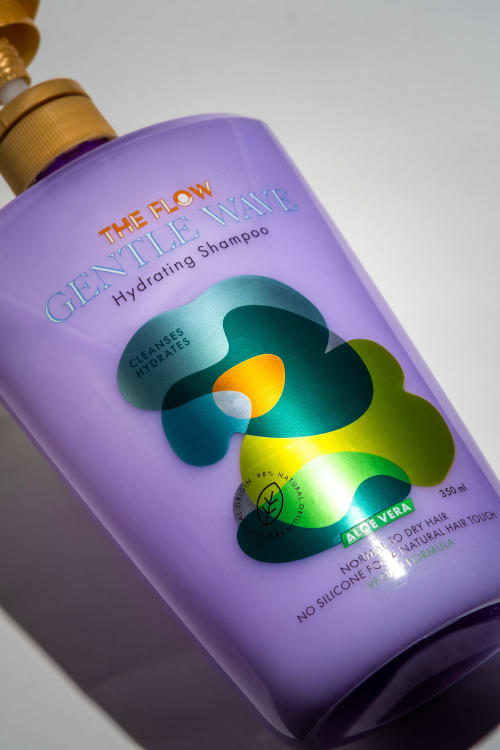
Actega’s Ecoleaf technology enables partial, on-demand metallisation. Image: Actega
Aluminium is also the focus for Swedish company Meadow, which intends to make use of the global aluminium recycling infrastructure. The company will present its new capsule technology at Interpack, which transforms an aluminium can into a ready-to-use pre-fill solution. In the form of a cartridge, it can be filled with soap, shampoos and other products and then inserted into a reusable dispenser.
Brand manufacturers are also actively driving packaging innovation. The iconic blue Nivea cream jar from Beiersdorf has been launched in a version made from 95 percent recycled aluminium, containing a vegan version of the classic skincare product.
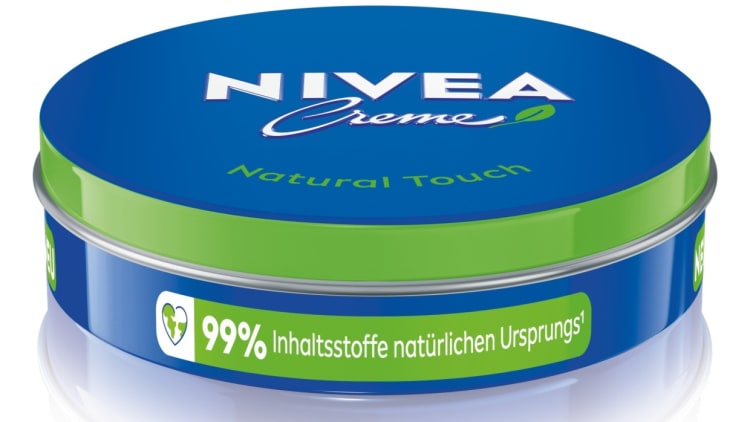
The new Nivea Creme Natural Touch consists of ingredients of natural origin and the iconic tin is made from 95 percent recycled aluminium. Image: Beiersdorf
Digital transparency and environmental assessment of packaging
Digital transparency related to the environmental impact of products is also becoming increasingly important in the cosmetics industry. At the initiative of cosmetics companies, the Europe-wide EcoBeautyScore environmental assessment system is currently being developed, covering the entire product life cycle. Packaging plays a key role in this system, as it significantly contributes to Scope 3 emissions.
EcoBeautyScore evaluates products from raw material extraction through to waste management. At present, the system covers four product categories: shampoo, conditioner, shower gel and facial care products. A global expansion is planned. Jean-Baptiste Massignon, Managing Director of the EcoBeautyScore Association, highlights the importance of this tool: "EcoBeautyScore is the transparency tool that the beauty industry has been waiting for. For the first time, brands can communicate their environmental impact in a scientifically sound, consistent and clear way."
At Interpack, which will take place in Düsseldorf from 7 to 13 May 2026, exhibitors will present a wide range of the latest solutions for sustainable cosmetic packaging. Detailed information on the event is available at www.interpack.de.