The year 2026 marks the first year of implementing China's 15th Five-Year Plan, which sets directions for innovation and high-quality development in the plastics and rubber industries. The document emphasizes the development of new and future-oriented sectors, deepening high-level economic openness and accelerating intelligent, green and integrated industrial transformation. Against this background, Chinaplas 2026 is intended to serve as a platform showcasing the practical implementation of policy objectives and changes in value chains, presenting material and processing solutions as well as new cooperation models in the industry.
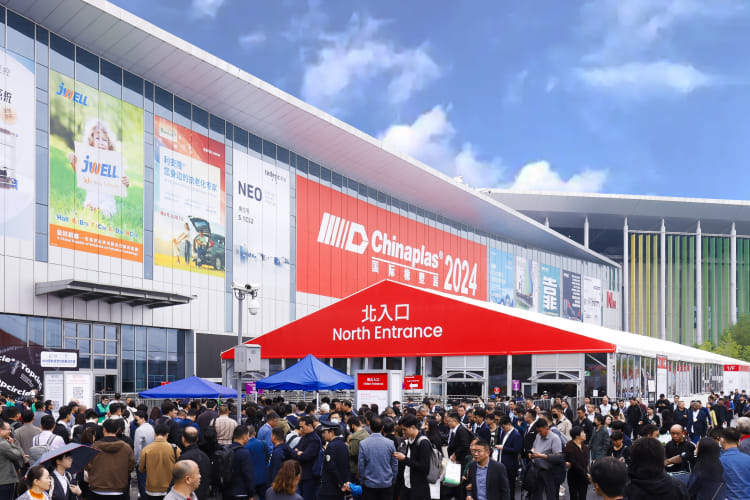
Chinaplas 2026, under the theme "Transformation · Collaboration · Sustainability", will be held from April 21 to 24, 2026 at the National Exhibition and Convention Center (NECC), Hongqiao, Shanghai. On a show area exceeding 390,000 m², the organizers announce more than 4,600 exhibitors from around the world. The trade fair is expected to become a "living laboratory" for new development paths in the plastics and rubber industries, including new energy, commercial aerospace, humanoid robotics, as well as production digitalization and circular economy. The exhibition is to integrate traditional market segments with the growing demand from new industries and to support the internationalization of supply chains.
New sectors as a source of material demand growth
The recommendations of the 15th Five-Year Plan point to strategic development clusters in new energy, advanced materials, aerospace and the so-called low-altitude economy, as well as the need for breakthroughs in quantum technologies, biomanufacturing, hydrogen, fusion energy, brain-computer interfaces, embodied intelligence and 6G communication. The expansion of these application areas increases demand for plastics and rubber as key materials for the manufacturing sector.
New energy vehicles
In 2025, China produced 16.6 million and sold 16.5 million new energy vehicles, maintaining global leadership for the 11th consecutive year with year-on-year growth of 29 percent in production and 28.2 percent in sales. The growing scale of the electric and hybrid vehicle market generates new requirements for materials used in battery systems, charging infrastructure and drive systems.
For example, advanced polymer antioxidants from Rianlon are designed to extend the service life of battery systems and charging equipment operating under extreme conditions. High-purity engineering plastics from Domo's Technyl Pure family, characterized by good electrical insulation and chemical resistance, are targeted at high-voltage applications.
Low-altitude economy
For 2026, a simultaneous policy, technology and market impulse is forecast for the development of the low-altitude economy, which covers, among others, logistics, tourism and rescue operations using aircraft operating at low altitudes. Plastics and composites are gaining strategic importance in this segment, and the estimated market size is on the order of trillions of RMB.
High-CTI polycarbonate from Covestro is offered as a material ensuring operational stability and safety in harsh electrical environments, for example in on-board systems of electric eVTOL aircraft. KingPan composite panels from Kingfa, reinforced with a high glass-fiber content and achieving V-0 flammability rating, can withstand exposure to 1,200°C fire for 30 minutes without dripping and, after removal of the flame, self-extinguish within 10 seconds, which makes them a potential material for critical eVTOL components.
Commercial aerospace
Dynamic growth in commercial aerospace is generating increasing demand for materials and equipment. By December 2025, China had submitted to the International Telecommunication Union (ITU) plans to deploy more than 200,000 satellites, which signals an acceleration in the construction of the national low-orbit satellite internet system.
Carbon fiber reinforced polyamide composites, combining low weight with high strength, are being developed as materials for satellite support structures. PEEK and PEKK, thanks to their high temperature, radiation and chemical resistance, are used in satellite structures, cable insulation layers and engine seals. Phenolic resins, with high char yield and favorable processability, are applied in commercial solid rocket nozzles. Liquid crystal polymers (LCP), with low dielectric constant, low dielectric loss and good temperature stability, are becoming a reference material for high-frequency components of satellite communication systems.
Lightweight composite materials from Syensqo are designed to replace metals in aerospace structures. The MTM46 epoxy prepreg system, developed for extreme environments such as space missions, is intended to provide stiffness, impact resistance and thermal performance that surpass traditional metal solutions. Payload fairings manufactured from this material can be around 30 percent lighter than their metal counterparts, which translates into lower fuel consumption, higher payload capacity and potentially lower manufacturing costs.
Humanoid robotics
The year 2025 is regarded as the first year of mass production of humanoid robots, and 2026 is expected to be a period of transition to larger-scale deployments and faster commercialization. Humanoid robots are gradually moving from demonstrative and competition applications to service functions in households and industrial plants.
According to IDC forecasts, in 2025 China's spending on embodied intelligent robots exceeded USD 1.4 billion, and the projected compound annual growth rate for the next five years is 94 percent. In this emerging segment, breakthroughs in material technologies are a key condition for market scaling, and plastics and elastomeric materials play an important role in the design and functionality of systems.
Specialty engineering plastics such as PEEK and PPS, due to their high strength, low density, wear resistance and self-lubricating properties, are increasingly replacing metals in robot joints, gears and bearings. Thermoplastic elastomers (TPE) are used in flexible components such as artificial muscles or skin-like coverings. Lushan New Materials has developed a new generation of bimodal electronic skin materials capable of precisely detecting very small forces, such as gentle touches or pulses. Dawn Group is developing ultra-soft TPE artificial muscle grades with a hardness of 0A on the Shore scale, combining high elasticity with a dry, non-sticky surface feel, which supports their use in key components of robotic joint actuators.
The organizers announce that Chinaplas 2026 will bring together more than 4,600 exhibitors responding to the needs of traditional and new sectors, presenting material technologies, processing solutions and application scenarios. The exhibition is intended to act as a link between the modernization of existing industries, the expansion of new sectors and the development of solutions for future industries.
Digital upgrading and green transformation
One of the priorities of the 15th Five-Year Plan is broad implementation of the "AI+" initiative, aimed at securing a leading position in the field of artificial intelligence applications and using them to increase efficiency in various sectors of the economy. At the beginning of 2026, a number of policy measures were introduced nationwide to accelerate the integration of artificial intelligence solutions with the manufacturing sector, from supply chain cooperation and plant modernization to support for small and medium-sized enterprises.
In quality control, AI technologies are used to overcome the low efficiency and limited fault tolerance typical of traditional manual inspection. Vision systems coupled with machine learning algorithms can detect defects at the micrometer level, and by continuously learning and updating evaluation criteria they ensure the identification of even small surface discontinuities or dimensional deviations.
Good Vision & Motion intends to present a high-performance quality inspection system at Chinaplas 2026, based on a combination of advanced vision technology and AI algorithms. This solution enables real-time quality monitoring and defect detection on high-speed production lines, providing full product assessment in milliseconds. Jeenar will showcase an AI-based valve-bag inspection system capable of detecting and eliminating defects during production, which helps reduce labor costs and increase product parameter stability. Engel has developed the injectAI system, an iQ process observer using artificial intelligence algorithms to automatically analyze more than 1,000 injection molding process parameters in real time, identify production deviations and generate optimization suggestions.
The Plan also highlights the need to accelerate a broad green transformation. The plastics and rubber industries, as a key part of the manufacturing sector, are among the areas where circular economy solutions are implemented, covering design for recycling, collection systems and the development of mechanical and chemical recycling technologies.
BASF, in cooperation with Porsche and BSR, has completed a pilot project on recycling mixed waste streams from end-of-life vehicles. Using gasification technology, complex residues including plastics, films, coatings and foams, which traditionally went to energy recovery, were processed. The process yielded synthesis gas and chemical derivatives that replaced fossil feedstocks in BASF's integrated value chain for the production of polyurethane formulations for new steering wheels, enabling a closed loop of "scrap parts → raw materials → new parts".
Boretech has developed three tailored "rebirth solutions" based on glycolysis, microwave alcoholysis and solvent processes for PET, PP, PE as well as composite and colored plastics. These solutions are used to build efficient chemical recycling systems that convert plastic waste into high-quality secondary raw materials.
At Chinaplas 2026, particular attention is expected to be paid to recyclates, bioplastics and biodegradable materials, new recycling technologies, digital solutions supporting material flow tracking and energy-efficient processing equipment. The organizers announce live demonstrations intended to illustrate the practical implementation of the intelligent and green transformation vision set out in the 15th Five-Year Plan.

High-level openness and internationalization of supply chains
The year 2026 is both the first year of the 15th Five-Year Plan and a period in which China aims to highlight resilience and growth potential under complex global economic conditions. The Plan stresses the need to expand high-level openness, support two-way investment cooperation and shape cross-border industrial and supply chains. Chinese companies are moving from the stage of "exporting products" to the phases of "internationalizing industrial chains" and "internationalizing ecosystems".
Examples of outbound expansion include BYD's plant under construction in Hungary, SAIC Group's cooperation with a partner in Turkey to launch a joint facility, CATL's third European battery factory in Spain, and Kingfa's expanded production capacity in Vietnam and Spain combined with the development of bases in Poland, Mexico and South Africa. Izumi has established subsidiaries in 12 countries, including Germany, the United States, India, Turkey and Mexico. By the end of 2025, Chinese companies had set up more than 50,000 overseas enterprises in 190 countries and regions.
In parallel, foreign investment in China is increasing. In 2025, the actual value of foreign direct investment reached RMB 747.69 billion, and the number of newly established foreign-funded enterprises was 70,392, a year-on-year increase of 19.1 percent. For example, France-based Forvia expanded its plant in Changshu, Jiangsu province, BASF started up a 1 million t ethylene unit at its integrated base in Zhanjiang, and Covestro opened a new TPU production facility in Zhuhai.
Against this background, the importance of international trade fair platforms is growing. As a place for direct technical exchange and business matchmaking, Chinaplas is intended to serve as a tool to break down information barriers, build a shared view of trends and strengthen innovation cooperation. For Chinese companies, the fair constitutes a channel for entering foreign markets and adapting their offer to the specifics of target regions, while for foreign enterprises it is an opportunity to observe the potential of China's plastics processing industry and its innovation capacity. Thanks to its long-standing presence, Chinaplas has established itself as a global meeting place for the plastics and rubber industries, attracting both exhibitors and visitors from many countries.
Registration and significance of the event for the industry
Pre-registration for Chinaplas 2026 has already started. After completing pre-registration, visitors can purchase an admission ticket at a price of USD 7.5 and receive an electronic confirmation of participation, which applies both to guests from the Hong Kong/Taiwan/Macau region and visitors from outside mainland China.
The organizers emphasize that, in close cooperation with market stakeholders, they will continue efforts to develop innovations and technologies that help reduce the environmental impact of the plastics and rubber industries. In the context of the 15th Five-Year Plan, Chinaplas 2026 is intended to function as a place to present solutions for technological transformation, foreign investment and the integration of the industry with sustainable development objectives.