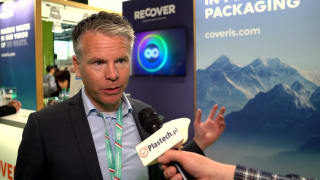
The Packaging and Packaging Waste Regulation (PPWR) has become a key reference point for the European packaging and label sector. It is no longer a distant legislative framework but a set of requirements that will directly affect how labels are designed, manufactured, applied and recycled in the coming years. The discussions held during the European Label Forum 2025, with contributions from Francesca Stevens (Europen), Pablo Englebienne (Finat), Jean-Emile Potaufeux (PRE), Marius Tent (Celab-Europe), Jan ‘t Hart (AIM Europe/HolyGrail 2.0) and Thomas Reiner (Berndt & Partner), help to capture the main implications of PPWR and other current regulations for the label industry today, in the run-up to 2030 and beyond.
The central challenge is the shift from a model where recyclability was often an additional aspect to one where recyclability becomes a precondition for market access. At the same time, many key definitions and detailed requirements are still being clarified. However, the label sector cannot limit itself to passively waiting for further implementing acts. It is necessary to prepare label constructions in line with design for recycling, test them in practice and actively participate in standardisation processes and technical consultations.
Technologies that can improve sorting and traceability of packaging in material circulation are also gaining importance. Projects using digital product marking show that the label is becoming part of the information infrastructure of the circular economy system. At the same time, forum participants stressed that the new regulations represent not only compliance risks but also potential development drivers for business models based on data, value chain cooperation and scaling up circular solutions.
Recyclability as a condition for market access
PPWR introduces a clear timeline. From 2030, packaging that does not meet design for recycling criteria is to be removed from the European Union market. By 2035, this requirement will be extended to the need to demonstrate effective recycling at industrial scale.
Pablo Englebienne, Regulatory Affairs Manager at Finat, summed this up clearly: "If a packaging, including the label, is not recyclable, it will lose market access. That’s the reality." For label printers and suppliers, this means a detailed review of all label components in terms of their impact on the recycling of the main packaging material.
In practice, this means, among other things, that labels must be compatible with the recycling process of the main material from which the packaging is made. Materials, inks, adhesives and other decorative elements should be aligned with design-for-recycling guidelines, which are currently being rapidly developed. In addition, plastic labels that represent more than 5% of the packaging unit will have to contain a specified share of post-consumer recycled content.
This raises practical questions, particularly for converters. Which specific label constructions will meet the forthcoming standards, how will recyclability be assessed across 22 packaging categories and how will requirements be interpreted for complex material combinations. From the perspective of preparations, it is crucial to start working early with brand owners and raw material suppliers to test, redesign and certify solutions based on the most up-to-date guidance available.
Regulatory harmonisation without full clarity
Although PPWR as a basic act has been adopted, a significant part of the implementing rules and detailed definitions remains open. Francesca Stevens, Executive Director of Europen, outlined the current state of the legislative process: "There are 40 pieces of secondary legislation still to come… and many critical definitions, like what counts as ‘packaging,’ are still unresolved."
Areas that require further clarification include, among others, the regulatory status of substrates and liners, including the question of whether the release liner of self-adhesive labels will be classified as packaging, and the criteria for qualifying solutions as compostable, both in home and industrial conditions. The allocation of responsibilities between brand owners, label converters and raw material suppliers also remains unresolved.
These definitional gaps generate significant future compliance risks. As Francesca Stevens stressed, despite the ongoing work: "Despite the uncertainty… it’s still strongly advisable to start this process and put preparation in motion together with your partners across the value chain." For label businesses, this means the parallel planning of material and construction options that can be adapted once final legal decisions are made.
In this context, Finat plays an important role by participating in standardisation work and feeding technical data from the industry into the policymaking process to ensure that the specific characteristics of labels are taken into account. Joint representation is particularly relevant where potentially conflicting requirements for different packaging components could hinder the achievement of recyclability targets for the entire product.
Sorting technologies and smart labels
Labels are not only part of the material stream for recycling, but can also function as an information carrier supporting the circular economy. Jan ‘t Hart presented the progress of the Holy Grail 2.0 project, which uses digital watermarks for intelligent sorting of packaging. According to the data presented, applying these solutions has enabled high purity levels, with more than 90% detection accuracy in a trial involving 2.4 million packages.
For label converters, this translates into at least two lines of potential action. First, innovations in printing, as digital watermarks can be integrated into existing processes without the need for additional production steps. Second, the possibility of offering customers added value through labels that support product traceability, information transparency and compliance with regulatory requirements on material flow tracking.
Jan ‘t Hart pointed out that "labels are central to the detection mechanism… without the label, the system can’t read the product." This shows that the role of the label goes beyond identification and marketing functions and becomes part of the data infrastructure needed for effective sorting and recycling systems.
PPWR as a driver for circular solutions
Some stakeholders in the industry view PPWR not only as a source of regulatory burdens but also as a catalyst for innovation. Marius Tent, associated with Ceflex and 360packmastery and, since 2025, also project manager at Celab-Europe, presented the Celab-Europe 2.0 strategy. The platform aims to match partners in order to scale circular solutions for release liner and matrix waste recycling.
"It’s PPWR time. There is nothing bigger than PPWR these days," emphasised Marius Tent. He highlighted persistent awareness gaps, noting that many co-packers and brand owners are still unaware that recycling solutions for label liners already exist. At the same time, he pointed out that scale is crucial, since the more stakeholders join the initiative, the more economically viable the recycling of these waste streams becomes.
Within its data-driven approach, Celab-Europe is developing an interactive map of solutions that is intended to provide practical guidance to label converters and their customers on available options for managing this waste. In this perspective, PPWR compliance is not simply a top-down requirement but the result of co-creating the system by actors who best understand material properties and operational realities.

Post-2030 outlook and strategic implications
In his keynote, Thomas Reiner outlined a broader context, including the development of global extended producer responsibility schemes, the introduction of bans on specific materials, growing accountability for carbon footprints and limited resource availability. "After the automotive and textile sectors, packaging is next. Others will compete for your recycled content," he warned.
The conclusions for the label industry include the need to meet, simultaneously, criteria for non-toxicity, recyclability and traceability. Brand owners will expect data on climate impact, water use and material balance at the level of individual packaging components, including labels. The limitation of secondary packaging may significantly change decoration needs, including the available surface and visibility of labels.
Label businesses therefore need to prepare for an environment in which regulatory requirements, sustainability targets and innovation pressure intersect and reinforce one another. This relates not only to material choices but also to business models, forms of cooperation and how value offered to customers is defined.
Conclusion: agility as a component of compliance
The new regulatory landscape provides a framework for building resilience and long-term competitiveness of label companies. Pablo Englebienne drew attention to the growing importance of information flows: "There has to be a flow of information along the supply chain… from raw materials to label printer to brand owner." Only then will it be possible to design solutions that are compliant with regulations and effectively support the circular economy.
Finat plays a role as a platform connecting market participants, providing expertise, practical tools and advocacy for the sector. Through knowledge sharing and collaboration within the community, the label industry can strengthen its ability to respond to PPWR requirements and make use of emerging opportunities.
Over the coming years, the ability to quickly adapt label constructions, processes and cooperation models may become one of the key elements of compliance. For many companies, PPWR will act as an impulse to rethink the role of the label in the packaging life cycle as a carrier of recycling, information and traceability functions.
European Label Forum 2026: continuing the discussion
The discussion on preparations for PPWR and the adaptation to new design and regulatory requirements will continue at the European Label Forum 2026, to be held from 27 to 29 May 2026 in Seville, Spain. The event is intended as a platform for exchanging experience on practical steps taken by companies in response to the upcoming changes.
Organisers encourage stakeholders in the label market to actively participate in this debate and request their seat at the table via the European Label Forum website at: https://www.europeanlabelforum.com/.