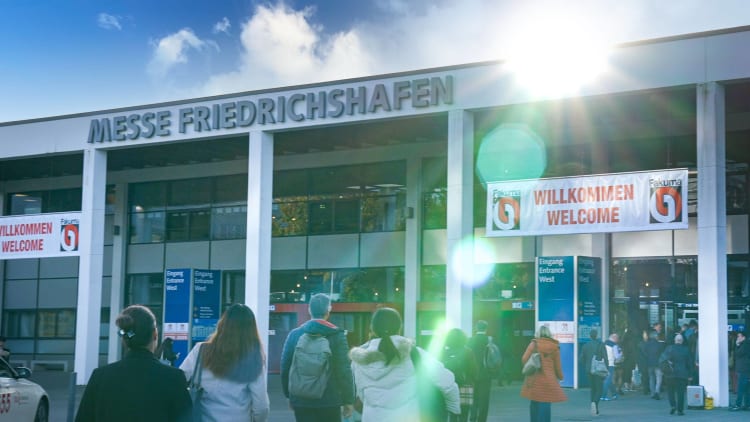
The history of the Fakuma trade fair shows how a consistently developed, specialised event can become one of the world's leading meetings for the plastics processing industry. The fair was initiated by trade fair organiser Paul Eberhard Schall, who recognised the potential of a dynamically developing market and opted for a format dedicated exclusively to plastics processing technologies. Together with entrepreneur Eugen Hehl from the family-owned company Arburg GmbH + Co KG, he created in the tri-border region on Lake Constance an event that over time gained significance beyond the local market. From the outset, Fakuma was designed as a specialised trade fair for plastics processing, and its founders placed emphasis on combining the practical presentation of solutions with direct dialogue between market participants.
The first edition of the fair took place in 1981 with the participation of 76 exhibitors. In the following years, Fakuma developed at a rapid pace, transforming into an important international event for the industry. The fair model was based on a strong focus on specialised suppliers who can directly compare their solutions while operating within a culture of knowledge exchange, competition and cooperation. This formula allows users to obtain a broad overview of the market and available technologies, as well as to assess the directions of offer development. The organisers emphasise that, driven by innovation and marketing activities, Fakuma radiates from Europe to other regions of the world, acting as a platform for presenting solutions for plastics processing.
The Fakuma community and the 30th edition anniversary
The celebrations of the 30th edition of the fair are an opportunity for the organisers to summarise the achievements of the event and to highlight its role in integrating the industrial community. The anniversary series "Fakuma Moments" has been launched, in which selected moments from the history of the fair are presented together with exhibitors. Within this initiative, the organisers stress the importance of personal meetings for building business relationships and inspiring the active co-creation of the future of the plastics processing industry.
The community aspect is underlined by Bettina Schall, managing director of P. E. Schall, the organiser of the Fakuma trade fair. "In Friedrichshafen, on the occasion of the 30th Fakuma, we are not only celebrating the anniversary of the fair, but also a large, growing community. It is made up of exhibitors, expert visitors, suppliers, booth builders, service providers, representatives of the trade and daily press, local partners in Friedrichshafen and logistics partners; they are all part of the Fakuma family."
The organisers point out that, despite the growth in scale and the increase in its international standing, Fakuma in Friedrichshafen has retained a friendly yet professional character. This atmosphere is intended to provide an important basis for building trust and making investment decisions in the field of capital goods, in particular in the context of purchasing machinery, equipment and complete technological lines for plastics processing.
Scope: the entire value chain in plastics processing
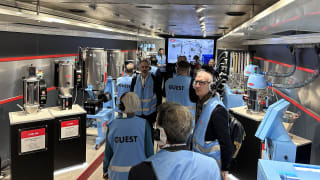
The thirtieth edition of the fair is intended to cover the entire value chain in the field of plastics processing. The programme and exhibition will feature injection moulding, forming and extrusion technologies, as well as 3D printing solutions. The range of raw materials will be presented, including additives and masterbatches, as well as base materials for plastics processing. Tools and equipment will be an important element, including solutions for mould and toolmaking and process technologies related to their operation.
The organisers indicate that the fair will also feature solutions related to recycling. This is to include technologies for the management of plastic waste, as well as systems enabling recyclates to be incorporated into existing production processes. The exhibitors' portfolio will include machines, peripheral equipment and automation systems designed to support companies in further increasing efficiency, quality and long-term viability. In this way, according to the organisers, the fair is also intended to contribute to maintaining the competitiveness of companies operating in the plastics processing sector.
Location on Lake Constance and industrial base
Fakuma is held in Friedrichshafen on Lake Constance. Its location in the border triangle of Germany, Austria and Switzerland underlines the importance of the fair as an event with an international reach and facilitates the participation of companies from various European markets. The organisers point out that the location on Lake Constance also strengthens the experiential aspect of the event, combining the highly specialised profile of the fair with an attractive environment.
The region around Lake Constance is characterised by the presence of numerous plastics industry companies and high-tech enterprises serving many industrial sectors. According to the organisers, companies operating in this area benefit from a high quality of life, environment and working conditions, as well as from a dense network of innovative enterprises. Such an environment fosters cooperation, know-how transfer and the development of new technological solutions, which are subsequently presented, among others, at the Fakuma trade fair.
The presented anniversary materials emphasise that Fakuma is intended to be a place where advanced plastics processing technologies meet the innovative resources of the region. The organisers encourage participants to use the fair as a platform for personal meetings, exchange of experience and joint shaping of the industry's future, encompassing both traditional processing technologies and new solutions such as 3D printing and emerging recycling technologies.