Südpack announces the presentation of its latest developments in compounding at two key industry events in spring 2026. At the KPA trade fair, a cross-industry event for plastic products in Ulm, experts from Ochsenhausen will be available for discussions on 25 and 26 February 2026 in Hall 2, at Booth D 13. One week later, on 4 and 5 March, the enhanced properties and improved carbon footprint of the new generation of products will again be the main focus at the Südpack booth, this time at the 33rd International Colloquium on Plastics Technology in Aachen. The manufacturer reports an expansion and improvement of the StarBlend compound range, which includes formulations with post-consumer and post-industrial recyclates as well as bio-based raw materials and mineral or fibrous fillers. The aim is to combine higher material performance with an improved environmental profile and new functional properties in technical, structural and packaging applications.
Expanded StarBlend compound portfolio
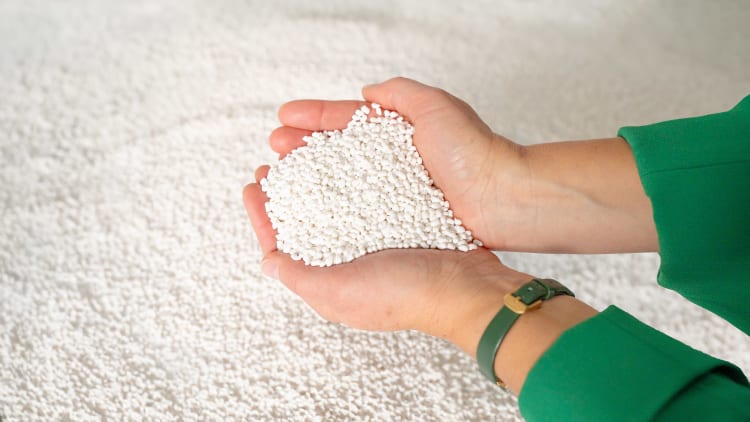
Südpack reports that it has expanded the StarBlend compound portfolio and optimized existing formulations. The composition of the blends includes post-industrial and post-consumer recyclates as well as bio-based materials and typical fillers such as talc, chalk and natural fibers. In the new product generation these components have been combined in such a way as to reconcile sustainability requirements with improved performance characteristics and additional material functions.
According to the manufacturer, the modified compounds are particularly targeted at applications requiring high mechanical strength, for example in the production of housings, technical components and automotive interior parts. In internal testing, Südpack compounds were reported to consistently outperform unmodified base polymers in terms of mechanical strength, which is relevant in areas where high mechanical loads and long-term dimensional stability are required.
High impact strength and reduced carbon footprint
One of the main development areas comprises compounds with increased impact resistance combined with a reduced carbon footprint. The inclusion of recyclates and bio-based raw materials allows for partial substitution of fossil resources, which reduces the consumption of fossil fuels across the value chain. As a result, this is expected to lead to lower emissions associated with plastic products and to support the implementation of circular economy principles in the polymer industry.
At the request of customers, Südpack states that it can provide a detailed environmental balance for StarBlend compounds. This is intended to enable customers to make decisions based on quantitative data, taking into account specific application requirements and the environmental objectives of the respective company. Such analyses can support both product design and the reporting of environmental indicators within the supply chain.
Compounds with defined electrical conductivity
A key part of the StarBlend portfolio also includes compounds with defined electrical properties. Most plastics are naturally electrical insulators and can become electrostatically charged due to friction. Uncontrolled electrostatic discharges cause significant financial losses every year, particularly in sectors such as microelectronics, medical technology, the chemical industry, logistics and explosion protection. The resulting problems include product damage, deterioration in equipment performance and, in extreme cases, the initiation of explosions in potentially explosive atmospheres.
To mitigate these risks, Südpack modifies polypropylene-based compounds with tailored additives to achieve a conductivity range from antistatic to fully conductive, depending on the requirements of the application. The manufacturer emphasizes that, in addition to black and uncolored versions, it is also possible to match colors to design specifications, for example to defined colors of device housings or structural components.
Due to the relatively low density of the material, these compounds can be used in lightweight applications where weight reduction of components is important. This is relevant for both the automotive sector and equipment design, where low component weight can influence energy consumption and ergonomics.
Quality, processability and supply security
In addition to the extended functional properties, all StarBlend compounds are designed with a focus on stable processing conditions. Südpack states that the formulations are developed to ensure good processability in standard plastics processing operations, which is important for production efficiency and for the consistency of finished part properties.
Full traceability of all raw materials in the supply chain is intended to enable the manufacturer to guarantee stable and consistent compound quality as well as availability in the quantities required by customers. This applies to users in sectors such as automotive, electrical engineering and mechanical engineering, medical technology, furniture, packaging, aerospace and consumer goods. According to Südpack, this is important for planning series production and for meeting quality and regulatory requirements in individual market segments.
Another benefit highlighted by the company is the broad portfolio of standard compounds, which is said to shorten development times for variants tailored to customer requirements. This can accelerate development processes and, as a result, speed up the market launch of new products, which is particularly relevant in segments with high innovation dynamics and short product life cycles.