The Kistler Group closed 2025 with sales of 424 million Swiss francs. Adjusted for currency effects, this corresponds to a decline of 1 percent, and in Swiss francs of 5 percent, which in practice translated into stable revenues compared with the previous year. Results were negatively affected by the strong Swiss franc, stagnation in the German automotive industry and geopolitical and economic uncertainties, including those related to US tariff policy. Order intake did not reach the planned level, recording a decline of 2 percent on a currency-adjusted basis and 6 percent in Swiss francs.
In 2026, Kistler is continuing preparations for the launch of a new, highly automated sensor factory at its headquarters in Winterthur. In parallel, the company is strengthening its presence in Asian markets through targeted investments and the creation of new regional structures. These measures are aimed at better exploiting growth potential in high-dynamics regions and balancing weaker conditions in traditional segments, in particular automotive in Germany. A key element of the strategy remains the focus on competencies in piezoelectric measurement technology and four key areas of industrial applications, including plastics processing for medical technology and monitoring of civil engineering structures. The company is also maintaining a high level of research and development expenditure, planning to allocate around 9 percent of its annual revenue to R&D again in 2026.
Financial performance and market environment in 2025
In 2025, the Kistler Group generated sales of 424 million Swiss francs. After adjusting for currency effects, a decline of 1 percent was recorded, while in nominal terms, measured in Swiss francs, the decrease amounted to 5 percent. The company describes this level as revenue stabilization compared with the previous year, taking into account the challenging macroeconomic environment.
The results were particularly negatively affected by the strong Swiss franc, which weakened price competitiveness in export markets. Another factor was the stagnation of the German automotive industry, an important customer segment for Kistler solutions. The company also points to the impact of geopolitical and economic uncertainty, including that related to US tariff policy.
Order intake also declined. On a currency-adjusted basis, orders were 2 percent lower, while in Swiss francs the decrease was 6 percent. This means that the market environment in 2025 was challenging both in terms of sales and newly acquired projects.
Structural changes and focus on growth markets
In response to changing market conditions, Kistler has adapted its regional structures. The aim of these measures is to increase organizational flexibility and enable faster response to differing conditions in individual markets.
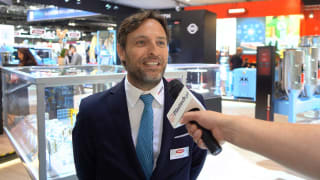
Marc Schaad, CEO of the Kistler Group, sums up the past year and the outlook for the coming months: "My first year as CEO was challenging, but we've set an important course. One way we've done this is by adapting our regional structures, enabling us to respond even more flexibly to different market conditions. Despite the strong Swiss franc and ongoing geopolitical and economic uncertainties, we are cautiously optimistic about the 2026 business year. We plan to continue growing through targeted investments, particularly in Asian markets such as China."
In Asia, especially in China, the company expects growth to remain stable. To better capitalize on the region's dynamics, Kistler plans to establish a new regional headquarters for Asia in Kuala Lumpur. In the United States, the management team has been strengthened in order to respond as effectively as possible to ongoing geopolitical tensions and economic uncertainty. In Germany, the priority is the development of new applications, which is intended to partially compensate for declining sales in the automotive sector.
Strategy in measurement technology
Strategically, the Kistler Group is focusing on its core competencies in piezoelectric measurement technology. The company concentrates on four main areas of industrial applications: monitoring and controlling manufacturing processes, applications in plastics processing, in particular for medical technology, condition monitoring of critical infrastructure such as bridges, and monitoring of marine and large stationary engines.
The company notes that significant growth opportunities were already visible in these segments in 2025. An example is the expansion of the portfolio with a cloud-based software platform for bridge monitoring. This solution enables continuous Structural Health Monitoring (SHM) and the provision of integrated systems combining sensors, data processing and analysis in conjunction with dynamic weight measurement of moving vehicles (Weigh in Motion, WIM).
Bridge operators thus gain access to accurate and highly available data on the actual behavior of infrastructure assets and loads generated by road traffic. This information supports safe and efficient operation of bridges, including maintenance planning, risk assessment and optimization of the use of existing infrastructure.
Investments in new products and research and development
Kistler emphasizes that new products are also expected to contribute to growth in 2026. The company is currently working on several promising innovations for various industries, while remaining within its core measurement and application competencies. Details of individual solutions have not been disclosed, but maintaining a high level of research and development expenditure is intended to enable further expansion of the portfolio.
In 2026, the Kistler Group plans to allocate around 9 percent of its annual revenue to research and development. This is broadly in line with the company's previous investment policy and is intended to support the development of measurement technologies and new applications in selected industrial areas, including plastics processing.
Planned smart factory in Winterthur
Over the next few years, the Kistler Group plans to build a smart factory at its headquarters in Winterthur. This will be a highly automated plant for sensor production that is expected to become an important pillar of the company's long-term development strategy.
"For us, the smart factory is a long-term investment and a clear commitment to Winterthur as a location. It's a key part of our long-term strategy to make the Kistler Group sustainable for the future," emphasizes Marc Schaad. "We're currently in an intensive planning and clarification phase to establish the technical and organizational foundations for a sustainable production and working environment."
The planned factory is expected to use a high level of automation and modern organizational solutions. The objective is to increase efficiency, quality and flexibility of production processes in response to growing customer requirements in various industrial sectors, including plastics processing and medical technology.

Marc Schaad, CEO of the Kistler Group