Finat has published the results of the 46th Label Competition 2026, one of the most widely recognised reviews of achievements in label printing. The entries were assessed under the chairmanship of Z. Murat Sipahioglu, together with the judging panel composed of Steve Wood, Phil Baldwin of Bobst UK and Fahri Ilazi of Kocher+Beck in Germany. A total of 204 entries were submitted by 43 companies from 24 countries, confirming the international nature of the event. The highest number of entries came from Türkiye and Austria, with a combined 52, followed by Spain, 16, and France, 15. In terms of categories, wines accounted for the highest number of entries, 32, followed by beers and spirits, 24, and self-promotional materials, 23. The number of entries using digital printing as one of the main processes also increased slightly, to 99. In this year’s edition, the competition covered 11 categories in the marketing and end-uses group, 8 categories in the printing technologies group, 4 categories in the non-adhesive applications group, and 2 categories in the innovation and electronic printing group. Group A included 140 entries, Group B 43, Group C 20, and Group D one entry. The awards ceremony, presented by Dr. Vlad Sljapic, took place on 27 May during the Finat European Label Forum in Seville. According to the organiser, this year’s edition once again confirmed the commitment of the Finat community and the high quality of label printing worldwide.
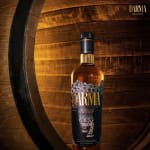
The Best in Show award went to Multi-Color Corporation Adelaide, Australia, for the label "Darma Rare Himalayan Blended Whisky". The judges described it as exceptionally striking and immediately attention-grabbing. They particularly emphasised the strong visual effect achieved through the combination of embossing, debossing and partial varnishing in the tiger motif, especially around the eyes. Attention was also drawn to the complexity of the production process, all the more so because the label was made on a heavy wine label stock that is susceptible to damage under the pressure of embossing and debossing tools. Techniques used in the production included embossing, engraving, partial varnishing, including the tiger’s eyes and the lines around the figure, and hot foil stamping of the brand logo. The final effect was achieved by combining lithographic printing with screen printing, including relief screen varnish, as well as embossing and debossing. The judges assessed the work as highly effective in terms of craftsmanship and final result.
Main group winners
The winner of the marketing and end-uses group was also Multi-Color Corporation Adelaide, Australia, for the label "Darma Rare Himalayan Blended Whisky". In the printing processes group, the award went to Multi-Color Corporation America’s Wine & Spirits, USA, for the label "Mai-Kai - Rum No.1". This was a seven-colour label produced using combination printing, combining lithography, screen printing, hot foil stamping and embossing, all completed in a single pass. Partial varnishing, spot screen varnish and precise embossing were also used.
The winner of the non-adhesive applications group was IPE Industria Gráfica S.L.U, Spain, for "Chardonnay Sparkling". This flexible packaging label was produced using five-colour flexographic printing with a relief screen varnish applied to a filmic shrink sleeve in a single pass at a speed of 60 m/min. The judges indicated that the relief varnish vividly brings the shells, clams and branding to life, and that achieving such precise application on an unsupported film substrate requires a very high level of operator skill.
The innovation group winner was Schreiner Group GmbH & Co.KG, Germany, for "Seal with Digital Authentication Feature". The label was printed on tamper-evident material using flexography and screen printing, and incorporates a concealed digital authentication feature with a unique pattern. This feature can only be viewed via a smartphone camera in combination with a dedicated app. The solution was developed for the sustainable sealing of cardboard boxes so that various supply chain stakeholders, including brand inspectors and customs authorities, can easily verify seal integrity in real time using a standard smartphone. If the label is tampered with, for example cut, the digital authentication fails, immediately indicating that the box has been opened and the product compromised. In addition, the wavy design makes it difficult to reposition the label exactly as before.
Judges’ special awards
A special judges’ award went to Multi-Color Corporation America’s Wine & Spirits, USA, for "Capio - Napa Valley Cabernet Sauvignon". The label was produced using two-colour lithography combined with hot foil stamping, embossing, varnishing and a distinctive tear effect. Each label features an individual tear mark. For this purpose, a specialised tool was developed to tear the lower section to a precisely defined width, pulling the face material together with the matrix, which results in a unique effect for each piece. The embossed interwoven rings, reinforced by detailed printing at the joining points, give the design pronounced depth and tactility.
Another special judges’ award went to ET Dars91-Dimitar Sabkov, Bulgaria, for "Sol Negru Riesling". The label was digitally printed, and the design was enhanced with relief screen varnish and hot foil stamping. Three different structural elements used as embossing effects, giving the middle section of the label a leathery feel, were identified as the feature that distinguishes the project and builds a more sophisticated character. The judges noted the effective, albeit restrained, design and the well-executed foiling and embossing effects.
Label Tech Ltd, Ireland, was also among the award winners for "Black Emerald 7 Year Single Grain Irish Whiskey". In this digitally printed label, hot foil stamping, embossing, partial varnishing and vivid green tones were used to strengthen the graphic layer. The wavy print evokes the appearance of an emerald vein in rock, while gold foil within the design and branding adds refinement. The judges underlined both the quality of the graphic execution and the ability to combine multiple processes in a single application.
Selected comments on category winners
In Group A, covering marketing and end uses, the wines category was won by Carini GmbH, Austria, for "Sauvignon Blanc Réserve Collection Wirtemberg". The judges described this label as apparently simple, yet containing many refined elements. It combines flexographic and screen printing with hot foil stamping and embossing, as well as a realistic rattan effect achieved by cut-through punching, which requires precise execution.
In the food and beverages category, the winner was Çiftsan Label and Packaging Company, Türkiye, for "Hasanbey Balsamic Vinegar". The textured label was created by printing a silkscreen canvas pattern over a matte laminated background. The design combines digital printing with hot foil stamping to highlight the logo, relief varnish to emphasise the logo and grapes against the matte surface, and holographic foil to accent the production region of Bergama, İzmir, in Türkiye.
In the general category, Carini GmbH won for "Flexiloona". The label was produced in three passes. In the first pass, four colours were digitally printed. In the second, a partial release varnish was applied, the reverse side was selectively printed with adhesive, transparent hot foil stamping was added on the front, and the label was then laminated into a multilayer construction. The third pass included the application of partial relief varnish to create a tactile effect, together with screen varnish.
In the cosmetics category, two equal awards were granted. Letra Graphix Pvt.Ltd., India, won for "Yuthika Professional UltraCare Shampoo", a simple yet striking label printed in three colours using screen and flexographic processes. Çiftsan Label and Packaging Company, in turn, received the award for "Baleq Brume Corporelle Parfumée", a digitally printed label in which sweets, ice creams and the brand logo were highlighted with relief varnish on a soft-touch background, while glitter added to the varnish reinforced the playful effect.
In the pharmaceutical category, the award went to Helvetikett AG, Switzerland, for "Helvetikett reclosable 5-page pharma edition booklet Setas". This is a multilayer label for pharmaceutical applications, produced in six passes and combining lithography, flexography, lamination, varnishing, and precise cutting in both flatbed and rotary finishing. Unlike typical solutions mounted on the back of the carrier, this design uses a specially developed support strip on the front, while the label itself is positioned like a flag beneath the top layer, improving the reliability of camera inspection and quality control. Application on round containers was also taken into account by making the two lower layers shorter than the top one. A glue-free finger lift facilitates opening.
In the security category, Schreiner Group GmbH & Co. KG was recognised for "3rd license plate RFID Hybrid Zanzibar". This is a label serving as a vehicle identification document confirming periodic technical inspection, intended for application to the windscreen. It includes anti-counterfeiting and anti-tampering features, including guilloches, serial numbering and two RFID inlays enabling long-range UHF and short-range NFC identification. Vehicle data can be uploaded to the technical inspection system and read by authorised personnel during routine checks.
In the booklet category, Helvetikett AG won for "Helvetikett reclosable convenience 12 pages booklet label in a clip label design Flamenco". This is a 12-page booklet label printed using lithography and flexography, then finished offline by folding and a fix-a-form construction. The customer specified a silver and black colour scheme to emphasise quality and elegance. A plastic layer on the base carrier allows repeated opening and closing, while the label itself can be attached to the packaging like a clip.
In the self-promotional category, Helvetikett AG won for "Helvetikett Security Label One Giralda". This digitally printed label combines digital printing with hot foil stamping and varnishing, providing a comprehensive brand protection solution. It integrates 13 features, including luminescent colours, Helvetikett lettering on the sail, security die-cutting for tamper evidence and full traceability. It also uses four forms of digital coding, three numerical and one hyperlink, microtext, and three methods of product authenticity verification, SQR, DeepIS and a unique GS1 QR code.

In the sets of labels category, two awards were granted. Marzek Etiketten+Packaging, Austria, was recognised for "Crémant de Limoux Vollgut Crémant", a digitally printed label enhanced with hot foil stamping and embossing, with precise register of these effects across the entire series. The second award went to Sancak Etiket, Türkiye, for "Bioxcin Keratin & Argan Bakım Yağı 150ML". The work was produced using flexographic technology with cold foil, lamination and varnishing. On the back label, a broken-glass holographic foil was first applied, followed by layers of opaque white, cold foil, black ink and gloss varnish. This gives the exterior a golden appearance, while a holographic effect becomes visible when viewed through the bottle from the front.
In Group B, dedicated to printing processes, the flexography category was won by Purgina spol.s.r.o., Slovakia, for "Pierre Baguette label Palivé". The judges underlined the precision, image sharpness and proper reproduction of dot and shape, indicating correctly set impression and high-quality prepress. In rotary letterpress, the award went to Kuresa S.A., Peru, for "Amarás - Bendito Clima de Lima", a six-colour job with a screen-printed white underlayer and a matte soft-touch varnish, producing an elegant, clean and tactile result.
In screen printing, Sancak Etiket won for "Antalya Reçelcisi Kuru İncir Tatlısı 650G". The judges particularly appreciated the tactile effect achieved by relief screen varnish and the soft-touch lamination. Embossed elements such as the head image, figs, branding and carpet-inspired motifs build the project’s authenticity and refer to the tradition of dried fig dessert popular in the Aegean and Mediterranean regions of Türkiye.
In reel-fed offset, two entries shared first place, "Mai-Kai - Rum No.1" by Multi-Color Corporation America’s Wine & Spirits and "Canpetek Yüksek Yayla Petekli Çiçek Balı 430G" by Sancak Etiket. In the case of the Turkish label, the judges indicated that the combination of reel-fed offset with relief screen varnish and soft-touch lamination creates a clear sense of refinement, while hand-sketched elements such as the beehive, honeycomb, bee and centrally positioned honey dipper were effectively highlighted by the relief varnish.
In combination printing, the award went to Multi-Color Corporation America’s Wine & Spirits for "Friction Viognier". The label was produced on a solid foil substrate with five-colour overprinting. Inks were used to control the reflectivity of the surface, while embossing and foil blocking gave the work a sculptural effect. In the hybrid category, the winner was Kimoha Entrepreneurs FZCO, Dubai, UAE, for "Lahab By Stallion 53". This digitally printed label combines flexography, cold foil, varnish and digital tactile varnish. The varnish applied to the dragon’s scales reinforces the three-dimensional effect, and the precision of the lines and text was rated very highly.
In Group C, covering non-adhesive applications, two awards were granted in the shrink sleeve category. IPE Industria Gráfica S.L.U received one for "Chardonnay Sparkling - Pearlescent Sleeve with Tactile Varnish and Two Side Register", while Ovelar, Spain, received the other for "Sleeve Olé on ice". The second of these works combines flexography and screen printing, was produced at a speed of 80 m/min, and finished in three passes. According to the judges, the design effectively conveys a sensation of coolness and ice, while the deliberately rough surface reinforces associations with an icy structure.
In Group D, dedicated to innovation, the winner was the label "Seal with Digital Authentication Feature" by Schreiner Group GmbH & Co.KG, already discussed above as the innovation group winner.
Finat also announced that judging for the L9 World Label Awards 2026 will take place during Labelexpo Americas in Chicago on 15-17 September 2026. The best winning entries submitted by the L9 associations, including Finat, will be selected for this international competition.