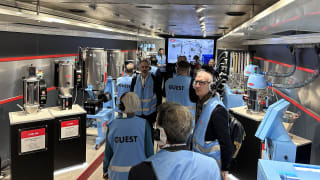
The global transition toward a low-carbon economy is making the new energy sector an increasingly important pillar of sustainable development. From rooftop photovoltaic panels and offshore wind farms through green hydrogen and electric vehicles to advanced energy storage systems, plastics and rubber are becoming the material backbone of these technologies. They are integrated at every stage of the value chain, from research and development through component manufacturing to end-use applications, where they provide barrier, insulation, structural and sealing functions.
According to the 2025 revenue ranking of the 500 largest global new energy companies published by the China Institute of Energy Economics, the total revenue of these enterprises reached RMB 9.55 trillion, a slight increase compared with RMB 9.54 trillion a year earlier. At the same time, the number of Chinese companies on the list rose from 255 to 263, representing 52.6% of all entities. This indicates the growing competitiveness of Chinese enterprises in the global new energy market and the scale of investments for which the appropriate selection of polymer materials is crucial.
Photovoltaics: light weight and weathering resistance
The photovoltaic industry is currently undergoing a deep structural transformation related to oversupply of manufacturing capacity, which is accelerating market consolidation. Despite these challenges, long-term demand remains stable, and development is driven by technological innovation and cost reduction. In parallel, the application scope of photovoltaics is expanding, which further raises the requirements for materials used for encapsulation, module construction and related components.
For a long time, the market for encapsulation films was dominated by first-generation films based on EVA copolymer, which benefited from established production processes and relatively low costs. However, limited weathering resistance and susceptibility to potential induced degradation (PID) have prompted the industry to look for alternative solutions. Films based on polyolefin elastomers (POE), featuring high moisture barrier performance and high volume resistivity, are becoming the preferred choice for high-efficiency technologies such as bifacial modules and N-type cells where long-term stability of operating parameters is critical.
Co-extruded POE/EVA films, which combine the advantages of both materials, are also gaining increasing interest. Such structures make it possible to balance the relationship between performance and material and processing costs, which supports their wider use in large-scale photovoltaic module production.
Sabic offers Fortify PV POE films with high volume resistivity designed to provide long-term protection of photovoltaic modules against electrical degradation and moisture. This portfolio is complemented by Sabic PP 95MK40T backsheet material, which selectively blocks the permeation of moisture, oxygen and acetic acid, thereby reducing the risk of corrosion and accelerated ageing of module components.
Wanhua Chemical has developed a series of solutions aimed at improving the efficiency of new energy systems, with polyolefin elastomers playing a key role. Encapsulation films made from Wansuper POE exhibit high moisture barrier performance, very good weathering resistance, high transparency and increased resistance to PID. In practice, this translates into improved power generation efficiency and greater long-term reliability of modules in operation.
Polyurethane composites are also important in the construction of photovoltaic components. Covestro's Baydur material, used in structural parts, provides high mechanical strength, corrosion resistance and good insulation properties. These features make it possible to extend the service life of components, reduce the dependence of module manufacturers on volatile aluminum prices and lower the carbon footprint. In the case of Baydur, this footprint is declared to be 85% lower compared with conventional aluminum solutions.
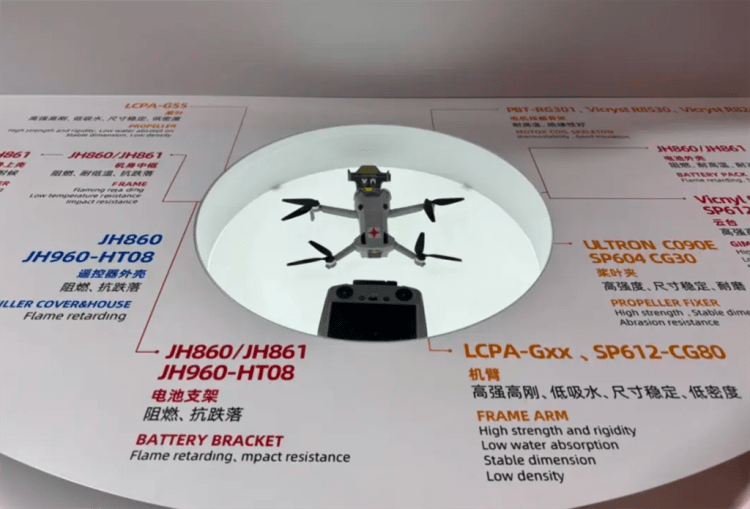
Encapsulation films made from Wansuper POE improve power generation efficiency and reliability of photovoltaic modules. (Photo: Wanhua Chemical)
Wind power: scaling up drives material and process development
Data from Japanese analytics company Global Information (GII) show that the global wind turbine market value will increase from USD 121.19 billion in 2025 to USD 157.79 billion in 2030, corresponding to a compound annual growth rate of 5.42%. The expansion of installed capacity goes hand in hand with rapid technological progress in blade design, nacelles, control systems and grid connection equipment.
Wind turbine blades are key components responsible for converting the kinetic energy of the wind into mechanical energy. Their geometry, mass and mechanical properties directly influence power generation efficiency and turbine operating costs. In China, rotor diameters for some installations already exceed 210 meters, which sets very high requirements for designers and manufacturers regarding the selection of composite materials, resins and hybrid structures.
Increasing blade length limits the potential for further optimization solely at the level of aerodynamic design. Additional challenges arise related to the transport of large-size components, the risk of mechanical damage and microcracking increases, and assembly costs and manufacturing complexity grow. To address these constraints, companies are working on solutions such as segmented blades, multi-rotor systems and new design concepts using lightweight composites and advanced resin systems.
Wind power installations, including transformers and electrical systems, also require effective solutions for sealing, insulation and vibration damping. These systems must meet stringent requirements for temperature, corrosion and fatigue resistance. DuPont Nomex materials are used as high-temperature insulations in generators and transformers to improve equipment safety, reliability and overload resistance under variable operating conditions.
Hydrogen energy: material progress supports green hydrogen development
In hydrogen production technologies, plastics and rubber materials play an important role in the construction of key equipment, mainly due to their combination of low weight, chemical resistance and the ability to form complex shapes with high precision. As proton exchange membrane (PEM) electrolyzers move to higher power levels and operating pressures, high-performance engineering plastics are gaining importance.
Materials such as PEEK and PEKK, along with carbon fiber-reinforced composites, are increasingly being indicated as candidates for the next generation of frames and structural components of electrolyzers. They enable stiffness and strength similar to metals while maintaining low component weight, which improves overall system efficiency and simplifies assembly.
Estonian manufacturer Stargate Hydrogen has used BASF's Ultrason specialty plastics to produce frames in alkaline water electrolyzer (AWE) stacks. The application of polysulfone as a replacement for metallic nickel has significantly reduced stack weight while maintaining high thermal and chemical resistance and compressive strength. The material retains its properties even in a highly alkaline operating environment, which supports long service life and reduced maintenance needs.
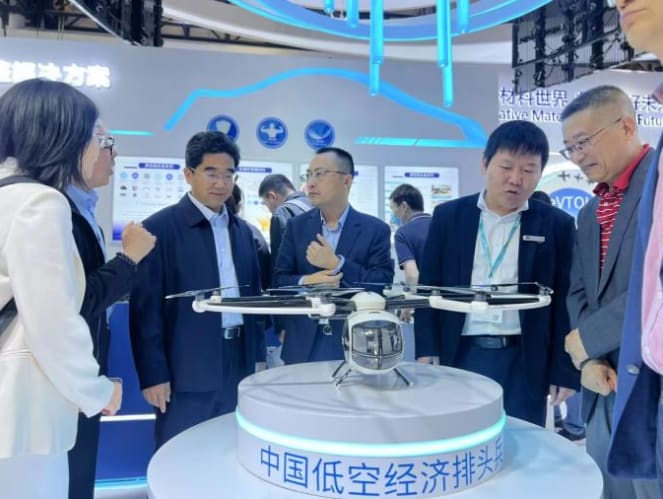
Thanks to BASF's Ultrason specialty plastic, frames in Stargate Hydrogen's AWE stacks are lightweight, yet robust and durable. (Photo: Stargate Hydrogen/BASF)
In alkaline electrolyzers, sealing gaskets are also critical components, providing both sealing and insulation and directly affecting system safety and reliability. In China, gaskets made from PTFE modified with fillers such as glass fiber, alumina and graphite are widely used. The most important performance parameters include compressibility, elasticity and resistance to creep and stress relaxation.
Zhejiang Conceptfe New Material Technology is one of the leading Chinese manufacturers of gaskets for hydrogen applications. The company's self-developed gaskets based on modified PTFE show improved wear resistance, higher hardness and better self-lubricating properties compared with products made from pure PTFE. This is particularly important under high pressure and frequent load cycling.
Another important area of development is type IV hydrogen storage vessels, which are one of the main focuses of structural research. They feature a thin-walled thermoplastic liner, usually made from HDPE or polyamide (PA), with a thickness of around 2–3 millimeters. These materials provide good gas tightness and resistance to hydrogen embrittlement, which is crucial for the safety of storage systems.
Liners made from Envalior's Durethan and Akulon Fuel Lock PA6 enable weight reduction of up to 75% compared with steel solutions, while also improving cost efficiency. The single-layer blow molding process allows integration of the valve with the inner liner, resulting in approximately 30% savings in production costs. In addition, PA6 offers five times better hydrogen barrier properties than HDPE, which makes it possible to design even thinner walls and increase gas storage density.
Advanced processing technologies for new energy components
The rapid development of the new energy market is increasing the demands placed on plastic and rubber components. Higher dimensional accuracy, more complex geometries, long-term stability of properties and greater reliability under demanding operating conditions are expected. These factors are driving continuous innovation in machinery and processing technologies, from injection molding and precision coating to advanced film orientation lines.
Injection molding technology is particularly well-suited for the production of high-precision parts such as motor housings, electrical connectors, insulating rings and spacers, gears and mounting elements for high-voltage systems. Engel injection molding machines, equipped with intelligent control systems, provide stable processing and precise dosing of the melt, which is important for large-scale production of components for electric vehicles and power electronics.
Arburg's Allrounder injection molding machines, integrated with robotic systems, make it possible to shorten the molding cycle for parts such as plugs and connectors and to increase productivity and process repeatability. Automation of part removal, secondary operations and quality control reduces the risk of human error and facilitates compliance with the stringent requirements of the e-mobility and power sectors.
In the field of precision coating, solutions from JCTimes play an important role. The company's high-end coating dies are used, among others, in the manufacture of components for photovoltaics and hydrogen energy. The design of the dies takes into account the rheological properties of the processed materials and the specific conditions of the production line. The use of advanced simulation systems at the design stage enables full digital control of operating parameters and tailoring die geometry to the requirements of a specific application.
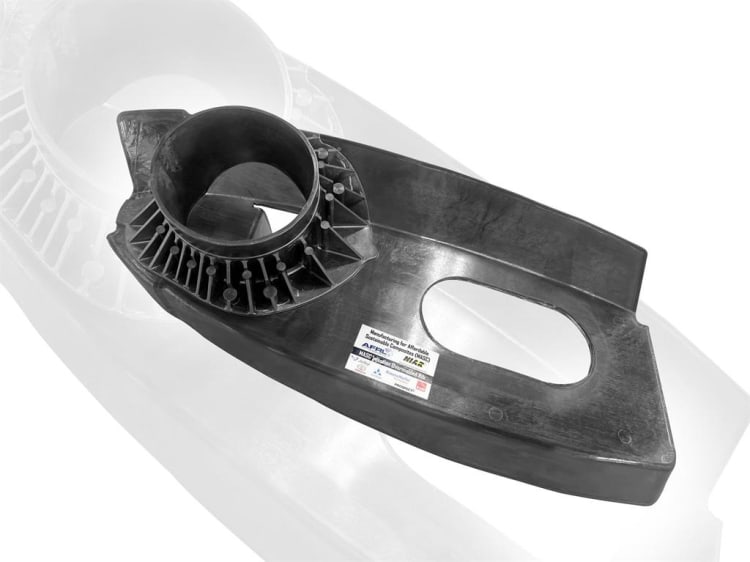
JCTimes' hot melt adhesive coating die series uses flow simulation technology to ensure coating uniformity and stability. (Photo: JCTimes)
As part of collaborative work on next-generation energy storage technologies, JCTimes has developed coating dies for production of solid-state lithium battery electrodes. The optimized layer application process is intended to improve thickness accuracy and coating uniformity, which enhances control of electrochemical parameters and helps lower manufacturing costs.
For functional film processing, biaxially oriented film lines are of key importance. Brueckner's high-output BOPP, BOPET and BOPA film stretching lines feature a working width of 10.4 meters, production speeds exceeding 600 meters per minute and annual capacities of over 60,000 tonnes. This configuration enables reduction of specific energy consumption, lower production waste, reduced raw material usage and lower carbon emissions, while utilizing advanced automation and digital process control systems.
Outlook for polymer materials in the new energy sector
Plastics and rubber are evolving from auxiliary materials to one of the key pillars of the energy transition. Their role is not limited to replacing metals and other traditional materials, but also includes enabling new design and processing solutions that would not be feasible without high-performance polymers and composites.
In fields such as photovoltaics, wind power, hydrogen technologies and energy storage, polymers contribute to lowering system costs, increasing production efficiency, improving reliability and reducing greenhouse gas emissions. As the new energy sector continues to pursue higher efficiency and lower emissions, the importance of material properties and advanced processing technologies will become even more pronounced.
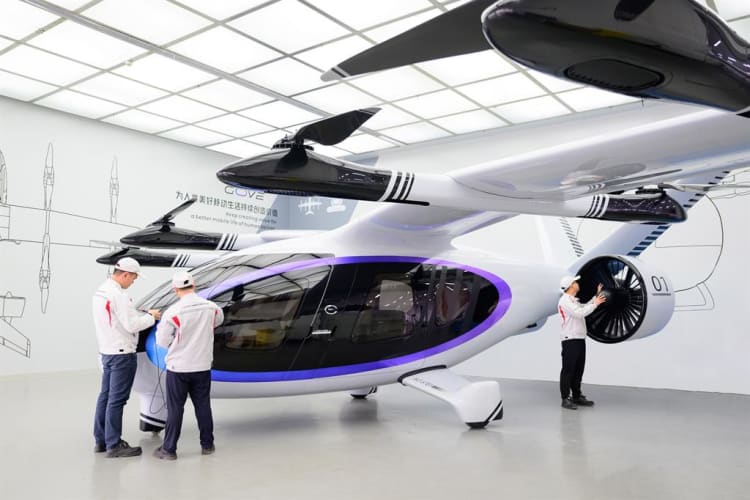
The rapid development of the new energy industry increases requirements regarding product efficiency, operational stability and cost control. (Photo: Covestro)