How can Europe ensure a level playing field in the global plastics market? That question was at the heart of the latest Plastics Industry Meeting, held on 18 May 2026 at Targi Kielce on the eve of Plastpol. More than 100 representatives of industry, public administration, industrial organisations, recyclers, processing companies and market experts took part in the event.
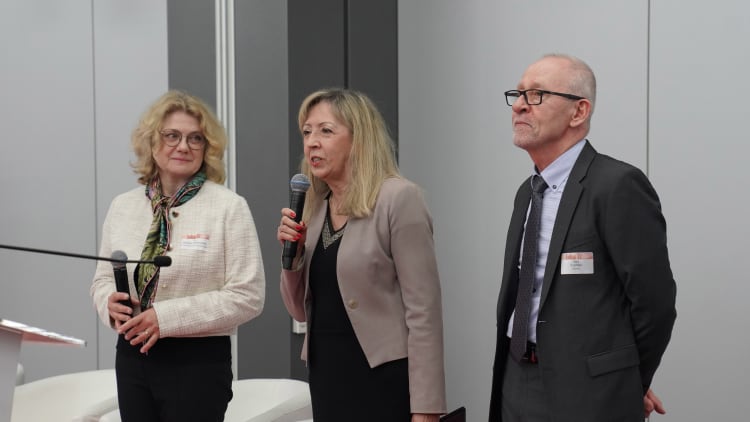
The conference was opened by representatives of the organisers: Bożena Staniak of Targi Kielce, Anna Kozera-Szałkowska of Plastics Europe Polska, and Robert Szyman of the Polish Association of Plastics Processors. A positive note was the participation of MP Rafał Kasprzyk and a letter from the Minister of Climate and Environment addressed to the conference participants. For an industry that for years has often discussed regulation, transition costs and competitiveness mainly within its own circle, this was an important signal of interest from lawmakers and public administration.
Macroeconomics increasingly shaped by geopolitics
The first substantive part opened with a presentation by Dr Piotr Bartkiewicz of Bank Pekao S.A. Formally, it was a presentation on the state of the Polish economy and its near-term outlook. In practice, however, the current situation shifted the macroeconomic analysis towards geopolitics. The starting point was not only classic economic indicators, but also international tensions, security of raw material supplies, risks related to oil and gas transport, and the impact of these factors on European industry.
An important element of the presentation was the situation around the Strait of Hormuz, through which a significant share of global oil trade passes. According to the estimates presented, global oil consumption amounts to around 100 million barrels per day, of which around 20 million barrels are expected to pass through this strategic route. After taking alternative routes into account, the market may still face a shortfall of around 10 million barrels per day, or about 10% of global consumption. Disruptions in this region therefore have effects far broader than just higher fuel prices. They also mean higher costs of energy, transport, petrochemical feedstocks, intermediates and working capital. For the plastics industry, which is closely linked to the chemical and energy sectors, this relationship is direct.
According to the assessment presented during the conference, the current tensions do not necessarily have to mean a global recession. A more likely scenario is slower growth and sustained cost pressure. Europe is not at the centre of the crisis, but as a net importer of energy it is particularly sensitive to raw material prices. For companies, this means more difficult cost calculations, greater caution in investment decisions, and less room to pass higher costs on to customers.
Bartkiewicz pointed out that the current situation differs from the energy crisis of 2021-2023. At that time, Europe feared physical gas shortages and a sharp rise in energy prices. Today, the pressure is less spectacular but more dispersed across the economy. The problem remains higher costs, weaker demand in Europe, and the risk of permanently low industrial competitiveness compared with regions benefiting from cheaper energy and less burdensome regulation.
In the Polish context, the exchange rate of the zloty was an important topic. A strong domestic currency may be interpreted as a sign of market confidence in Poland, but for exporters it means additional pressure on margins. In an industry where exports and imports of raw materials are an important part of operations, the exchange rate remains one of the practical factors of competitiveness.
Business wants predictability
The next presentation was given by Marek Górski of the Lewiatan Confederation, who presented the perspective of entrepreneurs. At the centre of his presentation were barriers well known to industrial companies: high energy costs, tax burdens, legal instability, an excessive number of regulatory obligations, and staffing problems. The issue of energy stood out particularly strongly. For the plastics industry, it is not one of many costs, but one of the conditions for maintaining competitiveness. Energy affects the costs of processing, feedstock production, transport and the entire industrial base. Its high prices mean that European companies are already competing from a less favourable cost position than producers from other regions.
Górski stressed that businesses primarily need more stable operating conditions. The problem is not only regulation itself, but also its volatility, accumulation and lack of a clear direction. Companies can adapt to high requirements, but they need to know what rules will apply over the coming years. Without that, it is difficult to plan investments, especially in capital-intensive sectors.
An important theme was the change in the growth model of the Polish economy. For years, Poland benefited from relatively cheap labour, inflows of foreign investment and EU funds. This model is gradually being exhausted. Further development requires higher productivity, automation, digitalisation, robotisation, and higher spending on research and development. This also applies to the plastics industry, which cannot build its advantages solely on labour costs.
From this perspective, the competitiveness of the plastics industry does not depend only on feedstock or energy prices. It is also a question of companies' ability to invest, the quality of regulation, the pace of implementation of new technologies, and whether the state is able to create conditions conducive to industrial development.
Europe is losing ground in global production
Industry data were presented by Jasper de Kruif, President of Plastics Europe Polska. He showed that Europe's declining competitiveness is not merely a perception among businesses, but is confirmed by statistics. Europe's share in global plastics production fell from 22% in 2006 to 12% in 2024. At the same time, global plastics production continued to grow, reaching around 430 million tonnes in 2024. Asia, including China, now accounts for around 57% of the global market.
Europe is also losing ground in circular plastics. The global share of circular plastics reached 10% in 2024, but this growth was driven primarily by China. Within two years, China's circular plastics production increased from 8.6 million tonnes to 12.5 million tonnes. During the same period, Europe remained virtually stagnant.
The diagnosis regarding imports was also important. In the case of HDPE, 37% of consumption in Europe comes from outside the continent, while for polypropylene the share of imports from outside Europe is 25%. De Kruif pointed out that import pressure is also growing because China has become more self-sufficient, and suppliers that previously sold into that market are looking for new sales destinations, including Europe. At the same time, plastics production in primary forms in Europe is declining.
For Poland, the importance of the sector remains very high. According to the data cited in the presentation, in 2023 more than 8,000 companies were active in the Polish plastics industry, employing more than 200,000 people, and sector turnover exceeded EUR 31 billion. This shows the scale of the risk: a weakening of European plastics production means a problem for the entire value chain - polymer producers, processors, packaging, automotive, construction and recycling.

Processors pay for volatility
The most direct perspective from processing companies was presented by Tadeusz Nowicki of the Polish Association of Plastics Processors. His presentation translated macroeconomics, geopolitics and global competition into the day-to-day calculations of a company. The first problem is feedstock prices. For processors, rising polymer prices can be more painful than oil price increases themselves, because they immediately increase working capital requirements, raise the value of inventories and complicate discussions with customers. It is not always possible to pass higher costs on to customers quickly, especially where plastic is the main cost component of the product. An additional risk comes when prices fall and the company is left with expensive feedstock or products manufactured at earlier, higher cost levels.
Nowicki also pointed out that nominal sales may give a misleading picture of the condition of the sector. This is why PZPTS also analyses normalised revenues, calculated on the assumption of constant plastics prices. Such an indicator better shows the real change in activity and value added. From this perspective, the data for 2025 and the beginning of 2026 confirm a decline in activity in the plastics business. This is also visible in profitability: historically, sales measured against normalised revenues remained for a long time at 6-7%, while currently they have fallen to around 5%. At the same time, investment remains necessary. In 2025, its level relative to value added was the lowest since 2019, while the increase in 2026 was interpreted by Nowicki as a sign of companies' determination to adapt technologies to market requirements despite pressure on margins.
Regulation and the economics of recycling are a separate problem. Nowicki was particularly critical of the PPWR, pointing out that valid objectives may diverge from the technical and logistical realities of industry. As an example, he cited the method of calculating the share of reusable packaging in a transport set, in which 300 g of stretch film may be treated as if it accounted for half of the packaging together with a pallet weighing 13 kg. The recycling situation remains equally difficult: in Poland, around 800,000 tonnes of recycling capacity are installed, but only half is utilised. Recyclates are more expensive than virgin plastics most of the time, so the obligation to use them alone is not enough. Mechanisms are needed that reward the use of secondary raw materials, stabilise demand, and allow recyclers and processors to plan investments.
From policy to operating conditions
The second conference session was devoted to the Circular Economy Act and the political framework of the transition. The introduction was given by Marta Pietrosanti of Plastics Europe, and the debate included, among others, Rafał Kasprzyk, Thomas De Meester, Emilia Tarłowska and Jakub Safjański. In this part, the recurring question was how to design regulations so that they support the transition rather than weaken industry.

The session on competitiveness and local feedstock security had an even more practical dimension. In the debate involving Zuzanna Lulińska, Sławomir Pacek, Joanna Leoniewska-Gogola and Paweł Sosnowski, it was emphasised that recycling requires not only investment, but also stable law, market protection and demand for recyclates. Sławomir Pacek pointed to the gap between declarations about the circular economy and the actual operating conditions of recyclers. He also drew attention to lengthy administrative procedures and the influx of cheap recyclates from Asia, often of origin that is difficult to verify.
France was cited as an important example, where producers using recyclates may receive significant subsidies. The debate indicated that support may amount to several hundred euros per tonne and apply to materials processed within a specified distance from the plant. This type of mechanism strengthens local supply chains and creates a real sales market for secondary raw materials.
Paweł Sosnowski, in turn, drew attention to extended producer responsibility. He was critical of a model based on a central fee and redistribution of funds through a public fund. An alternative would be a system in which businesses genuinely assume responsibility for packaging waste, cooperate with local authorities and have an impact on the quality of the waste stream. The debate indicated that the planned burden could increase from around PLN 1 billion to around PLN 5 billion per year, which is why the way this money is spent is of key importance.
Transition requires a competitive industry
Plastics Industry Meeting showed that the discussion about plastics today is not solely a discussion about recycling, packaging or environmental regulation. It is a debate about the competitiveness of European industry, feedstock security, energy costs, trade policy and geopolitics. It is increasingly clear that any analysis of the sector's economic situation must take into account geopolitical risks, feedstock price volatility, access to energy, import pressure, and the effects of regulations created at national and EU level.
The importance of Plastics Industry Meeting also lies in the fact that for many years it has been one of the few places where the key industry organisations representing plastics producers and processors appear together. Thanks to this, the meeting is not just another conference on the circular economy, but a forum where the perspective of the entire value chain can be confronted - from polymer production, through processing, to recycling and the regulations affecting market functioning.
The main conclusion was clear: Europe may raise environmental standards, but it cannot weaken its own industry in the process. If companies in Europe are to bear ever higher costs while at the same time competing with products and raw materials from outside the EU that do not meet similar requirements, the transition will become difficult for them to bear. A level playing field therefore means, above all, fair rules of the game - rules that allow European companies to invest, compete and achieve environmental goals without the risk that the cost of these changes will push production out of Europe.
Paweł Wiśniewski, Plastech.pl