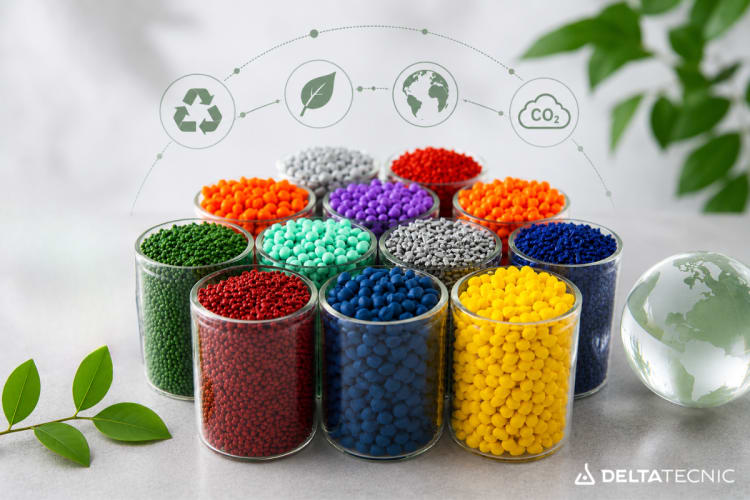
Delta Tecnic is developing new masterbatch formulations to reduce its carbon footprint at the source. With 2030 targets approaching and the requirement to cut emissions by at least 30%, companies are increasingly competing not only on cost and performance, but also on the environmental impact of their products. The company, which specialises in masterbatches for cables and PVC, is focusing its efforts on an area that usually remains invisible to the end user but can be highly significant for the total emissions balance, namely raw material formulation. The company has started reviewing selected recipes in order to reduce emissions at the level of each product component. The goal is not to offset the impact, but to reduce it structurally by reassessing the raw materials used, their origin and their environmental footprint across the full life cycle. This approach includes the gradual replacement of traditional materials with recycled alternatives, renewable raw materials or lower-energy-intensity solutions, while maintaining the required technical properties.
The starting point is measurement. In line with market and regulatory requirements, Delta Tecnic already has detailed data on CO2 emissions per tonne of masterbatch produced. The main focus has been placed on the polymer, which represents a significant share of the formulation and whose carbon footprint has historically been linked to the use of crude oil. In response, the company declares the incorporation of recycled polymers and renewable raw materials with a lower carbon footprint into its formulations. The gradual replacement of virgin raw materials with recycled or bio-based counterparts is intended to enable a significant reduction in emissions and support the transition towards a circular economy model, without compromising product performance.
Formulation review and the role of pigments
The transformation pursued by Delta Tecnic is not limited to the polymer itself. The company is carrying out a detailed formulation review, analysing the environmental impact of each component. This approach is intended to enable the selection of raw materials with a lower carbon footprint and a more sustainable origin, while maintaining the technical parameters required by end-use applications.
One of the most important areas of work is pigments, which have traditionally been associated with emission-intensive processes. The company has launched new development lines focused on pigments with a lower environmental impact, including solutions based on recycled materials and new plant-based alternatives.
These activities have already resulted in specific product solutions. Delta Tecnic has developed a black polyethylene masterbatch for the cable industry that meets the technical requirements for inner sheath applications. Although the product was initially targeted at specific niches, it is intended to enable cable manufacturers to reduce their carbon footprint without sacrificing functionality. At the same time, the company offers PVC masterbatch formulations containing recycled raw materials, thereby reinforcing a circular approach across different product lines.
According to Delta Tecnic's calculations, the new range of masterbatches based on recycled-origin raw materials makes it possible to reduce carbon footprint-related emissions by 30%.
Next stage of work
At the same time, the company is carrying out a detailed analysis of the actual environmental impact of each raw material it uses, examining the entire life cycle from origin to end use. This is intended to support better material selection and accelerate emission reductions across the full product portfolio.
The next identified challenge is the development of natural-origin pigments and the broader use of plant-based resources, which could open the way to a new generation of raw materials with a lower environmental impact.
As Manuel Miret, area manager and new product developer at Delta Tecnic, points out: "The industry has already covered part of this path through measurement and process optimisation, but if we truly want to meet the 2030 targets, the change must start with raw materials. It is not about doing the same things more efficiently, but about doing them differently, by incorporating recycled materials, exploring renewable origins and rethinking each component of the product so as to reduce its impact from the very beginning."