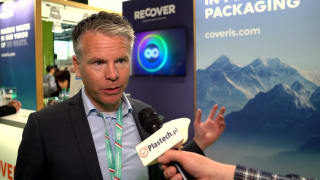
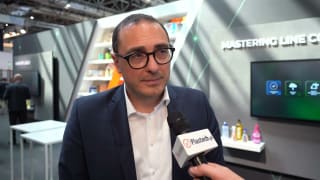
From 9 to 12 June 2026, the 20th anniversary edition of Plast 2026, the international trade fair regarded as one of the most important events for the European plastics and rubber industry, was held at the Fiera Milano Rho exhibition centre. This year’s edition once again confirmed its standing as a key platform for the exchange of experience, the presentation of innovative technologies and the development of international business relations. Despite the difficult economic and geopolitical situation that has affected the operation of many industrial sectors in recent years, the organisers succeeded in delivering an event of impressive scale and high substantive value.
Scale of the event and international profile
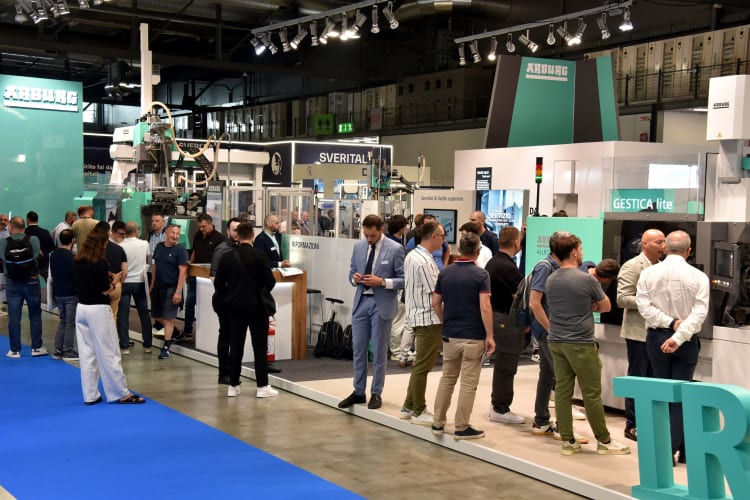
Plast 2026 brought together more than 1,000 exhibitors representing 45 countries, presenting their solutions across more than 40,000 m² of net exhibition space. The exhibition was arranged across six halls, occupying a significant part of the MaTec complex, a project bringing together events dedicated to advanced materials and technologies.
Of all exhibitors, 56% were Italian companies, while 44% came from abroad, once again underlining the event’s international dimension. A particularly important indicator was the presence of around 200 companies that had not taken part in either of the two previous editions of the fair. In the context of economic slowdown and investment uncertainty, such a high number of new participants was seen as a sign of the industry’s confidence in the Plast brand and its importance as an effective tool supporting business development and the establishment of commercial contacts.
The number of international business visitors was equally impressive. Thanks to cooperation with ICE - Italian Trade Agency and numerous industry organisations from around the world, more than 300 qualified buyers from 30 countries came to Milan. They included representatives from Albania, Algeria, Saudi Arabia, Argentina, Bosnia and Herzegovina, Brazil, Bulgaria, Chile, Colombia, Croatia, Egypt, Ethiopia, India, Israel, Kazakhstan, Kosovo, Morocco, Mexico, Nigeria, Peru, Poland, Romania, Serbia, Slovenia, South Africa, Tunisia, Türkiye, Uganda, Hungary and Vietnam. Particularly large delegations came from India and Latin American countries.
Plast 2026: Polish delegation in Milan
A prestigious Polish delegation arrived in Milan, bringing together 11 leading industry representatives and 2 influential B2B media platforms supporting the sector’s development.
The Polish delegation represented the full industry value chain. It included companies specialising in advanced processing by injection moulding and thermoforming (SPLAST, Bilplast, KGL S.A.), companies active in chemicals and technical components for the automotive, aerospace and transport sectors (Plastbud, GUMAT, INTAP, ROMA LTD.), as well as representatives of advanced composite technologies and textile engineering (Rymatex, TC3) and the circular economy (VIVE Textile Recycling, Sinoma.pl.).
Thanks to this mission, direct relationships were established with Italian companies operating in plastics, rubber, machinery, components, packaging and the circular economy. It created space for the exchange of experience, valuable networking and the identification of new opportunities for business cooperation.
For ITA – Italian Trade Agency – Warsaw, inviting selected foreign delegates to the most important Italian trade fairs remains one of the most concrete tools for trade promotion. It is not only about building visibility, but above all about creating conditions for direct contacts and real business opportunities. This is the essence of ITA’s activities to promote Made in Italy abroad: identifying the right partners, facilitating dialogue and turning industry interest into practical cooperation between Italian companies and international markets.

Official opening and accompanying events
The official inauguration of the fair took place on 9 June along the main Corso Italia avenue. Representatives of local authorities, export support institutions and industry organisations took part in the ribbon-cutting ceremony. Guests included Rosario Pantaleo representing the Milan City Council, Maurizio Forte of ICE, Francesco Conci, CEO of Fiera Milano, Massimo Margaglione, President of Amaplast, Enrico Aureli, President of Acimall, and Roberto Frassine, President of Assocompositi.
Plast 2026 was held in parallel with Xylexpo and Composites Future, jointly forming the MaTec – Next Materials and Technologies project, aimed at showing synergies between different sectors of modern industry.
Comprehensive industry showcase
One of the fair’s main strengths was the opportunity to explore the full value chain of the plastics and rubber industry. In addition to the main exhibition, participants could visit three satellite events: Rubber, 3D Plast and PlastMat. Rubber focused on the rubber sector, from raw materials and processing technologies to finished industrial applications. PlastMat was devoted to material innovations and new solutions addressing the needs of today’s manufacturing industry. Particular attention, however, was drawn by the refreshed format of 3D Plast, which was transformed into a modern innovation centre under the name 3DPlastLab.
3DPlastLab - a laboratory of the future
Unlike traditional exhibition zones, 3DPlastLab was designed as a space for experience and co-creation of knowledge. It served as a meeting place for representatives of industry, science, design and new technologies.
The concept was developed with the involvement of Simone Maccagan, associated with Gimac and eXgineering, and Pierpaolo Ruttico from the Indexlab digital fabrication laboratory at the Politecnico di Milano.
In the zone, covering more than 400 m², participants could explore specific implementations of additive technologies, prototypes and research and development projects. The programme featured continuous presentations and debates on topics such as:
- new materials for 3D printing,
- artificial intelligence in manufacturing processes,
- computational design,
- distributed ledger technologies,
- sustainability,
- new industrial models.
The exhibition was divided into four areas: materials, technologies, production systems and design techniques. The most innovative solutions were recognised with special awards.

Conference programme
Throughout all four days of the fair, numerous conferences, seminars and panel discussions took place. These events brought together representatives of public institutions, industry associations, research centres and companies.
The topics covered included, among others:
- the competitiveness of European industry,
- the circular economy,
- plastics recycling,
- regulatory challenges,
- digitalisation of manufacturing processes,
- automation,
- sustainability,
- technological innovation.
The conference programme became a space for the exchange of experience and the search for answers to the challenges facing the sector.
Market condition and Amaplast data
An important part of the event was the presentation of economic analyses prepared by the Amaplast research centre. According to the data presented, the Italian sector of manufacturers of machinery, equipment and moulds for plastics and rubber processing ended 2025 with a production decline of around 5%, reaching a value of EUR 4.4 billion. Exports, accounting for around three quarters of production, also decreased by about 5%, to just over EUR 3.4 billion. At the same time, imports of technology increased by almost 24%, indicating continued domestic demand, partly supported by Industry 4.0 and 5.0 programmes. As a consequence, the sector’s trade surplus fell from a record EUR 2.65 billion in 2024 to EUR 2.24 billion.
Geopolitical challenges
Experts indicated that 2025 was marked by numerous uncertainties. Among the key factors affecting the industry were:
- the tariff policy of the US administration,
- higher tariffs on steel and aluminium,
- the weakening of the dollar against the euro,
- the energy crisis related to the conflict in the Middle East,
- rising prices of gas, oil and raw materials,
- difficulties related to the implementation of the European PPWR regulations on packaging and packaging waste.
The reduced willingness of companies to invest in the European market was a particular source of concern.

Export directions
Export data showed a varied situation across individual markets. Declines were recorded in sales to Germany and France, traditionally among Italy’s most important trading partners. At the same time, sales to Spain, Poland and Romania increased. The situation on the US market was also assessed positively, with exports of Italian technology rising by almost 9%. Even greater potential was identified in India, where sales of Italian machinery have more than tripled over the past ten years.
Among product categories, declines were recorded for extruders, blow moulding machines, flexographic machines and moulds, while only injection moulding machines posted sales growth. Despite the difficulties, 54% of companies associated with Amaplast ended the year with lower sales, but the industry managed to maintain employment, which increased by around 0.5%.
Anniversary exhibition “The Origins of Plast”
To mark the 20th edition, an exhibition dedicated to the history of the fair was prepared. In Halls 13 and 15, photographs, posters and archival documents were presented, showing the development of the event from its first edition in 1964. It was recalled that the fair initially operated under the name Salone Europeo delle Materie Plastiche e della Gomma, bringing together around 800 exhibitors and several thousand visitors. In subsequent years, Plast developed dynamically, shifting from a four-year to a three-year cycle.
The exhibition also presented the history of the development of plastics themselves, from the popularisation of polyethylene and polypropylene, discovered by Nobel Prize laureate Giulio Natta, to the growing importance of the machinery industry.
The figure of Armando Testa, the creator of Plast’s visual identity from 1969, was also recalled. His iconic 1972 poster was included in the architecture and design collection of the Museum of Modern Art in New York.
The exhibition also presented the development of technologies over subsequent decades: the growing importance of injection moulding machines, the expansion of extrusion technology, the development of blow moulding machinery and the increasingly broad use of plastics in automotive and construction applications.

Art & Plastics - where art meets industry
One unusual element of the fair was the Art & Plastics zone, which presented plastics as a medium of artistic expression. The projects on display included:- the Lady Be exhibition, presenting 24 works made from recycled materials and interactive installations using artificial intelligence;
- an exhibition by Pina Inferrera, exploring the relationship between light, matter and perception;
- the project “Polimeri d'arte: Le Tavole d'Arte da mangiare”, combining contemporary art with reflection on the function and transience of materials;
- installations by Tommy Bonicelli, who through his “ectoplastic aesthetics” transformed everyday objects into symbols of memory and consumption.
These events showed that plastics can be not only an industrial material, but also a tool for artistic narrative and reflection on the contemporary world.
Summary
Plast 2026 once again demonstrated that it remains one of the most important events for the plastics and rubber industry in Europe. Despite unfavourable economic and geopolitical conditions, the fair brought together a record number of exhibitors and international guests, becoming a venue for the presentation of the latest technologies, knowledge exchange and the building of business relationships.
The extensive conference programme, innovative themed zones, the anniversary historical exhibition and initiatives linking industry with art demonstrated the multidimensional nature of today’s plastics and rubber industry. Plast 2026 not only summarised the current state of the sector, but also pointed to directions for its further development, highlighting the importance of innovation, international cooperation and the ability to adapt to dynamically changing market conditions.