At Tire Technology Expo 2026 in Hannover, Lanxess will present new additives for tire compounds and tire manufacturing processes. These specialty chemicals are intended to support tire manufacturers in stabilizing and improving the safety of their processes, increasing material efficiency, reducing environmental footprint and enhancing the operational performance of modern tires. The solutions cover both rubber formulation and processing aids, as well as release agents used in tread and finished tire production.
Alternative to 6PPD: Vulkanox 4060 antioxidant
Stricter regulatory requirements for the use of the antioxidant 6PPD, particularly in the United States but also within the framework of European legislation, prompted Lanxess to develop an alternative solution with an optimized environmental profile. The new product Vulkanox 4060, based on N,N'-dicyclohexyl-1,4-phenylenediamine (CCPD), has been designed as a replacement for 6PPD in tire applications.
Laboratory studies and application tests conducted in rubber compounds and on finished tires have shown that Vulkanox 4060 provides protection against oxidative aging of rubber products comparable to 6PPD. Lanxess is currently preparing the registration of this additive in accordance with the REACH (Registration, Evaluation, Authorization and Restriction of Chemicals) regulation for volumes exceeding 1,000 tons, and the start of commercial production is planned for the middle of the year.
Aflux SD - processing aid for improved silica dispersion
Aflux SD is a processing aid for silica-filled systems that improves compound flow behavior and filler dispersion, particularly in combination with functionalized polymers. This additive is produced from sustainable raw materials and does not contain substances of very high concern (SVHC) as defined in chemicals legislation.
The use of Aflux SD significantly improves silica dispersion in the compound. As a result, the Payne effect is reduced, which translates into a combination of tire performance parameters: lower rolling resistance, improved wear resistance and better wet grip.
Regulations as a driver for formulation changes
Magnesium oxide in the form of talc is traditionally used in the rubber industry as both a release agent and a filler. However, increasing regulatory pressure on the use of talc makes it necessary to introduce changes in formulations. The International Agency for Research on Cancer (IARC), operating within the World Health Organization, has recently reclassified talc to category 2A, as probably carcinogenic to humans.
As a consequence of this classification, talc will be prominently listed in the digital product passport, in line with upcoming Ecodesign for Sustainable Product Regulation (ESPR) requirements. This leads to growing interest in talc-free solutions among manufacturers. In response to these expectations, Lanxess now offers the entire range of ready-to-use Rhenogran and Rhenoslab additives in talc-free versions.
Another example of replacing problematic substances is Cohedur RA, which serves as an alternative to resorcinol in coupling agent systems for textile fibers or steel cord. The product is free of resorcinol, features easy dispersion and reduces the occurrence of blooming, which is typical for resorcinol-containing systems.
Solutions for tire manufacturing processes
In the area of processing aids, Lanxess is presenting, among others, Rhenodiv BO-3900 Pearls Cool, a mineral-free, cold-water-dispersible batch-off release agent. The product reduces deposits on the surfaces of production equipment, resulting in lower cleaning requirements for installations. Its pearl form enables reproducible dosing and completely dust-free processing. In addition, the composition of this release agent has been designed for resource-efficient use.
Another element of the portfolio is the filler-free interior spray Rhenodiv BP-338. The preparation ensures clean and defect-free removal of the vulcanized tire from the bladder at the end of the vulcanization process. Although the product is not chemically reactive, it achieves a release effect comparable to reactive systems. At the same time, it requires significantly lower material consumption than conventional solutions and, unlike traditional reactive systems, does not generate hydrogen during processing.
Lanxess offering for the tire industry
Lanxess is one of the leading global suppliers of rubber additives and system solutions for the rubber processing industry. The company portfolio includes a wide range of additives used in tire compounds. The offer comprises, among others, vulcanizing agents, rubber additives in predispersed and other delivery forms, vulcanization accelerators, anti-reversion agents, zinc oxide, antioxidants and mastication agents.
In the segment of release agents, Lanxess supplies granulated batch-off products, internal spray solutions for multiple and single mold release and bladder coatings. External finishing agents and tire marking paints complete the portfolio.

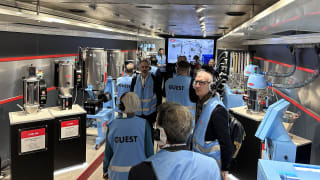
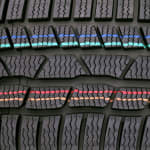
LANXESS rubber chemicals enable tire manufacturers to make production processes more stable and material-efficient, reduce their environmental footprint and increase the efficiency of modern tires. (Photo: Lanxes)