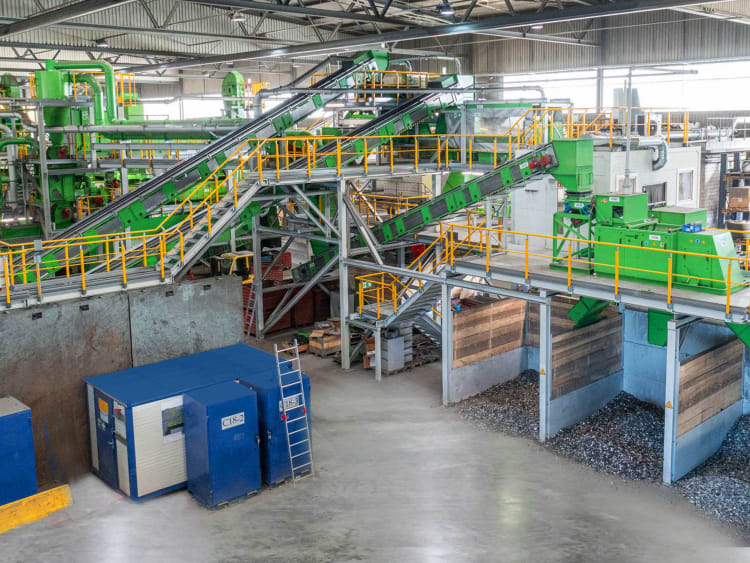
Electronic waste has become the fastest-growing waste stream worldwide, influencing market conditions and investment decisions across the recycling sector. Against this backdrop, weeeSwiss Technology AG, a subsidiary of the Stadler Group and an early developer of Waste Electrical and Electronic Equipment (WEEE) recycling technology, identifies key forces that are defining the next phase of industry development. The company combines over three decades of experience in designing, building and operating e‑waste plants with detailed knowledge of commodity markets and regulatory frameworks. Its activities within the Stadler Group span advanced process engineering, machinery selection and the delivery of turnkey plants, supported by digital tools and a strong focus on operational safety.
For CEO Jochen Apfel, the focus on e‑waste dates back to his initial training as an energy systems electronics technician. He recalls that many devices could not be repaired economically, which prompted him to look for systematic recycling solutions. That early motivation now underpins the role of weeeSwiss within Stadler, where the objective is to convert mixed end‑of‑life equipment into high‑purity output fractions that can be reintroduced into manufacturing value chains. The company observes that rising e‑waste volumes are being matched by increasing demand for recycled materials, including metals and plastics, while regulatory developments and safety requirements are pushing operators toward more sophisticated processing concepts.
According to Apfel, market demand is shifting from primary resource extraction to so‑called urban mining, with manufacturers increasingly interested in incorporating recycled materials into new products. At the same time, the composition of e‑waste streams is changing, with more short‑lived, low‑value devices such as chargers, earbuds, small digital accessories and battery‑powered toys entering the market. This trend creates additional sorting complexity and can reduce the economic value of recovered fractions. Product design therefore has a direct impact on recycling performance and risk management, particularly with regard to lithium‑ion batteries and fire hazards.
Market trends: from urban mining to domestic processing capacity
weeeSwiss reports generally favourable conditions for e‑waste recycling, driven by continuously rising collection volumes and higher raw material prices. In this environment, e‑waste is increasingly viewed as a competitive resource stream. Apfel notes that the market is actively demanding recycled materials and that manufacturers are looking for reliable access to high‑quality secondary raw materials. This reinforces the importance of process routes that can deliver high‑purity metals and plastics at consistent quality levels.
However, the presence of short‑lived, low‑value products in the waste mix is a countervailing factor. These devices often contain smaller quantities of valuable materials and may be manufactured from a broader combination of plastics, metals and composites. As a result, they can lower overall yields and complicate downstream separation. To mitigate these effects, Apfel highlights the importance of upstream design decisions. Simplifying product structures, reducing the number of different materials and ensuring easy access to lithium batteries can materially improve recycling outcomes. Easy battery access is particularly relevant for fire prevention and for enabling safe, efficient removal prior to shredding or further process steps. Even when products do not meet these design-for-recycling criteria, weeeSwiss states that its process concepts are designed to handle batteries safely.
Regulatory developments, especially in Central and Eastern Europe, are another defining factor. Apfel points out that resource limitations and more restrictive trade conditions are reducing cross‑border material flows. Stricter rules on transboundary movements are making shipments more complicated and expensive, while some countries lack sufficient domestic recycling capacity. As a result, there is growing pressure to invest in national treatment infrastructure and to develop in‑country processing solutions that comply with regulatory requirements and reduce dependence on exports.
Higher prices for precious metals, particularly gold, are also having a direct impact on technology choices. Fractions that were previously considered too fine or too complex for efficient recovery are now being targeted with new process solutions. In response, weeeSwiss has developed a process capable of separating precious metals from very fine material fractions that were often lost in past operations. This is aimed at improving overall value recovery from WEEE streams and aligning process engineering with current commodity price structures.
Technology, digitalization and AI in modern e‑waste plants
The shift toward high‑quality recyclates is driving continuous development in sorting, detection and process control technologies. Apfel observes that technological progress is moving in a direction that allows recyclers to separate high‑purity fractions earlier in the treatment chain than was previously possible. Early separation of metals, plastics and critical components can enhance plant efficiency, reduce contamination and improve final product purity.
Digitalization is another central element of plant design. It is now possible to establish mass balances not only during process development but also to calculate and update them automatically in real time with the support of artificial intelligence. Within the Stadler Group, this is implemented through the Stadlerconnect digital platform. The system uses AI to support predictive maintenance, materials analysis, mass balance calculations and energy consumption optimization. For plant operators, this enables closer monitoring of throughput, quality and equipment status, as well as the potential to reduce unplanned downtime and improve overall resource efficiency.
Safety remains a priority throughout these technological developments, especially because lithium‑ion batteries in WEEE streams present a significant fire and explosion risk. weeeSwiss and Stadler have developed integrated safety concepts that combine preventive measures, controlled handling and automated emergency response. In the modular process architecture used by weeeSwiss, large batteries are separated in an early stage referred to as Module 1. For smaller batteries, the company designs pre‑shredders in such a way that the batteries remain as intact as possible, reducing the likelihood of thermal events during size reduction.

If a battery does catch fire, a dedicated fire detection system activates an extinguishing system and diverts the affected material directly into a safe bunker. In addition, an explosion suppression system is used in cases where explosive materials have not been removed during previous sorting steps. weeeSwiss states that it is also working on solutions for automatic battery separation in combination with manual sorting, with the aim of further reducing risk and increasing process stability.
Combined expertise and global reference projects
The cooperation between Stadler and weeeSwiss brings together Stadler’s long experience in designing and building turnkey sorting and recycling plants with the WEEE‑specific know‑how of weeeSwiss. This combination is used to provide fully integrated solutions that address both the technical and operational requirements of modern e‑waste recycling. The approach covers plant layout, mechanical and process design, equipment specification, installation and commissioning, as well as operator training and ongoing optimization.
According to the companies, this model has supported projects in Europe and the United States and is now facilitating further expansion in South America, Africa, Asia, the Middle East and Australia. One example is the high‑performance plant built for Immark AG in Regensdorf, Switzerland, described as the largest e‑waste sorting facility in the country. The plant is reported to set new benchmarks in terms of throughput, purity and fire safety, and serves as a reference for future installations. A video presentation of the facility is available online.
Outlook: automated battery lines and direct‑use recyclates
Looking ahead, weeeSwiss sets out a clear strategic objective within the Stadler Group. Apfel states that the companies aim not only to maintain their technology position but also to become the leading suppliers of e‑waste plants in the global market. A key step in this direction is the commissioning of the first automated sorting household battery recycling line developed by weeeSwiss, which is described as the largest and most modern of its kind in Europe. The line is expected to significantly increase battery recycling rates and improve the quality of recovered fractions.
In parallel, weeeSwiss is working on process concepts that target direct use of recyclates in manufacturing. The long‑term goal is to produce output materials from e‑waste plants at such a high quality level that they can be sold directly to manufacturers without additional intermediate refining steps. This would strengthen the role of WEEE recycling within the circular economy by closing material loops more tightly and reducing reliance on primary raw materials.
Within the Stadler Group, these activities are complemented by broader capabilities in mechanical and digital engineering. Stadler plans, produces and assembles sorting systems and components for the recycling industry, including ballistic separators, conveyor belts, trommel screens, label removers, bale dewiring units, steel structures and electrical switch cabinets for complete plants. Through Test and Innovation Centers in Europe, the company supports research and provides simulations of sorting processes to optimize performance before full‑scale deployment. The group’s long‑standing family ownership is reflected in a stated commitment to quality, reliability and social responsibility, which forms the backdrop for ongoing investment in recycling technologies and digital tools.
weeeSwiss, for its part, operates as an international provider of turnkey WEEE recycling facilities, offering full Engineering, Procurement and Construction (EPC) services. The company’s remit covers requirement analysis, process design, installation and commissioning, alongside tailored training programmes that aim to ensure safe and efficient operation in line with recognised industry practices. Drawing on insight into global commodity markets and an international partner network, weeeSwiss focuses on maximizing value from recovered precious metals, non‑ferrous and ferrous fractions and high‑grade plastics, while supporting customers in meeting regulatory, sustainability and market expectations for responsible e‑waste management.