The Wacker Group is presenting new silicone-based additives for composites at this year's Jec World 2026 trade show. The portfolio includes two impact modifiers, Genioperl W37 and Genioperl W38, designed for thermosetting resins such as epoxies and vinyl esters, as well as the silicone compound Powersil Resin 710 for manufacturing high-temperature molded parts. Jec World takes place in Paris from March 10 to 12.
Impact modifiers improve the resistance of composites to impact and shock, which is crucial in applications requiring high mechanical reliability, fatigue resistance and retention of properties at low temperatures. In the case of Genioperl W37 and Genioperl W38, the development goal was to increase the durability and performance of thermosetting resin systems while simplifying processing and minimizing the influence of the additives on viscosity and heat resistance of the material. Wacker also emphasizes the environmental aspect, stating that the content of cyclic compounds has been significantly reduced in both products. The modifiers disperse easily, are compatible with organic resin systems and are effective even at low dosages, and their incorporation can be carried out using simple stirrers or rotor–stator systems without significantly changing the mechanical or thermal properties of the cured composites.
Impact modifiers Genioperl W37 and W38
Genioperl W37 and Genioperl W38 have been developed to improve the impact strength of composites based on thermosetting resins, in particular epoxy and vinyl ester systems. Both products use a specially designed molecular structure based on a functional silicone building block, which promotes controlled phase separation and the formation of nanometer-scale elastomeric domains within the resin matrix. This microstructure increases the ductility and impact resistance of the composite, reducing the risk of cracking under dynamic loading.
Thanks to these properties, Genioperl W37 and Genioperl W38 are intended for demanding applications in composites, adhesives and coatings where mechanical reliability, resistance to material fatigue and good performance at low temperatures are important. Both additives are characterized by easy dispersion in typical organic resin systems and high modification efficiency at relatively low dosages.
Genioperl W37: improved impact strength at low temperatures
Genioperl W37 is intended to improve the impact strength of polymer systems based on thermosetting resins, particularly in low temperature ranges. The recommended dosage level in thermosetting resin systems is from 2 to 8 percent by weight relative to the unfilled resin–hardener system or polymer formulation.
Due to the low additive loadings, the impact on the viscosity of reactive resins and on the glass transition temperature of the cured products is practically negligible. To achieve optimum dispersion, the manufacturer recommends a processing temperature of at least 50 °C. Such conditions facilitate homogeneous distribution of the modifier in the matrix and promote the formation of the desired elastomeric domain structure.
Genioperl W38: impact strength and foam reduction
GenioperlW38, like Genioperl W37, increases the impact strength of polymer systems based on thermosetting resins at very low temperatures. The recommended additive level for such systems is also in the range of 2 to 8 percent by weight.
A key feature distinguishing Genioperl W38 is the presence of additives that reduce foaming. This is particularly important in casting processes carried out under reduced pressure, where the formation of gas bubbles in the resin mass can lead to defects in the product and a reduction in its mechanical and dielectric properties. Thanks to the built-in defoaming functionality, Genioperl W38 helps to obtain a homogeneous, pore-free composite structure.
Powersil Resin 710 for high-temperature components
The industry is increasingly facing the need to manufacture structural components with high mechanical strength that are capable of long-term operation at temperatures above 200 °C. Wacker offers a material solution for such applications in the form of the silicone compound Powersil Resin 710. Using this material, molded parts can be produced by compression molding, pressure gelation or even injection molding.
Powersil Resin 710 is intended for the production of components in thermal class R, which can withstand temperatures of up to 220 °C for extended periods. As a result, the material is an alternative to high-temperature polymers such as PTFE, polytetrafluoroethylene, and PEEK, polyetheretherketone. Components manufactured from this compound are characterized by good electrical insulation properties, high mechanical strength and UV resistance.
The material is solvent-free and is not subject to classification and labelling requirements. Its low viscosity facilitates processing in standard molding operations. Powersil Resin 710 is available in two variants: a peroxide-curing grade for the production of finished, heat-resistant parts and a grade that cures with small quantities of a standard silicone catalyst.
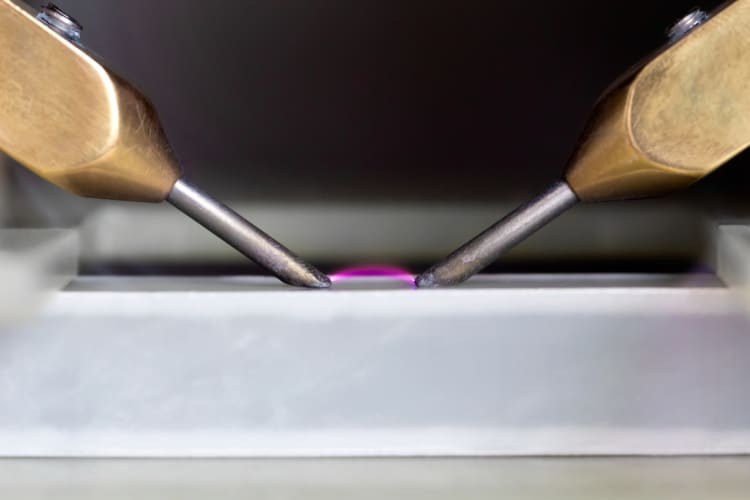
Wacker is presenting at Jec World 2026 the silicone compound Powersil Resin 710 for manufacturing molded components in thermal class R
Other additives and binders for the composites industry
In addition to the new impact modifiers and the silicone compound for high-temperature components, Wacker is also showcasing other additives and binders for the composites sector at Jec World 2026. The portfolio includes SILRES silicone resins, which improve electrical insulation properties and enhance the flame retardancy of composite materials. Another product group is HDK pyrogenic silica, used for precise rheology control in resin systems.
The solutions on display also include Vinnapas low-profile additives, which reduce processing shrinkage and improve the dimensional stability of composites, as well as Geniosil organofunctional silanes for adhesion promotion and for surface modification of fillers and fibers. These products address the needs of composite manufacturers seeking materials with enhanced mechanical, dielectric and fire properties while maintaining the ability to process them in standard industrial operations.
Wacker invites visitors to Jec World 2026 to booth 5N142, where the full range of additives and binders for the composites industry is presented.