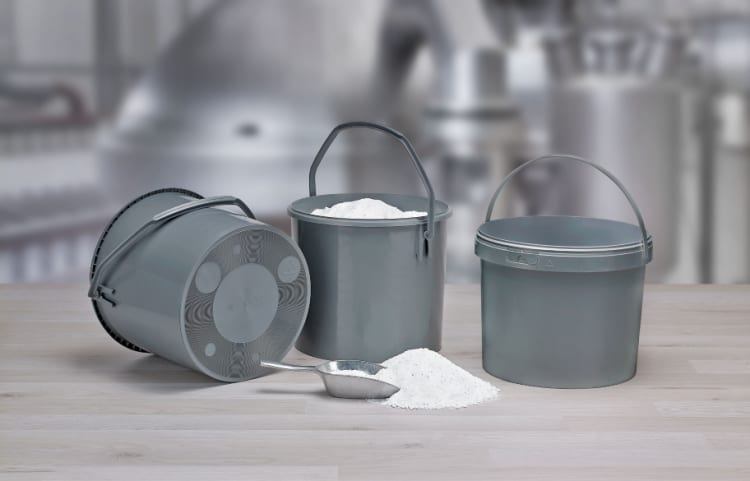
Amcor, a global packaging producer, has obtained UN certification for 5.5-liter and 5.8-liter industrial containers manufactured at its plant in Pamplona, Spain. The containers contain 50% post-consumer recycled plastic, combining safety requirements for hazardous substances with growing market expectations for more sustainable packaging.
UN-approved packaging is designed to prevent leaks and limit exposure to hazardous substances, which is important for protecting people, property and the environment. The certification granted to Amcor's containers enables their use for the safe storage and transport of solid and powdered dangerous goods in sectors such as chemicals, pharmaceuticals, medical and automotive. The manufacturer expects particularly strong demand for the containers in the segment of swimming pool chemicals and water treatment products.
The use of 50% PCR content in the container design allows the company to address customer requirements for more sustainable packaging solutions and helps enterprises comply with current and upcoming EU and national packaging regulations. This refers in particular to rules on recycled content levels, design for recycling and documentation of the origin of secondary raw materials.
The Pamplona plant, like other European Amcor factories in Besançon and La Genête in France and in Lubien in Poland, holds RecyClass certification. This enables selected non-food packaging to be labelled with the RecyClass mark, which verifies claims related to recyclability and the share of recycled plastics in the final product. For industrial customers, this means greater supply chain transparency and the ability to reliably report environmental performance indicators.
The Amcor representative stresses that combining safety requirements with sustainability objectives is a key direction in the development of the offer for industries using hazardous substances. Ignacio Igea, sales director industrial for Spain, Portugal and Italy at Amcor Rigid Packaging Solutions International, stated that the UN approval obtained may bring tangible benefits to a broad group of companies in Europe. In his view, companies seeking to increase the share of recycled material in packaging cannot at the same time compromise on key performance parameters of containers, especially for hazardous goods. He pointed out that the UN containers with PCR content maintain the required level of safety and reliability, meeting the strict criteria of UN approval procedures.
Characteristics of SuperLift Extra and SuperFlex containers
The UN certification covers two container types: the 5.5-liter SuperLift Extra and the 5.8-liter SuperFlex. Both solutions combine a reinforced structure with product security and optimized use of storage space. From the user's perspective, the reduced noise level on filling lines is also important, resulting from the appropriately designed geometry and wall stiffness.
The containers feature a lightweight construction, which facilitates manual handling and transport while maintaining the strength requirements associated with UN certification. The manufacturer offers various decoration options, enabling the application of product information and visual identification tailored to the needs of industrial customers and the regulations governing the labelling of hazardous substances.
The SuperFlex model can be equipped with a child-resistant closure designed to prevent children under 51 months from opening the container. At the same time, the solution is intended to ensure easy access for adult users, including seniors. This type of functionality is important for chemical products used in domestic or residential environments, where the risk of children coming into contact with the contents of the packaging is a particularly sensitive safety issue.
By combining UN certification, a high PCR content and compliance with RecyClass guidelines, the new Amcor containers can be used as part of sustainability strategies in companies from the chemical, pharmaceutical, medical and automotive sectors. For manufacturers of chemical products, including swimming pool care preparations, they offer the possibility to increase the level of packaging safety while documenting the reduction in the use of virgin raw materials.