Tosca points out that packaging in supply chains is no longer perceived solely as a purchasing decision. According to the company, it is increasingly recognised as an element of infrastructure that directly affects operational performance, process resilience and the achievement of environmental goals. This shift in approach is said to be driven by rising operating costs, advancing automation, more stringent regulatory requirements and the need to increase supply reliability. In this perspective, what matters is no longer only the price of an individual load carrier, but also its impact on the entire operating system. Tosca believes that this is why the pooling model is beginning to play the role of a solution that enables reusable packaging to be scaled and integrated into supply chain infrastructure. Companies are now analysing not only the purchase cost of pallets, crates or containers, but also their impact on handling, hygiene, efficiency, product protection, transport, regulatory compliance and sustainability.
In this approach, Total Cost of Ownership across the full packaging lifecycle is becoming increasingly important. From Tosca's perspective, reusable packaging pooling systems make it possible to build a more predictable cost model while also supporting efficiency improvements over the longer term. The company stresses that, for many organisations, this means a change in how packaging is viewed, it is no longer treated as a consumable item, but as an operational asset supporting process continuity and value creation. Vincent Nagels, Managing Director of Upstream at Tosca, states: "Companies are no longer focused solely on purchase price. They are analysing the total value that packaging delivers across their operations. When handling, product protection, operational efficiency and long-term costs are taken into account, load carriers are no longer merely a means of transporting goods. They become critical infrastructure for efficient and reliable supply chains."
Standardisation and operational performance
One of the main mechanisms through which pooling is expected to improve supply chain performance is standardisation. Uniform dimensions, asset quality and consistent specifications reduce handling issues, increase operational efficiency and support workplace safety. The importance of this aspect is growing as processes become more automated, from unloading and storage to picking and packing. Automated environments require packaging that performs consistently and reliably. Differences in dimensions, weight or technical condition can cause stoppages, jams and reduced productivity, whereas reusable plastic load carriers are intended to support smoother flow and more stable operation of automated systems.
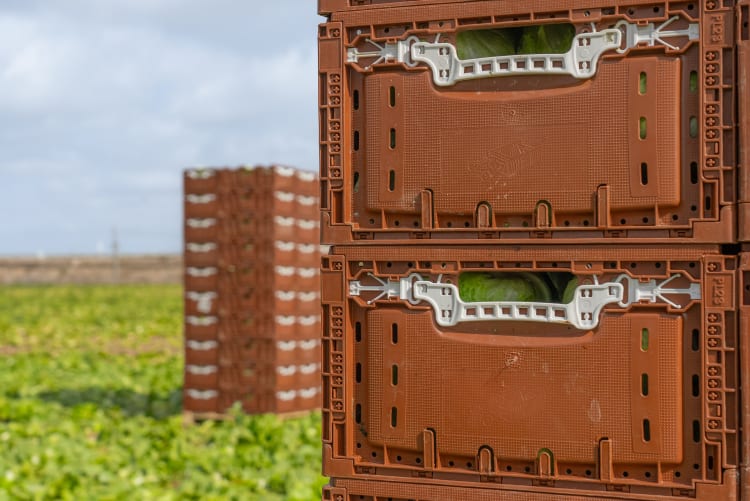
The benefits identified by the company are also expected to be visible in retail. Reusable crates and pallets can facilitate shelf replenishment, reduce packaging waste in back-of-store operations and simplify storage in outlets where available space is often limited. Once emptied, collapsible crates can be folded and stored quickly, which is expected to reduce the time staff spend handling empty packaging. Systems of this type also support product protection and food safety. Durable plastic crates maintain their structure in humid environments or where temperatures fluctuate, helping to protect fresh products and meet food safety requirements. In addition, ergonomic solutions can make handling easier and reduce strain on workers in high-throughput environments.
Flexibility based on the pooling network
Tosca emphasises that the real value of pooling results not only from the standardisation of the load carriers themselves, but also from the network behind their circulation. Instead of purchasing, storing and independently managing large volumes of pallets, crates or containers, companies can access the load carriers they need, where and when they need them. This flexibility is particularly important during seasonal demand peaks or periods of supply chain disruption. By balancing demand between industries and locations, pooling service providers can help customers absorb fluctuations without the need to purchase additional packaging assets.
As Vincent Nagels indicates: "The real value of pooling goes far beyond providing reusable load carriers. By balancing demand between industries and locations, pooling providers help customers cope with seasonal peaks and supply chain fluctuations, ensuring the availability of load carriers where and when they are needed most."
Regulatory compliance and environmental goals
The company believes that regulations are an additional factor accelerating the transition to reusable systems. Requirements related to PPWR and EPR are increasing pressure on businesses to reduce waste, improve recyclability, increase the level of reuse and better control packaging flows. In this environment, reusable packaging pooling is intended to provide a practical route to compliance.
Keeping load carriers in circulation through repeated cycles of use is intended to help companies move from an approach focused mainly on recycling towards more circular packaging systems, while at the same time incorporating compliance requirements into everyday operations.

Direction of development for pooling systems
According to Tosca, the next stage in pooling development will be linked to deeper integration, digitalisation and automation. As retail and logistics networks become more interconnected, pooling systems are expected to become more deeply embedded in supply chain structures, supporting the reduction of unnecessary transport, improved service quality and lower operating costs in increasingly automated environments.
Digital asset management is also expected to become standard. Processes using artificial intelligence may support, among other things, sorting, inspection and repairs. For companies handling high-volume flows, this means easier control, scaling and optimisation of pooling systems. Marco Gonzalez, Managing Director for Central Europe at Tosca, comments: "As supply chains become increasingly connected and performance expectations continue to rise, reusable pooling systems are likely to become more strongly embedded within the networks they serve. The discussion will move beyond packaging itself and focus on how companies build the physical infrastructure needed to support efficient, resilient and scalable supply chains."