Farmavita, one of the leading Italian manufacturers of professional hair care cosmetics, has implemented Sidel's EvoBlow stretch blow moulding solution in its production line. The objective of the project was to switch from HDPE containers to PET bottles in its professional product range for hairdressers and salons, while improving the quality, functionality and appearance of the packaging. The family-owned company, active for more than thirty years at its industrial site near Milan and present in forty countries, places particular emphasis on the aesthetics and tactile properties of its containers as a key element of brand perception.
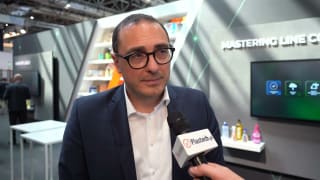
Manuel Ferrarotti, Chief Operating Officer at Farmavita, stresses that the implementation of PET bottles was intended to change the packaging material and improve operational efficiency. The company aimed to use the lower blowing temperatures typical of PET to reduce its carbon footprint and energy consumption. At the same time, by introducing in-house stretch blow moulding of PET preforms, Farmavita wanted to simplify logistics, reduce the need for storage of finished packages and increase control over bottle parameters.
An additional challenge was the nature of the products being packed. The selected cosmetics contain hydrogen peroxide, which, under specific transport and storage conditions, can lead to an increase in internal pressure in the bottle and deformation of the base of standard HDPE containers. In this context it was necessary to develop a bottle design that offers high mechanical resistance and dimensional stability so that the packaging maintains its shape both on the production line and on the store shelf.
Packaging colour and the impact of TiO2 on the blow moulding process
To obtain a consistent white colour and repeatable appearance of the packaging from production through to point-of-sale display, Farmavita uses preforms containing a white pigment based on titanium dioxide (TiO2), commonly used in the food industry for its opacity and colouring properties. The use of such a pigment, however, affects the blow moulding process and poses two key technological challenges.
Firstly, the addition of TiO2 makes the preform more difficult to stretch correctly and requires a longer heating time in the oven, while strictly controlling temperature in order to avoid overheating the material. Secondly, the finished bottle must show a uniform wall thickness distribution and resistance over its entire surface, particularly in the base area. This is crucial to withstand potential increases in internal pressure inside the bottle associated with hydrogen peroxide reactions, especially at elevated temperatures that may occur during summer transport and storage.
Blow moulding parameters and EvoBlow configuration
In cooperation with Sidel, Farmavita has benefited from the supplier's experience in blow moulding different types of PET resins, including virgin PET, rPET, bottles for one-way and returnable filling, and transparent and opaque, mono- and multilayer containers. For the production of 1 L white bottles, the company selected the standard SBO 6 EvoBlow model with an output of 7,200 bottles per hour.
Farmavita took advantage of the modular design of the blow moulder by extending the oven with two additional heating modules. This modification made it possible to increase the preform heating time while reducing the temperature, which supports better stretching and a more homogeneous material distribution during the moulding of TiO2-coloured preforms. With this configuration, the required oven ventilation was reduced, resulting in approximately 10% lower energy consumption in the heating process. In addition, the oven is equipped with an air recovery system that has reduced process air consumption by 30%.
Extending the oven with additional heating modules increased its length, which, given the limited space in the existing production line, required a modification of the machine layout. Sidel specialists optimised the blow moulder configuration by integrating a compact, customised preform feeder. This solution allowed the entire blowing system to be installed in a very limited area without reducing performance. The feed rail was also adapted to the small support ring of the selected preform neck finish.

Bottle base design and resistance to hydrogen peroxide
A key element of the project was the development of a new bottle base to increase the packaging's resistance to hydrogen peroxide and the associated potential pressure build-up. The base design supplied by Sidel features a reinforced structure that minimises the risk of the bottom collapsing or deforming. As a result, the container offers higher stability, which is important during transport and palletising as well as in display in hairdressing salons and retail outlets.
Before installing the blow moulder at the Farmavita plant, the Sidel team carried out dedicated test sessions at the Packaging Centre of Excellence in France. The focus was on feasibility tests to define the optimal blow moulding process using specific preforms and colouring parameters. The trials included, among other aspects, the selection of stretching and blowing conditions in the context of the biaxial orientation of the preform and the validation of key mechanical properties of the finished bottles.
This approach enabled early qualification of packaging parameters before the equipment was delivered to the production site. As a result, the industrial line start-up process was shortened and the risk of later corrections to the production conditions was reduced. Farmavita was able to start bottle production under conditions close to the target ones, with process settings already verified.
Project summary and Farmavita's future plans
Summarising the implementation, Manuel Ferrarotti highlights the importance of cooperation with the technology supplier in view of the specific requirements related to coloured PET and material distribution in the bottle. He notes that, thanks to collaboration with Sidel experts, it was possible to develop a solution that meets the requirements in terms of colouring, mechanical properties and packaging aesthetics. The result is a higher quality bottle, offering improved performance as well as visual and tactile properties that are important for end users in the professional hair care segment.
Ferrarotti also indicates that Farmavita is considering extending the range of formats produced in-house. Among the potential development directions is the introduction of 100 ml bottles into production, which would reduce dependence on external converters. Such a change could further contribute to lower packaging and transport costs while providing greater flexibility in designing and managing the packaging portfolio.