Emirates Biotech, together with Heriot-Watt University and the United Arab Emirates University (UAEU), has concluded a student competition for the design of the company's future headquarters. In recent months, 17 teams of architecture and engineering students from both universities prepared and submitted their proposals. From the five projects shortlisted for the final, a winning concept was selected, which is to become the basis for further work on the company's new office building.
The aim of the competition was to rethink the company office space from the perspective of sustainability, innovation and a circular economy. This aligns with a broader trend in the design of office buildings and laboratory facilities for the biotechnology sector, where requirements are increasing regarding energy efficiency, resource optimization and integration with the surroundings. The students' proposals were evaluated by a jury composed of representatives from Capital Engineering, AECOM and the Emirates Biotech management team. The assessment took into account architectural quality, functional solutions, regulatory compliance and feasibility.
Award-winning design from UAEU
The winning team from the United Arab Emirates University (UAEU) was recognized for a coherent architectural concept, efficient functional zoning and a high level of regulatory compliance. The design optimizes the core layout of the building in terms of access to daylight and user circulation with minimal structural modifications, which reflects Emirates Biotech's vision of a sustainable headquarters.
This approach is practically relevant for planning research, development and administrative facilities in the chemical and biotechnology sectors. Optimizing access to natural light, carefully designed internal circulation and reducing interference with the load-bearing structure of the building help to limit energy consumption and support flexible workplace configuration over the life cycle of the facility.
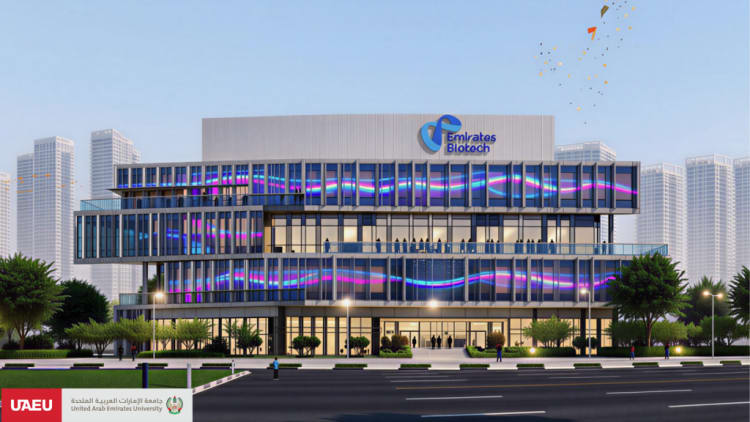
Winning Emirates Biotech headquarters design prepared by the team from the United Arab Emirates University (UAEU), College of Engineering
Second place for the Heriot-Watt University team
The team from Heriot-Watt University took second place, presenting a refined and compliant structural concept with significant development potential. With adjustments to the internal layout to maximize space efficiency and accessibility, this design can form the basis for creating a headquarters characterized by rational resource management and full alignment with Emirates Biotech's sustainability objectives.
The evaluators emphasized that both finalist projects address key issues related to shaping energy-efficient office buildings, including rational planning of functional zones, organization of technical installations and the potential for integrating solutions that support circular economy principles in the operation of the facility.
Importance of industry-university cooperation
Christophe Miegeville, Project Delivery Officer at Emirates Biotech, highlighted the role of both universities' involvement in the design process. He noted that the quality of the submissions was very high and that the final vision of the company's headquarters results from combining multiple ideas and perspectives. In his assessment, the greatest potential lay in drawing inspiration from the students' creativity and combining rich local heritage with diverse international viewpoints. According to him, this approach makes it possible to develop architectural solutions that are better adapted to the real needs of users and the company's long-term objectives.
Professor Kheira Tabet Aoul, head of the Architectural Engineering program at UAEU, drew attention to the practical dimension of student participation in the design of the Emirates Biotech headquarters. She stressed that working with a real industry partner, under actual design constraints and with continuous feedback from professionals, was a valuable experience and significantly strengthened the students' preparation for future professional practice. In her opinion, this initiative demonstrates the importance of practice-based learning and confirms the value of long-term cooperation between universities and industry in preparing graduates for market challenges.
Dr Hassam Chaudhry, Associate Professor and Director of Studies (Dubai) in Architectural Engineering at Heriot-Watt University, underlined the importance of giving students the opportunity to participate in a real-life project. He pointed out that the competition participants worked in multidisciplinary teams including architects and engineers, and carried out the assignment in a manner consistent with professional market standards. From an academic perspective, it was particularly important to demonstrate in practice the benefits of collaboration between industry and the research community.

Winning team from UAEU: Khadeja Al Hadhrami, Reema Al Marzooqi, Suada Al Mansoori with their academic supervisors from the United Arab Emirates University
Continued partnership for a sustainable economy
The organizers emphasize that the competition marks the beginning of a long-term cooperation between Emirates Biotech and the academic community. The company assumes that the implementation of the new headquarters, based on selected solutions developed in the competition, will directly support the priorities of the United Arab Emirates in developing a knowledge-based economy and sustainable investments. Initiatives of this kind may in future become an important element of cooperation between universities and industries using advanced technologies, including chemistry, biotechnology and related industrial sectors.