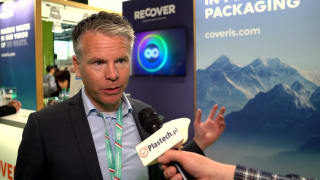
Based on an expert commentary by Krzysztof Wiśniewski, Chairman of the Management Board of Eurocast
The debate on extended producer responsibility in Poland is largely focused on future fee levels. However, the analysis presented by Circpack by Veolia, prepared for Europen and covering the 27 European Union member states, shows that the effectiveness of EPR systems is determined primarily by their design, transparency and the way funds are reinvested. For packaging producers, this is particularly important in the context of implementing the PPWR regulation, which will apply across the European Union from August 2026 and will introduce further recycling and recycled content requirements in subsequent years. The study's conclusions indicate that the EPR system should support investment and the development of solutions aligned with the circular economy, rather than being limited to imposing additional costs on businesses.
The commentary was authored by Krzysztof Wiśniewski, president of the management board of Eurocast. The material emphasises that, for the packaging industry, not only the fee levels themselves matter, but also whether the system creates predictable investment incentives and whether the collected funds actually strengthen collection, sorting and recycling capacity. A comparison of data from different EU countries shows significant differences in organisational models and fee levels, but also clearly indicates that high costs borne by producers do not automatically translate into better environmental outcomes.
Higher fees do not guarantee higher recycling
Europen's analysis shows major differences in fee levels between member states. In multi-operator systems, fees for plastics range from EUR 0.071/kg in Greece to EUR 1.64/kg in Sweden, which represents a 23-fold difference.
At the same time, Sweden achieves a packaging recycling rate of 68.5%, while Germany, where fees are also among the highest in Europe, EUR 1.21/kg for plastics, reaches 69.4%. Spain, by contrast, with fees of around EUR 0.61/kg, achieves a packaging recycling rate of 70.5%.
These data indicate that an increase in costs alone does not automatically improve system efficiency. Countries achieving high recycling rates show that a well-designed model can deliver good results even with moderate fee rates. In practice, this means that EPR reform should be assessed not only through the prism of the financial burden, but also through the efficiency of fund allocation and the environmental outcomes achieved.
The importance of eco-modulation
The material indicates that the strongest correlation with recycling performance is shown by the degree of detail in eco-modulation. Countries applying the most advanced fee differentiation systems, Belgium, France, Germany, Italy and the Netherlands, achieve an average packaging recycling rate of 73.9%. Countries applying only basic fee differentiation remain at 57.4%.
The difference amounts to 16.5 percentage points. The examples cited show that the Belgian Fost Plus system differentiates fees for 19 categories of plastics, while Italy's Conai applies nine categories for plastic packaging alone. This model is intended to provide businesses with a real economic incentive to design packaging in line with Design for Recycling principles.
From a packaging producer's perspective, this direction means a more precise impact mechanism than simply raising rates. Industry needs predictable investment signals that support design and technological changes.
Transparency and system performance
The report also indicates a link between system transparency and recycling performance. Countries classified in the highest transparency group achieve an average packaging recycling rate of 69.6%, while countries with the lowest transparency reach 56.2%. The difference is therefore 13.4 percentage points.
The biggest gap was identified as the lack of transparency regarding the subsequent flow of funds. Producers know the level of fees they pay, but in most European countries they do not have full information on what share of this money goes to sorting plants, recycling facilities, local authorities or educational activities.
From the perspective of the companies financing the system, this is a fundamental issue. Transparency in fund management can affect both the assessment of system efficiency and business willingness to accept its assumptions.
Infrastructure as the main challenge
The commentary stresses that one of the most important problems today is not the fee level itself, but infrastructure. Eleven EU countries still send more than 30% of municipal waste to landfill. The figure is around 80% in Greece, around 70% in Romania, and around 60% in Spain and Portugal.
By comparison, Germany, Belgium, the Netherlands, Denmark and Austria landfill less than 5% of municipal waste. These are the countries with well-developed collection, sorting and recycling infrastructure that achieve the best recycling results.
Flexible packaging remains a particular challenge across the EU. Adjusted recycling rates for flexible plastics remain many times lower than for rigid packaging. Even in Germany, the actual recovery rate for flexible PE packaging is around 24%, and for PP only 13%.
According to the conclusions presented, without new investments in sorting and recycling, it will not be possible to meet the PPWR requirements for recyclability at scale.
Conclusions for Poland
The material indicates that there is no single ideal organisational model for EPR. Single-operator systems achieve an average recycling rate of 71.8%, competitive systems 62.2%, and state-managed models 47.4%.
Regardless of the organisational structure, however, the best results are achieved by countries with three shared characteristics, high-quality data, transparent governance and effective eco-modulation mechanisms. From the packaging industry's point of view, this means that extended producer responsibility should not be treated as another tax, but as a tool for building real recycling capacity, increasing the availability of secondary raw materials and supporting the investments needed to achieve circular economy goals.
In summary, Krzysztof Wiśniewski concludes that