From the perspective of Universal Robots, 2025 confirmed the continued potential for further development of robotics in Poland. Market data and survey results show that collaborative robots are becoming an important tool for increasing innovation, competitiveness and continuity of production processes, including in the plastics sector. At the same time, despite a still lower robot density than in some countries in the region, the pace of automation in Polish industry is higher than in neighbouring Central and Eastern European states. Growing interest can also be seen in the practical use of artificial intelligence in combination with robotics, with Polish companies’ expectations regarding measurable outcomes of implementations higher than the average for the EMEA region.
Structure of robotisation and the role of the plastics sector
According to the World Robotics 2025: Industrial Robots report by the International Federation of Robotics (IFR), the main drivers of robotisation in Poland remain automotive, metalworking and the plastics and chemical sectors. Automotive accounts for 32% of new installations, metalworking for 15%, and the plastics and chemical sector for 13%. Universal Robots’ market data indicate that in 2025 demand for cobots increased markedly in the plastics, metal and food sectors, reflecting the growing role of collaborative robots in different branches of industry.
IFR points out that the most frequently installed applications are dominated by material handling operations, which represent 68% of deployments, and welding, which accounts for 12% of installations. Universal Robots simultaneously observes rising interest in cobots used for quality inspection and palletising. Such solutions follow the trend towards fast, scalable implementations with a relatively short payback period, which is important both for large plants and for SMEs.
In 2025 the Polish market maintained solid investment activity in automation. Universal Robots recorded stable demand for robotic solutions, especially in the largest manufacturing companies. Enterprises from the SME sector, which had postponed investment decisions in previous years, are increasingly returning to discussions about robotisation. Rising labour costs and labour shortages are now prompting them to seek tools that make it possible to maintain or increase productivity, including through the deployment of collaborative robots.
Safety, functionality and complete solutions
In industries with high quality and regulatory requirements, including automotive and the production of plastic components, safety remains the key criterion for cobot implementation. This is emphasised by Tomasz Sernicki, Sales and Marketing Manager at integration company Drim Robotics, a Universal Robots partner.
"In the case of cobot implementations in the automotive industry, safety remains the key criterion, as these are solutions designed for direct collaboration with people. Therefore, customers analyse all formal aspects of the use of collaborative robots in great detail, ensuring full compliance with applicable regulations while maintaining the required functionality of the application" says Tomasz Sernicki, Sales and Marketing Manager at Drim Robotics, a Universal Robots integration partner. "The second issue is ease of use. On a production line, a cobot should act as a tool, flexible, easy to adapt to changing conditions, intuitive to operate and not requiring specialist knowledge" adds Sernicki.
More and more often, customers are looking not for standalone devices but for complete solutions that verifiably improve specific process segments, including the final stage of production. This is observed by Grzegorz Kucia, Robotics Sales Manager at Intrex.
"Customers today are not looking for single devices but for complete solutions that genuinely improve the final stage of production. When selecting cobots, they focus primarily on safety, process stability and impact on productivity, but just as often also on the human aspect, relieving employees from working with heavy products while at the same time organising and automating the palletising process" says Grzegorz Kucia, Robotics Sales Manager at Intrex.
Diversity of applications in industry and logistics
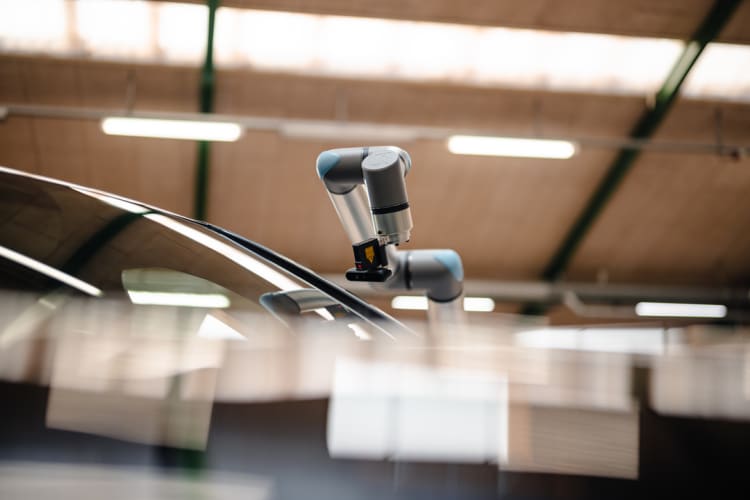
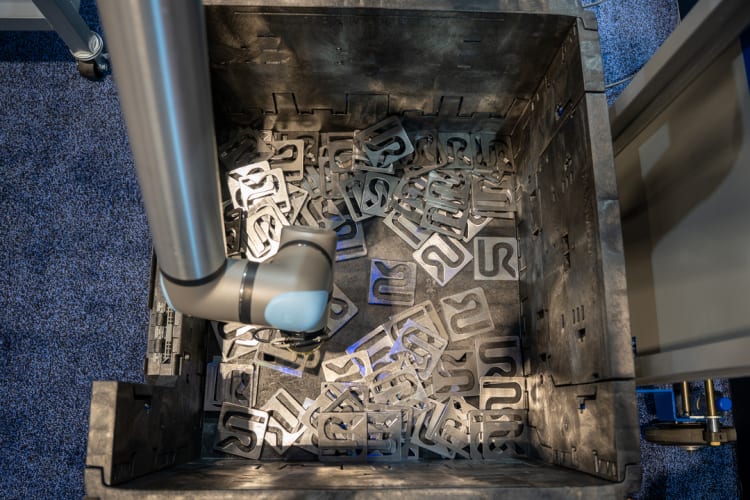
In 2025 cobot implementations in Poland were marked by considerable diversity. They covered both typical automotive applications such as assembly and tending of injection moulding machines or CNC machines in the plastics and metal industries, and R&D projects in new application areas. Growing interest is also visible in logistics, where the number of intralogistics and internal transport projects is increasing.
In this segment, MiR solutions and so‑called mobots, that is mobile cobots mounted on autonomous AMR platforms, play an important role. This configuration enables targeted support for selected production workstations and flexible response to the current needs of the plant, without the necessity of permanently assigning a robotic resource to a single operation.
The scale of diversity in projects implemented on the Polish market is described by Grzegorz Będkowski, Channel Development Manager at Universal Robots.
"The 2025 implementations were characterised by significant diversity. We carried out both typical automotive assembly applications and tending systems for injection moulding machines and CNC machines in the plastics and metal industries, and a pioneering R&D project for a company operating in the field of AI‑based prosthetics" says Grzegorz Będkowski, Channel Development Manager at Universal Robots. "Such a diverse group of customers shows that automation is finding applications in an increasing number of areas, and demand for intelligent industrial solutions is steadily growing. It also confirms the innovativeness of Polish industry, where new ideas and new sectors naturally translate into new robotic applications" concludes Będkowski.
Education as part of the robotics ecosystem
The education sector is becoming an increasingly important area of application for collaborative robots. Universal Robots cobots are now used at several dozen universities and in many secondary schools in Poland. New deployments in this area show a diversity similar to that observed in industry, ranging from standard training stations for learning robot programming and operation to use in space exploration projects.
Access to current automation technologies in schools and universities is an important element in preparing future staff for labour market requirements. Providing students and pupils with hands-on experience with cobots allows them to understand the practical aspects of human–robot collaboration, which in subsequent years can facilitate the deployment of automation in manufacturing companies.
Poland in the regional robotisation landscape
The IFR report provides data on the degree of technological transformation in Polish industry. Robot density in general industry in Poland stands at 81 robots per 10,000 employees, meaning the number of robots per 10,000 people employed in industry. This value is lower than in some countries in the region, such as the Czech Republic with 113, Slovakia with 71 and Hungary with 88 robots per 10,000 employees. The differences relate both to the automotive sector and to other branches of manufacturing.
At the same time, growth dynamics in Poland remain higher than in neighbouring countries. Between 2020 and 2024, robot density in Poland increased by 56%. For comparison, the increase was 33% in the Czech Republic, 20% in Slovakia and 43% in Hungary. These figures indicate that Poland is gradually closing the gap with more robotised economies in the region and that there is still significant potential for further development of automation in domestic industry.
In the opinion of Daniel Niepsuj, CEE Sales Lead at Universal Robots, the current level of robotisation shows that there is still considerable scope for productivity gains in Polish plants.
"The level of robotisation in Europe, including in our part of the continent, shows that Polish companies still have substantial untapped potential to increase productivity through automation. At the same time, they have a good understanding of the benefits of implementing it" says Daniel Niepsuj, CEE Sales Lead at Universal Robots. "This optimism is also visible in labour market forecasts. Polish leaders expect that by 2030 human–cobot collaboration will become standard for at least 25% of positions. This proves that awareness of the role of robots as tools supporting employees is increasing" adds Niepsuj.
Artificial intelligence in automation: expectations and practice
The Automation Status Report 2025 prepared by Universal Robots shows that Polish companies take a pragmatic approach to robotics and artificial intelligence. More than 61% of respondents in Poland state that they expect tangible, measurable results from AI‑enabled robotics implementations. This is significantly higher than the EMEA regional average of 53%.
The perception of the long‑term, transformative potential of artificial intelligence and machine learning in Poland is similar to that in other European countries. Over the next five years, 35.5% of Polish respondents expect these technologies to have a significant impact on their industries, compared with 38% of respondents in Europe. These figures suggest that differences between markets concern primarily expectations regarding practical outcomes of implementations, rather than assessments of the scale of upcoming technological change.
Combined with the observed growth in robot density and the expanding range of applications in industry, logistics and education, the findings of the IFR and Universal Robots reports indicate a systematic strengthening of the role of cobots and AI systems in Polish industry. In the coming years, companies’ ability to combine safety and functionality of robotic solutions with their measurable impact on process efficiency may be a key factor.