At the headquarters of CEAD Group B.V. in Delft, where large-format 3D printing systems are developed for the marine, construction and composite industries, additive manufacturing is combined with a circular approach. The company uses pellet-based extrusion technology, which enables the production of full-scale parts from fiber-reinforced thermoplastic composites, from complex molds and rapid prototypes to entire vessels. This production method offers high design flexibility and a shortened concept-to-product cycle, but at the same time generates significant amounts of waste in the form of rejected prints and prototypes. To close the material loop, CEAD has adopted plastics shredding technology from Weima.
At CEAD's Maritime Application Center, massive hull sections and other structures for the marine sector are produced. At this large scale, each new test print can mean tens or hundreds of kilograms of composites based on polymers reinforced with glass or carbon fibers. Rejected parts and prototype structures accumulate quickly, and their disposal by conventional methods proves time-consuming and costly. For a company focused on the development of 3D printing technology, it was necessary to find a solution that would enable efficient recycling of these materials and their reintegration into the manufacturing process.
3D printing waste as secondary raw material
Each iteration of a new industrial-format print is an attempt to push the limits of additive technology. This requires numerous trials and thus generates material waste. In the case of CEAD, these are mainly structures made of short-fiber thermoplastic composites in which the polymer matrix is reinforced with glass or carbon fibers. The scale of the parts, especially in marine applications, means that a single rejected print can weigh several hundred kilograms.
As the company points out, at such a volume of production residues, size reduction to dimensions suitable for further processing is crucial from both a logistics and potential recycling perspective. Properly prepared material can be reintroduced into plastics processing operations and used as feedstock for further applications instead of entering the waste stream.
Weima WLK 4 shredder in the CEAD line
After consulting with industry partners, CEAD decided to implement a Weima WLK 4 shredder in a single-shaft configuration with a 10 mm screen. The machine was selected to match the characteristics of the processed material, that is, fiber-reinforced thermoplastic structural components produced in the 3D printing process using pellets.
The WLK 4 shredder enables the size reduction of large-scale components into uniform flakes of around 10 mm. This fraction is a convenient intermediate product for further processing, including higher-level operations such as repalletizing. The durability of the machine and its uncomplicated operation have made it a permanent part of CEAD's additive manufacturing ecosystem, operating under industrial conditions with frequent use.
The shredded material fits into the closed-loop concept that CEAD is working on. The concept assumes a pathway from printing, through use or prototyping, to recycling and the return of the plastic into the cycle as feedstock for further prints. The use of shredding as an intermediate stage is one of the key elements of this material pathway.
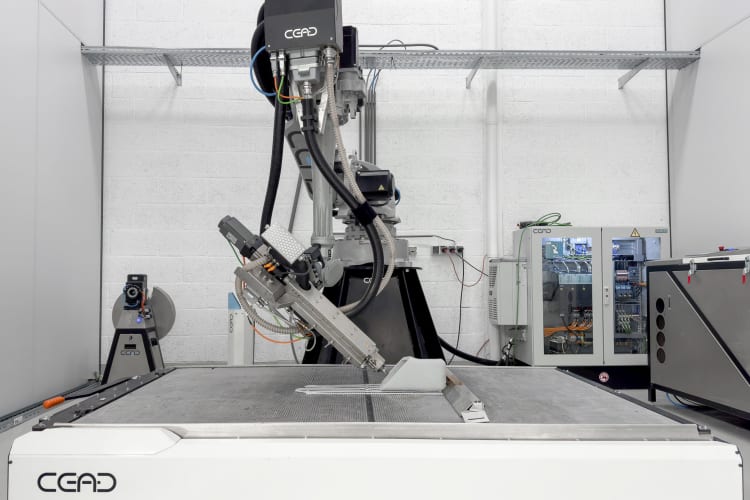
Large-format additive manufacturing cells at CEAD
Research on repalletizing reinforced composites
The next stage in closing the material loop is to develop a technology for regranulating the shredded plastic. Together with several Dutch R&D partners, CEAD is working on repalletizing flakes of short-fiber thermoplastic composites for use in pellet extrusion 3D printers.
According to the company, initial trials indicate that recycled material containing short reinforcing fibers can be transformed into new feedstock without significant deterioration in print quality. If these results are confirmed under industrial conditions, this will make it possible to reduce the consumption of virgin composite raw materials and decrease the amount of waste generated in large-format manufacturing processes.
This approach opens up new opportunities for sustainable additive production, in which fiber-reinforced composites are not treated as difficult-to-manage waste but as a resource that can be reused in the printing cycle. This model may be relevant not only for the marine industry but also for other sectors that use large-scale 3D printing technology.
The importance of equipment reliability in additive manufacturing
The Weima shredder has become an integral part of the workflow at CEAD, combining the recycling function with the requirements of operation in an industrial environment. According to the company's representative, the reliability and ease of use of the machine are crucial when it is frequently used in a production line.
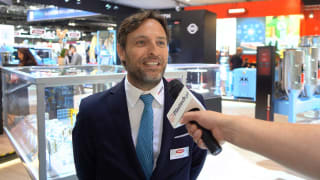
"For me, Weima means reliability, easy operation and a trustworthy partner" says Mark Muilwijk, Material and Process Specialist at CEAD. "We have been using the shredder frequently without any breakdowns, and the machine performs very well in an industrial environment".
Integrating shredding technology into a comprehensive production workflow allows CEAD to develop solutions in the field of large-format additive manufacturing while taking into account the principles of the circular economy. Converting rejected prints into secondary raw material is one of the elements that define what more sustainable production based on thermoplastic composites can look like.
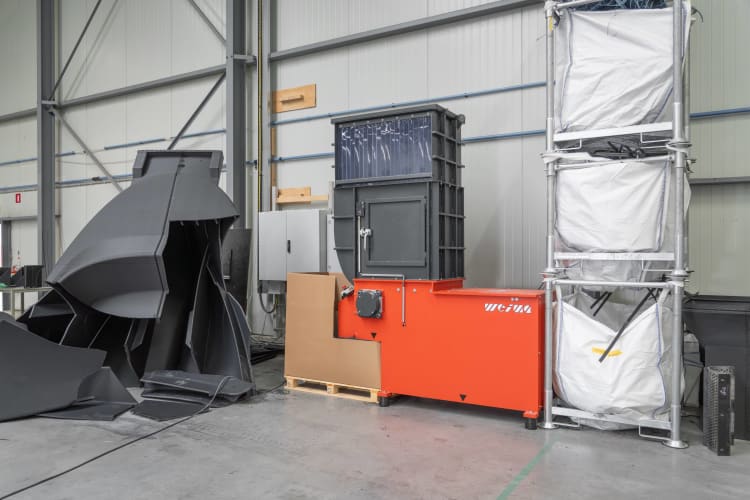
Weima WLK 4 plastics shredder