Amcor is investing in the development of its thermoforming processes to respond to the growing demand from the ready-meal and dairy sectors for advanced plastic packaging. According to data from Euromonitor, this segment is recording stable growth of around 5%, which reflects sustained demand for reliable and cost-effective food packaging solutions. The analysis highlights that for many brands thermoformed packaging has become a strategic asset, as it helps extend product shelf life by up to 50%, reduce food waste and provide convenience while taking into account sustainability requirements. In response to these conditions, Amcor is developing a portfolio of standard and custom-designed cups, containers and trays that combine protective, marketing and material recyclability functions.
Market development and the role of thermoformed packaging
The market growth forecast by Euromonitor at around 5% per year indicates continuing demand for food packaging solutions, particularly in the ready-meal and dairy segments. For food manufacturers this means the need to combine a high level of product protection with cost efficiency and logistics requirements. Thermoformed plastic packaging meets these needs thanks to the possibility of adapting shape, dimensions and functionality to specific applications, while maintaining low pack weight and high performance of packaging lines.
According to the report, thermoformed packaging is increasingly seen as part of food product strategies rather than just a physical carrier. Its role in extending shelf life, reducing food waste and improving consumer convenience is highlighted. With appropriately selected barrier layers and multi-component constructions, it is possible to adapt the level of protection to the requirements of a given product, including chilled meals, refrigerated products and extended shelf-life products stored at ambient temperature.
Amcor thermoformed solutions portfolio
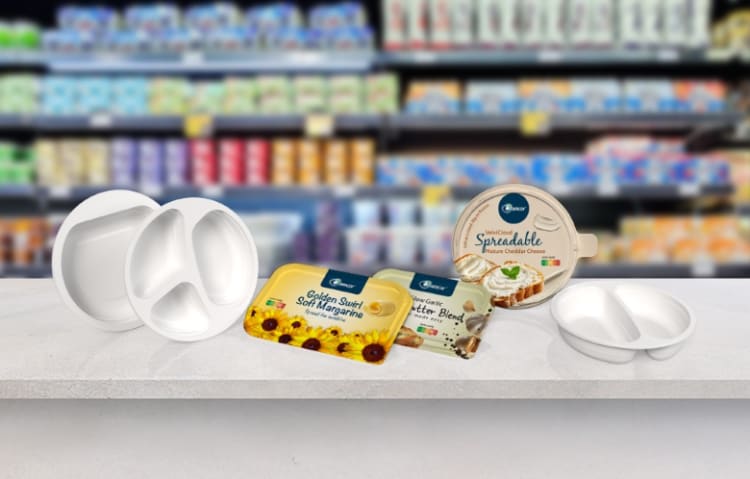
Amcor's thermoformed product portfolio has been developed to provide key technological and user benefits. It includes a wide range of solutions for many product groups and applications and offers features such as recyclability, extended shelf life and low packaging weight. The range covers various round cups, containers and multi-component trays, available with inserts and in different shapes and heights. This configuration makes it possible to match the packaging to portion requirements, product type and shelf presentation format.
Katrina Burrett, product line director for containers and reusable packaging at Amcor Global Rigids Packaging Solutions, points to the competitive conditions in the ready-meal segment. She notes that this sector is characterised by a large number of brands and product formats, for which packaging performs both a protective and a communication function. In her view, appropriately designed packaging can play an important role in ensuring product quality, building brand recognition and supporting consumer loyalty. In this context, a wide range of standard packs and the ability to develop custom solutions enable manufacturers to better adapt pack format and functions to the specific requirements of their assortments.
Product protection and barrier functions
For products requiring extended shelf life at ambient temperature, Amcor uses a barrier layer based on ethylene vinyl alcohol copolymer, that is EVOH, in its solutions. Its purpose is to provide effective protection of the contents against oxygen ingress, which allows food freshness to be maintained for longer. Such solutions are particularly important for categories such as extended shelf-life ready meals, sauces, dairy dishes and other products exposed to oxidation of ingredients during storage and distribution.
The company emphasises that the use of EVOH barriers takes place with simultaneous consideration of recycling requirements. This barrier is accepted in recycling streams for extended shelf-life products, which is important for manufacturers aiming to improve material recovery rates and alignment with local waste management systems. Pack constructions are designed to maintain the required barrier function while limiting material structure complexity to a level that enables recycling where suitable collection and secondary raw material processing infrastructure is available.
Lightweight design and material recyclability
Amcor's technical expertise in the design and processing of thermoformable plastics enables the company to create containers that provide high long-term functional performance and mechanical durability at low weight. These constructions are materially homogeneous to the extent permitted by the required barrier functions, so the packaging is ready for recycling in countries with developed infrastructure for separate collection and plastics recycling.
This approach is important in terms of the circular economy, regulatory requirements and the expectations of retail chains. Low pack weight also helps reduce the consumption of virgin raw materials and affects transport efficiency and logistics costs. The combination of weight reduction, functional product protection and recyclability is in line with current development directions in the plastic packaging market.
Premium decoration solutions
An important element of Amcor's thermoformed packaging offer is decorative solutions designed to build consistent brand visual identity and increase shelf appeal. Premium decoration options include pre-printed lids using a patented printing process. This technology makes it possible to print the entire surface of the lid, including beyond the edge, which allows full coverage and greater design freedom for pack graphics.
Another solution is in-mould labelling of containers, implemented as part of the thermoforming process. In this approach, pre-printed labels are introduced directly into the mould and then integrated with the container during forming. This method enables the use of complex multicolour designs while achieving a higher level of surface finish and greater decoration coverage than standard direct printing on the pack. The solution can be used both in the ready-meal segment and in dairy products, where packaging also serves as a carrier of information about the brand and product attributes.
Supporting customers' sustainability goals
Amcor stresses that the development of its latest thermoformed solutions is aimed at supporting the sustainability goals of food industry customers. This particularly concerns combining pack functionality, product protection requirements and visual appeal with increasing demands relating to recycling, reduction of packaging waste and limitation of food loss.
As Katrina Burrett points out, the packaging offered is intended not only to meet expectations regarding functionality and aesthetics, but also to support the environmental strategies of food manufacturers. In practice this means designing packaging with recycling in mind where possible, while maintaining the required barrier parameters, as well as using construction and material solutions that help extend product shelf life and reduce losses along the supply chain.