At the Chinaplas 2026 trade fair in Shanghai, the Wittmann Group will present a broad portfolio of solutions for plastics processing, including injection molding machines, automation and auxiliary equipment. The key element of the exhibit will be the first all-electric EcoPrimus injection molding machine produced at the company’s plant in Kunshan, China. In addition, the company will showcase applications using liquid silicone rubber (LSR) on an EcoPower machine, micro part production on a MicroPower injection molding machine, the new Primus 118 linear robot with increased payload, as well as temperature control units and granulators for plastics reprocessing. The Wittmann stand is intended to highlight the strategy of supplying complete, locally manufactured systems for various industries that use plastic products.
EcoPrimus from local production in Kunshan
The EcoPrimus injection molding machine with a clamping force of 1000 kN has been developed for high-volume, single-component molding of compact parts. The machine combines high precision, efficiency and relatively low operating cost. Its design is compact and robust while maintaining ease of operation. Like other current injection molding machine series from the Wittmann Group, EcoPrimus is equipped with the Unilog B8X control system.
At Chinaplas, an EcoPrimus 100/350 will produce functional key rings made of polystyrene, demonstrating capabilities for stable high-volume production. In December of last year, Wittmann commissioned an expanded production plant in Kunshan. In addition to robots and auxiliaries, injection molding machines of the EcoPrimus series will also be manufactured there, which means the start of local production of these machines in China. At the same time, the company plans to expand local development capabilities.
Kevin Wang, General Manager of Wittmann in Kunshan, emphasizes the importance of this investment for serving the Asian market: “This will enable us to implement local requirements faster and in a more targeted way. Our customers will benefit from the Wittmann Group’s global technology platform.”
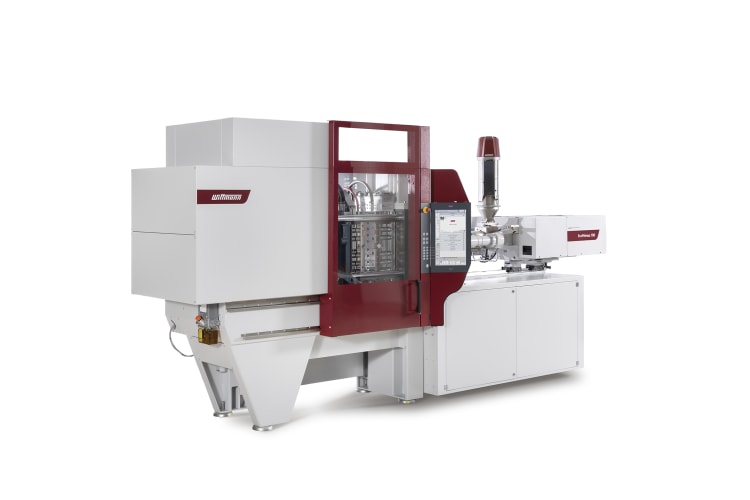
At Chinaplas 2026, the new all-electric EcoPrimus injection molding machine will be presented in Asia for the first time.
EcoPower for processing liquid silicone rubber
The second live injection molding exhibit will be the all-electric EcoPower 110/210, configured for processing liquid silicone rubber. At the stand, it will be used to produce LSR sealing rings in a 16-cavity mold, with a single shot weight of 1.7 g. Applications involving silicone are gaining importance worldwide, driven by the development of modern medical technology and electromobility. Both sectors make use of the wide range of properties offered by LSR materials.
Parts made of liquid silicone can operate in a wide temperature range from -50 to +250 °C. They are characterized by good electrical insulation properties, very good resistance to weathering and aging and high biocompatibility. Wittmann offers injection units specifically developed for LSR processing and a number of LSR-specific options covering a wide range of injection volumes and mold configurations for use on different injection molding machine types.
The all-electric EcoPower is intended for applications where precision, efficiency and cleanliness of the process are crucial. The machine achieves high injection speeds and dynamic motion profiles and enables very accurate control of the cycle. Direct servo drives and the use of braking energy recovery via Wittmann KERS technology contribute to reducing energy consumption.
MicroPower for small and micro parts production
The MicroPower concept has been developed for molding small parts and micro molded parts with minimal floor space requirement. The entire production cell occupies an area of around 2 m². The design of the machine allows the injection piston to reach the parting line of the mold, which reduces the melt cushion to a minimum and significantly reduces or completely eliminates the runner system. This results in higher material efficiency and improved consistency of part quality due to the very short flow path when transferring pressure to the melt.
During Chinaplas, a MicroPower 15/10 will produce vascular clips made of POM in a 4-cavity mold, with a part weight of 0.003 g per piece. The micro parts will be demolded by an integrated, vertically arranged scara robot and subjected to quality inspection using a camera system within the enclosed production cell. Good parts will be deposited with separation by mold cavity. The work cell is equipped with a laminar flow box, enabling production under ISO Class 7 clean room conditions in accordance with ISO 14644-1.
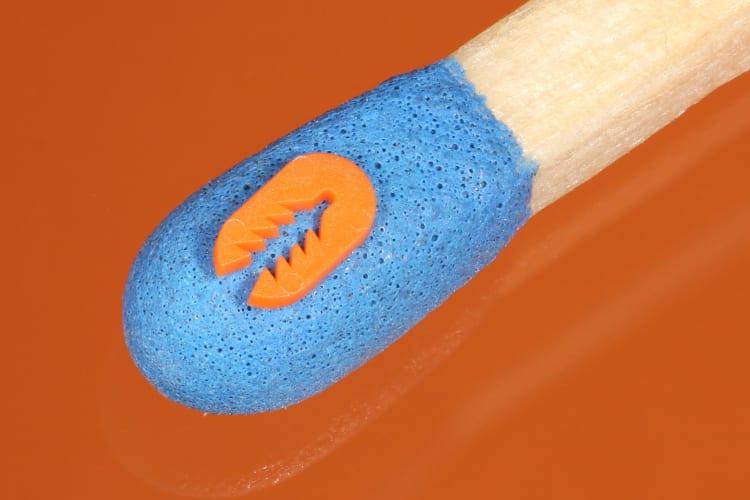
Encapsulated as a cleanroom cell, the MicroPower injection molding machine was developed specifically for the production of small and micro parts. At Chinaplas, Wittmann will demonstrate the production of vascular clips made of POM on this system.
Primus 118 linear robot with increased payload
In the field of automation, Wittmann will present the Asian premiere of the Primus 118 linear robot at Chinaplas 2026. The new model extends the application range of the Primus series for injection molding machines with clamping forces up to 250 tons. Previously, the maximum payload in this segment was 5 kg, whereas the Primus 118 offers a maximum payload of up to 8 kg. The new design with reinforced take-out and vertical axes as well as reinforced drives forms the basis for the increased performance of this robot.
The Primus 118 offers up to ten valve slots, enabling various combinations of gripper and vacuum circuits. Up to eight vacuum circuits are available. The drilling pattern in the main beam of the robot has not changed compared to previous generations, allowing the new model to be easily integrated into existing systems. The Primus linear robot series is intended for typical pick-and-place tasks and for use in simple automation cells.
The Primus 118 operates with Wittmann’s R9 robot controller. As standard, it includes an OPC UA interface for data exchange with an MES and for editing and saving programs on a PC. The R9 controller supports the user already at the program creation stage, which shortens setup times. The QuickNew Wizard guides users, including those without prior experience, through the program creation steps.
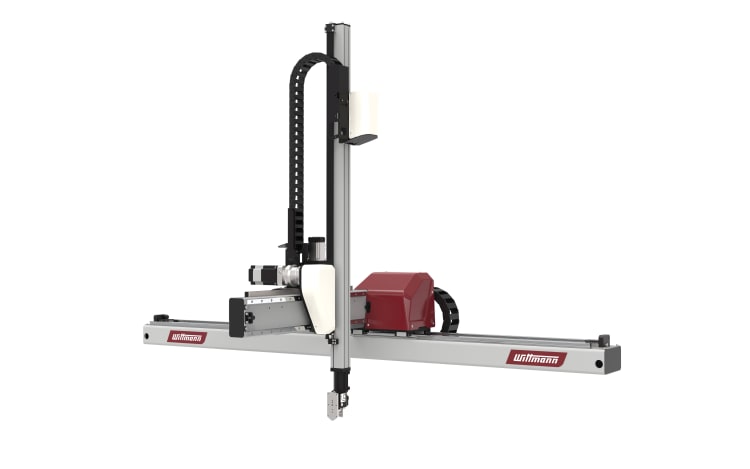
At Chinaplas 2026, the Primus 118 robot will have its Asian premiere. The new linear robot is a solution for typical pick-and-place applications and simple automation cells.
Tempro basic 120 for precise temperature control
In the part of the exhibit dedicated to auxiliary equipment, Wittmann will show representatives of all major product groups, including temperature control units and water flow regulators, dryers and vacuum loaders, as well as granulators for in-house recycling. Among the devices on display will be Tempro basic temperature control units, intended for applications requiring precise temperature regulation and high operating convenience while focusing on essential functions.
The new Tempro basic 120 model has been developed for applications with higher thermal load. The single-circuit units for applications up to 120 °C use radial impeller pumps, enabling high flow rates over a wide pressure range. The temperature control units are equipped with an automatic filling system with pressure monitoring and pressure gauges on the flow and return lines. A self-optimizing microprocessor controller operates with an accuracy of ±1 °C.
Thanks to a high-precision proportional cooling valve controlled by a servo step motor, Tempro basic 120 units can respond more accurately to fluctuations in process parameters. The flow rate is infinitely adjustable. As the proportional valve does not require a diaphragm, maintenance requirements are reduced and the service life of the unit is extended. The precise control also improves the energy efficiency of the application.
A new feature across the entire Tempro basic series is a 3.5" TFT LCD color display, which further simplifies operation. Compared to the previous seven-segment display, it provides a better overview of parameters and more intuitive menu navigation.
G-Max XL granulator for homogeneous regrind
Throughout the trade fair, a G-Max XL granulator will demonstrate the processing of sprues and production waste into secondary raw material. The compact granulators of the G-Max series are designed for soft to medium-hard plastics such as PP, PE, ABS, PU or PC. The optimized rotor ensures clean, homogeneous regrind and high material throughput.
The machine is equipped with a solid flywheel that increases the rotor’s inertia, enabling higher performance at the same power input. With a rotor speed of 200 rpm at 50 Hz, the number of unnecessary cutting repetitions is reduced. Thanks to the tiltable hopper, screen changes and cleaning can be carried out easily and without tools. The G-Max XL model presented at Chinaplas is the largest in the series and is designed for a throughput of up to 100 kg/h.
Complete systems for various industries
Wittmann’s portfolio covers material handling and conveying, automation, injection molding machines, mold temperature control, in-house recycling, digital technologies and complete system solutions from a single source. The company positions itself as a supplier to industries that require high-quality plastic products at acceptable unit costs, such as the packaging sector, medical technology, automotive and household appliances.
Kevin Wang emphasizes the role of the Kunshan plant in expanding the system offering: “Our expanded production facility in Kunshan marks Wittmann’s transition from a supplier of stand-alone units to a provider of comprehensive system solutions. Here in China and Asia, we can now offer our customers integrated system solutions that are produced entirely locally.”
The Wittmann Group will be present at Chinaplas 2026 in hall 4.1 at stand D41.