Dynamic changes in the packaging sector mean that technological innovation is no longer optional but has become a condition for competitiveness. Artificial intelligence, hybrid print solutions and the convergence of narrow- and wide-web technologies are now defining the direction of development in the label industry. This set of topics was at the center of discussions during the FINAT European Label Forum 2025, where technology leaders and experts analysed how printers and suppliers can adapt their business models to the new market reality.
This article is the fourth part of a series devoted to the key sessions of the forum and focuses on the role of technology and innovation in transforming the labels and packaging business. Contributions came from Bram Verhoef (Axelera AI), Jörg Schönwald (independent flexible packaging consultant) and a panel of technology company representatives: Noël Kasmi (Adapa Group), Erik van Sloten (Bobst), Alex Aarslew-Jensen (Nilpeter) and Michael Schrameyer (Coveris Flexible). The discussion covered both practical applications of new solutions and barriers to entering new market segments.
Artificial intelligence in label production: from buzzword to business tool
Artificial intelligence is gradually moving from a fashionable term to a real tool for improving operational efficiency in label production. Bram Verhoef presented a perspective for implementations over the next 24 months, including predictive maintenance, dynamic job scheduling, support for quality control and integration with ERP systems.
As Verhoef emphasised, "AI is not going to replace people, but it will definitely change the nature of work. It will augment human decision-making with data-driven recommendations." In practice, for label printers this means the ability to reduce material waste, shorten lead times and improve production planning through better use of process data.
Early implementation of AI tools, especially in areas such as preventive maintenance and supply chain forecasting, can provide a measurable competitive advantage. For machine and system suppliers, this is a signal to integrate AI-based functionality into the next generations of printing and finishing equipment.
Flexible packaging as a growth path for narrow-web printers
A significant part of the discussion was devoted to the potential for the label sector to expand into flexible packaging, in particular stand-up pouches. Jörg Schönwald pointed out that this is a segment growing at more than 10% annually, traditionally served mainly by wide-web printers.
Today, however, thanks to digital printing technology and changing consumer expectations, this market is opening up to converters using narrow and mid-web equipment. Schönwald stated that "stand-up pouches are no longer just an opportunity, they are becoming a necessity for growth. Today, they offer the perfect entry point for label converters due to agility and personalisation needs."
The growing number of short runs, brand owners' demand for customisation and shorter time-to-market mean that the technological capabilities of narrow-web lines are well aligned with new requirements. Label printers can thus enter segments such as pet food, cosmetics and personal care, ready-to-drink beverages and specialised food categories.
A key element is identifying SKUs with smaller batch sizes that are particularly well suited to processing on narrow-web lines. In parallel, it may be necessary to invest in complementary competences such as lamination or to build partnerships with wide-web printers in order to supplement missing process stages.
Convergence of technologies: linking narrow and wide web
The panel discussion on the technology mix showed that the boundaries between traditional label printing and flexible packaging production are becoming less distinct. Participants agreed that the future lies in the strategic combination of technologies rather than one displacing another. Noël Kasmi underlined that "label printers have agility in their DNA. That gives them an edge in short runs, personalisation and versioning."
Erik van Sloten from Bobst pointed to the growing role of mid-web presses as hybrid solutions that enable cost-effective production of medium-volume jobs. In turn, Alex Aarslew-Jensen from Nilpeter noted that increasing levels of automation and shorter changeover times are boosting the competitiveness of narrow-web presses even in markets traditionally reserved for wide web.
In practice, for label printers this means evolution rather than a sudden change in the business model. Mid-web presses, digital embellishment techniques and automated end-to-end production lines allow entry into new markets without abandoning existing core competences. At the same time, this is an impulse to rethink workflows, optimise press setups and integrate "smart" functions into existing operations.
Real barriers to entry into flexible packaging
However, expanding label printing operations into flexible packaging is not a simple, plug-and-play transition. Challenges include regulatory requirements, food safety certification, competence in lamination and the material complexity of the structures used.
Noël Kasmi pointed out that "material engineering remains a critical hurdle. Mono-material does not mean one layer. It often involves multiple layers of the same polymer, each with specific properties." Michael Schrameyer added that "brand owners expect consistency and performance. That means matching their packaging standards and ensuring you have the right certifications."
For printers interested in entering this area, it is recommended to start with a detailed assessment of requirements and capabilities. Key steps include cooperating with experienced flexible packaging producers, upskilling teams in food-contact regulations and investing in testing and certification, such as BRC for direct food contact materials. In many cases, it is worth considering alliances or joint ventures to share capabilities across the value chain.
Agility as a competitive advantage for label printers
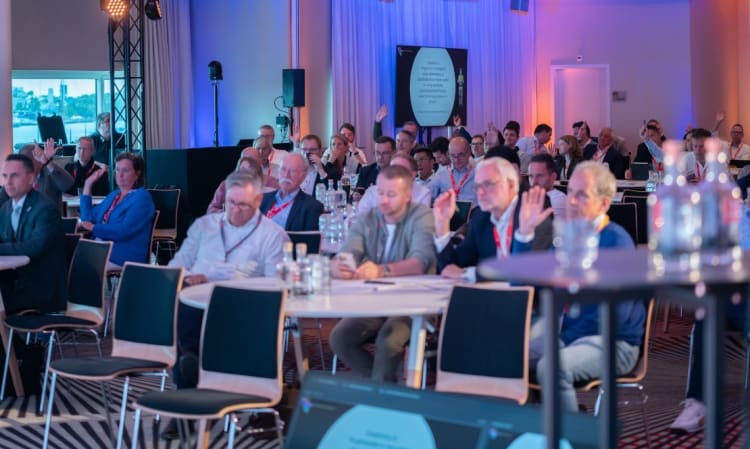
A recurring theme at the forum was operational agility, which is a traditional strength of label converters. Short changeover times, fast delivery, the ability to easily manage multiple versions and a high level of digital readiness are areas where label printers often outperform conventional flexible packaging producers.
Alex Aarslew-Jensen noted that "we see more cosmetics and personal care products moving to refill solutions, opening new packaging needs that narrow-web converters are well suited to fulfil." Erik van Sloten added that "if you have label printing experience, you already understand brand colour control, short-run efficiency and speed-to-market. That is a tremendous asset."
In this context, automation technologies, hybrid solutions and the integration of analytical tools can further strengthen label printers' advantage in competing for new packaging market segments.
Technology as a key to growth and the role of FINAT
The conclusions from the FINAT European Label Forum 2025 clearly indicate that technological innovation is not a luxury, but a lever necessary for market survival and further growth. AI-supported production, entry into the flexible packaging segment and the development of hybrid solutions create an opportunity for label printers to expand their role within the broader packaging ecosystem.
However, success requires well-considered investments, a willingness to collaborate along the value chain and openness to reassessing existing business assumptions. As one panellist summed up, "this is not a disruption. It is evolution. And label converters are in a strong position to lead it." Through knowledge sharing, community platforms and the development of partnerships, FINAT declares its support for the label industry in adapting to the new technological reality.
The organisation encourages industry representatives to actively participate in the ongoing discussion on the future of the market, including by attending the next European Label Forum 2026, which will be held from 27 to 29 May 2026 in Seville, Spain.