Scaling medical device production requires not only building an efficient line but also ensuring that millions of units are manufactured without defects and fully documented. In many conventional assembly processes, the line still functions as a kind of "black box", with quality assurance limited to pre-assembly and final inspections. This leads to several issues: high demand for production floor space, the need for numerous special tools, and constraints in meeting regulatory requirements for process traceability and auditability. In response to these challenges, ATS Life Sciences Systems (ATS LSS) and Kistler Group have developed an automated assembly line based on the Symphoni platform, combining digital motion control with real-time force and displacement measurement.
The Symphoni platform uses advanced sensor technology from Kistler and a patented digital motion system from ATS LSS. The integrated system enables in-line assembly and verification of medical devices at speeds of up to 320 parts per minute, while reducing tooling requirements by up to 90 percent and ensuring full process traceability. Reducing tooling and applying a more compact line architecture translates into a smaller footprint and simplified workstation configuration. The platform is designed as a scalable, data-driven solution that supports compliant medical production, audit readiness and flexible handling of multiple product types on a single line.
By using digitally synchronous motion and modular automation from ATS LSS, together with force and displacement sensors from Kistler, the system allows a significant reduction in cycle time. According to data provided by the partners, cycle time has been reduced from 3750 ms to 750 ms, while maintaining high precision and full in-line process monitoring. This configuration makes it possible to exceed 300 parts per minute while handling more than one product type on the same line, which is relevant for manufacturers seeking short changeover times and high flexibility.
For medical device manufacturers, meeting regulatory requirements such as FDA 21 CFR Part 11 and the European MDR is also crucial. This includes demonstrating consistent product quality and providing fully traceable, audit-ready process data. Integrated real-time process monitoring and the ability to store data across multiple databases support optimization of production parameters, audit preparation and rapid ramp-up of new lines.
Digital motion control and sensing in a single platform
The cooperation between ATS LSS and Kistler focuses on making previously invisible aspects of the assembly process measurable and controllable. ATS LSS expertise in digitally synchronous motion and modular automation has been combined with real-time force and displacement measurement provided by Kistler. The result is a system that enables both execution of assembly operations and their simultaneous verification within one process sequence.
Real-time monitoring of force and displacement allows the Symphoni platform to measure and verify critical steps of medical device assembly as they occur. Waveform analysis makes it possible to detect potential failure modes before they result in nonconforming product. At the same time, a patent-pending inertia compensation system neutralizes the influence of high-speed motion on force measurements.
This approach enables more precise evaluation of the relationship between force and distance, which in turn reduces the number of false positive and false negative inspection results. The need for separate inspection stations is eliminated, since verification takes place continuously within the same assembly sequence. Collected process data are available for further analysis, supporting continuous improvement of line parameters and shortening the time needed to introduce new product variants.
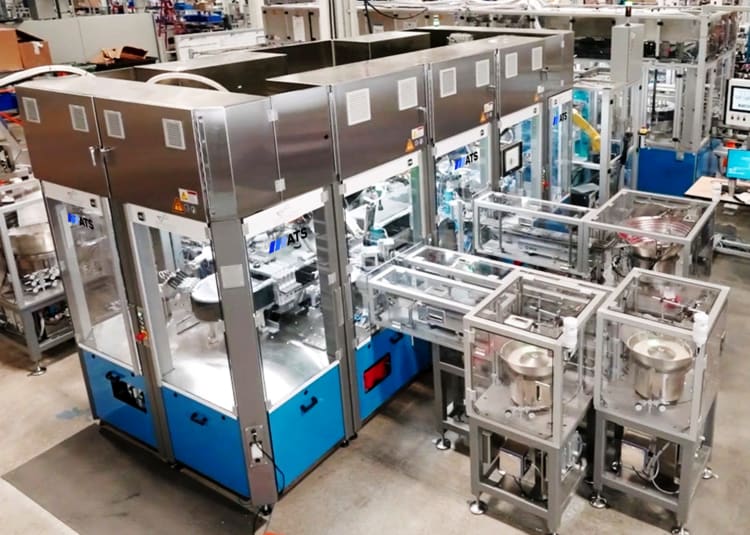
Symphoni reduces tooling, minimizes footprint, boosts throughput and yield, and handles multiple product types on a single line. By embedding inline process monitoring directly into assembly, it removes blind spots and delivers fully traceable, audit-read
Process transparency and audit readiness
Traditional approaches to quality control in medical device assembly usually focus on incoming inspection of components and final testing of the finished product. This leaves an information gap between these points, and the course of the assembly process itself is documented to a lesser extent. Applying real-time force and displacement measurements in-line is intended to close this gap and provide detailed data on each assembly step.
Data from Kistler sensors can be stored in multiple databases, depending on user requirements. This supports both local process optimization and the obligations related to storage and reporting of data to regulatory bodies. The manufacturer can demonstrate that each device has been assembled within defined process windows, which is important in the context of compliance with FDA 21 CFR Part 11 and European regulations.
The Symphoni platform has been designed as a solution capable of handling multiple product types on a single line. This makes it possible to reduce the number of dedicated tools and workstations, decrease the required floor space and improve utilization of resources in the production plant. At the same time, the embedded process monitoring supports maintaining stable parameters when the line configuration and product variants change.
Reduced tooling and footprint with increased throughput
According to the partners, the Symphoni platform enables a reduction in tooling of up to 90 percent compared with traditional solutions. Fewer dedicated jigs and the integration of assembly and quality control functions into a single line contribute to a compact layout. This in turn facilitates optimization of plant layout, shortens internal transport paths and lowers infrastructure-related investment costs.
The system has been designed for speeds of up to 320 parts per minute while maintaining full traceability of process data. The combination of short cycle time, digital motion control and real-time measurements is intended to increase throughput without compromising the level of safety and quality required in the medical device sector.
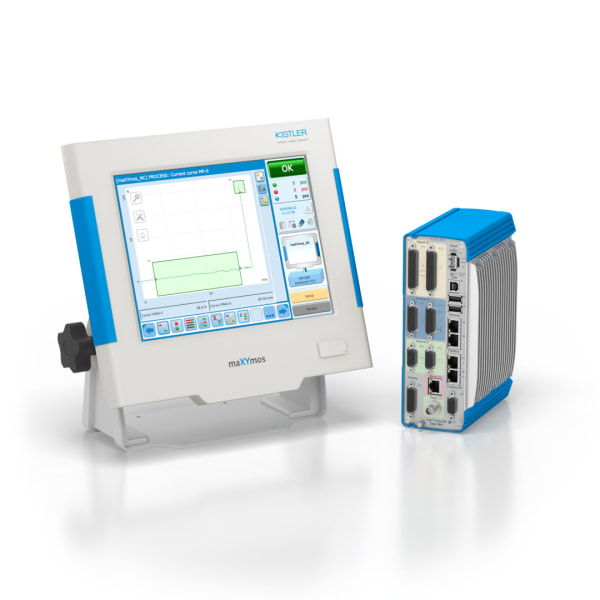
Kistler provides real-time force and displacement monitoring, inertia compensation and waveform analysis, enabling process monitoring at every step of the medical device assembly process and supporting compliance with FDA 21 CFR Part 11 requirements.