Siemens' factory in Nanjing, China has been included in the World Economic Forum's Global Lighthouse Network as a Lighthouse Factory. The plant was recognized in the productivity category for achieving high cost and quality performance through the use of digital twins and continuous AI-driven transformation. Improvements in asset utilization, worker enablement and resource management were also acknowledged. The Nanjing site is the fifth Siemens manufacturing facility to receive this distinction, following plants in Amberg, Erlangen and Fürth in Germany and in Chengdu in China.
Cedrik Neike, Member of the Managing Board of Siemens AG and CEO Digital Industries, described the Nanjing plant as a digital-native factory. The facility was designed, tested and optimized entirely in a virtual environment before construction began. This approach enabled faster project execution, cost reduction and continued implementation under challenging pandemic conditions. According to Siemens, combining global manufacturing expertise, local insight and a digital-first mindset allows for continuous process optimization and maintaining high flexibility of the plant.
Digital transformation in response to operational pressure
The World Economic Forum jury highlighted the continuous digital transformation of the site and the advanced deployment of artificial intelligence applications. The factory redesigned its production processes in response to increasing operational pressure. A key challenge was the growing variability of customer orders, which required reconfiguration of production lines on average every four weeks. At the same time, delivery windows shrank from 45 to 10 days while market demand remained volatile.
To meet these requirements in a high-variety, low-volume manufacturing environment, Siemens implemented a digital excellence strategy. It included the use of end-to-end digital twins, modular automation, manufacturing operations management systems and more than 50 applications based on artificial intelligence. Compared to 2022, this initiative enabled a 78 percent reduction in lead times and a 33 percent reduction in time-to-market, while productivity increased by 14 percent by 2024. Field failures decreased by 46 percent and the plant reduced its direct and energy-related carbon dioxide emissions by 28 percent.

Digitally planned research and manufacturing facility
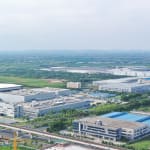
The Nanjing plant is Siemens' largest research and production center outside Germany for high-performance controls for machine tools (CNC systems), drives and electric motors. The facility sets benchmarks in digitalization and sustainability. The 73,000 square meter factory, referred to as Digital Native Factory Nanjing, together with its production processes was fully planned and simulated digitally, enabling optimization in the virtual environment before construction started.
Cedrik Neike emphasized that the plant is an example of integrating digital planning, advanced automation and AI solutions within a single manufacturing site. He indicated that this approach makes it possible to modify and scale production without long downtimes and complex line rebuilds. In the context of increasing customer requirements and shortening production series, this is important for maintaining competitiveness and supply chain stability.
WEF Global Lighthouse Network
The World Economic Forum's Global Lighthouse Network has been operating since 2018 and brings together industrial plants that achieve outstanding results in productivity, supply chain resilience, customer centricity, sustainability and talent development. The network includes sites that deploy advanced production and digital technologies at scale.
The inclusion of Siemens' Nanjing factory in the Global Lighthouse Network means it is recognized as one of the most operationally advanced manufacturing plants in the world in its category. According to the WEF, the distinction was awarded for the consistent implementation of digital tools, including digital twins and AI applications, which has translated into measurable effects in terms of efficiency, quality and emissions reduction.