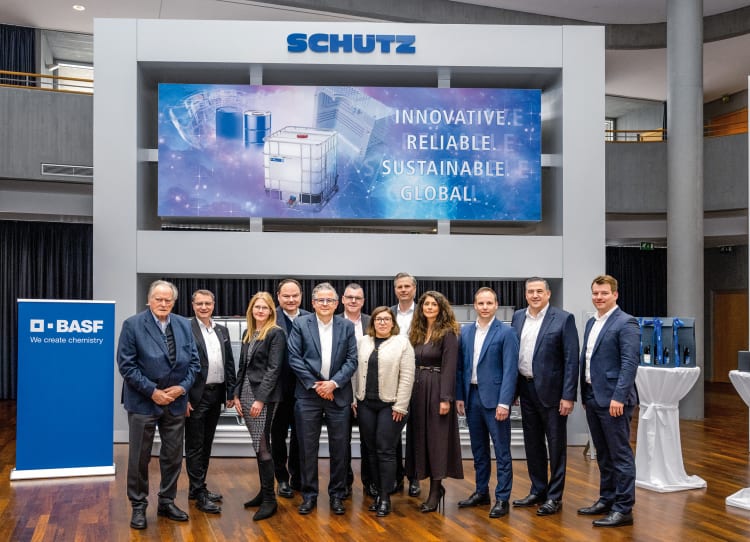
BASF and Schütz have signed an agreement for the construction of a highly automated production and storage facility for intermediate bulk containers (IBCs) at BASF's main site in Ludwigshafen. The new plant is intended to ensure a secure, long-term supply of industrial packaging for the chemical complex. Construction work is scheduled to start in the third quarter of 2026.
The project involves the implementation of a modern IBC production installation on a plot directly adjacent to the BASF site. The two companies have developed a new, comprehensive concept for the supply of industrial packaging, under which the future Schütz facility and the chemical complex will be closely interconnected in terms of infrastructure and logistics. The concept also covers the digitalisation of warehousing processes and the expansion of activities related to the reuse, reconditioning and recycling of used containers.
As underlined by Roland Strassburger, CEO of the Schütz Group, the project is important both for site development and for cooperation with customers. "This project is not only a clear signal in the direction of sustainable site development, it also represents highly efficient, customer-specific on-site solutions and the further strengthening of our role as a strategic partner to industry," says Strassburger.
New IBC packaging supply concept
The central element of the agreed concept is the construction of an automated IBC production plant in the direct vicinity of the chemical site. The proximity of the location is intended to enable close integration of BASF's material flows and production processes with Schütz's operations, which translates into optimisation of the packaging supply chains for chemical products.
The project provides for the establishment of an advanced, digitalised packaging warehouse integrated with the container production installation. In line with the concept, the warehouse is to be part of a coherent logistics system that will allow dynamic inventory management and alignment of IBC deliveries with the changing needs of the production facilities in Ludwigshafen.
The direct connection of the Schütz plant to BASF's infrastructure is intended to shorten transport routes and simplify the organisation of deliveries to the complex. The concept also foresees the continuation and further development of activities related to the reuse, reconditioning and recycling of used containers, which is expected to support improved resource efficiency in the industrial packaging segment.
Strengthening the structure of BASF's main complex
The integration of IBC production with the existing material and production cycles in Ludwigshafen is seen by BASF as a factor that will enhance the competitiveness of the company's key site. "The targeted attraction of long-standing partners and investment in production capacities located directly next to the site create key structural advantages for our main complex," says Helmut Winterling, President European Verbund Sites, BASF SE. "The integration of IBC manufacturing into our material and production cycles strengthens our competitiveness in the long term."
Relocating packaging production closer to the point of use also has an important operational dimension. It is intended to increase supply security for BASF's production plants and reduce exposure to disruptions in external supply chains. Potential benefits include shorter IBC delivery lead times, more stable packaging availability and better alignment of production volumes with the current requirements of the site.
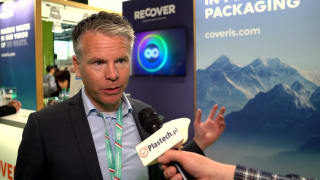
The importance of the location is also highlighted by BASF's indirect procurement organisation. "Schütz's new site close to our facility creates maximum supply security for our operations. The proximity and integration keep transport routes short and allow us to respond flexibly at all times to changing demands in our production plants and facilities," notes Uwe Lohr, Senior Vice President Global Indirect Procurement, BASF SE.
Long-term cooperation and the role of IBCs in chemical logistics
The current project is based on the long-standing cooperation between the two companies. Relations between BASF and Schütz date back to the 1960s. An important milestone was the development in 1975 by Udo Schütz, in close cooperation with BASF, of the world's first intermediate bulk container. This solution quickly became the standard in the global industrial packaging sector.
At BASF's Ludwigshafen site, standard IBCs are used, among other purposes, for the storage and transport of liquid chemical products. These typically include basic chemicals such as dispersions, additives and surfactants. The role of IBCs as a standard logistics carrier for various product groups is important both for process safety and for the organisation of internal distribution of media and raw materials across the site.
Today, Schütz operates a global production network with more than 70 locations. From these plants, the company supplies IBCs to BASF sites worldwide as well as to numerous customers in many industrial sectors. The new investment next to BASF's main complex in Ludwigshafen fits into this cooperation model, extending it with a directly integrated on-site solution for a strategic customer from the chemical industry.