Plastics are firmly embedded in production processes and everyday life, while plastic pollution is becoming an increasingly serious issue and a challenge for the global environmental governance system. Recycling and regranulation are key strategies to mitigate this phenomenon and an important element of sustainable development in the plastics and rubber industries. Thanks to technological progress, interdisciplinary applications and regulatory support combined with growing market demand, plastics recycling is moving beyond simple resource recovery and is increasingly seen as an area of deep transformation for the entire sector.
According to an analysis by Precedence Research, the global recycled plastics market is expected to grow from USD 58.68 billion in 2025 to USD 127.25 billion in 2034, with a compound annual growth rate (CAGR) of 9.01%. The Asia-Pacific region currently holds the largest share of the market. This dynamic is driven by rising demand for recyclates in many industrial sectors. In the electric vehicle segment, lightweight and lower-emission materials are becoming the basis for technological upgrades, and modified recycled HDPE is indicated as a preferred material for selected components. The packaging sector is facing increasingly stringent environmental requirements, which supports the replacement of virgin polymers with PCR resins. At the same time, applications in household goods and municipal projects further broaden the demand base.
The role of regulation and demand in building the recyclates market
Market development is also supported by regulatory initiatives on plastic waste management. The European Union has adopted the Single-Use Plastics Directive, which restricts the use of selected single-use plastic items and requires that by 2030 all beverage bottles contain at least 30% recycled plastic. In China, the fifteenth five-year plan for green transformation aims to accelerate the shift towards more environmentally friendly production and consumption models, achieve peak emissions before 2030 and support the long-term target of climate neutrality by 2060.
The combination of regulatory pressure and actual market demand is creating a favourable environment for the plastics recycling sector, in which theoretical potential is gradually being converted into real industrial value and new business models.
Technological progress and new application areas
Breakthroughs in recycling technologies
Significant innovations are being observed in recycling technologies. A research team at Zhejiang Ocean University has developed a recycling machine for plastic bottles that uses a low-temperature heating process to convert shredded material into 3D printing filament. The resulting filament has a diameter deviation of less than 0.05 mm, which is comparable to commercial-grade filaments.
Another example is room-temperature catalytic conversion technology, which addresses the recycling of non-degradable plastics. Researchers at East China Normal University, working with an international team, have developed a method that enables one-step conversion of mixed plastic waste into high-quality, chlorine-free fuel. The process, carried out at near-ambient temperature, reduces energy consumption by more than 70% compared with current chemical recycling methods.

Researchers at East China Normal University, in cooperation with international experts, have developed room-temperature catalytic conversion technology. (photo: East China Normal University)
Toray has developed a recycling technology that enables the breakdown of various carbon fibre reinforced composites based on thermosetting resins while maintaining the original strength and surface quality of the carbon fibres. In the field of recycling equipment, the fourth generation of Erema's Vacurema system is equipped with EcoGentle technology. Lowering processing temperatures, optimising extrusion parameters and precisely using shear and elongational flow make it possible to significantly reduce energy consumption while improving the quality of recyclates.
Cross-sector applications building an ecosystem
Innovative applications of recycling technologies are increasingly being used in different industries, helping to shape a diversified industrial ecosystem. The widest implementation can be observed in the packaging sector. Through its acquisition of Circulus, Dow is investing in PCR research and production. The resulting materials are used in shrink packaging, stretch films, cushioning materials and selected food packaging.

Circulus uses advanced technologies to reduce contamination in plastics recycling processes. (photo: Circulus)
Modified recycled plastics are also gaining importance in electromobility. Recycled HDPE grades produced by Wuhu Boretech Plastics have obtained IATF 16949 automotive quality management certification, which allows them to be used in the production of components such as bumpers and interior parts for electric vehicles.
The apparel and accessories sector has become an important showcase for the potential of plastics recycling. Chinese company Visionblue, specialising in marine waste management, processes plastic waste from the oceans into products such as scarves made from five bottles and backpacks made from 22 bottles. These items combine functionality with environmental aspects and bring the idea of recycling into everyday use.
In the toy segment, Kingfa Sci. & Tech. offers PCR materials with properties comparable to virgin plastics. The company operates its own testing facilities to control product safety and regulatory compliance, which helps ensure that recycled materials meet safety requirements while delivering the required performance.
Key barriers to the development of plastics recycling
Despite favourable market prospects, the plastics recycling industry faces three main groups of challenges: technological and economic, quality-related and linked to consumer awareness.
From the technological and economic perspective, the development of advanced recycling technologies requires substantial investment, while market acceptance is not yet complete, which makes it difficult to scale up new solutions. A cost gap between secondary and virgin materials also remains. The recyclate production chain comprises many stages, such as collection, sorting, washing and processing, which often results in higher market prices compared with virgin polymers and limits the competitiveness of recycling.
The stability of recyclate quality and performance is a significant barrier to wider use. Heterogeneous waste streams and difficulties in accurate sorting lead to variable material properties, which can affect the quality of final products. Packaging applications require, among other things, high material clarity, while medical applications place particular emphasis on safety and regulatory compliance. Such high requirements set entry barriers for recyclates.
The level of social acceptance is another important challenge. Some consumers remain sceptical about the quality of recycled products, which directly hampers their market promotion. Since products made from recyclates are often more expensive than their virgin counterparts, even consumers who declare pro-environmental attitudes may in practice refrain from purchasing such products, which limits the full demand potential.
Directions of action: technology, market, cooperation
Improving technology and intelligent sorting
To take advantage of development opportunities while responding to current challenges, plastics market participants should focus on three areas: improving technologies, developing the market and cooperation along the value chain. In the technological area, it is crucial to enhance the stability of recyclate properties and develop intelligent collection and sorting technologies.
The use of intelligent technologies offers more efficient methods of dealing with plastic waste. For example, food and non-food packaging are often made from similar materials with a comparable appearance, which makes separation difficult. Tomra has integrated deep learning modules into its Autosort system, enabling rapid, large-scale and efficient sorting of PET, PP and HDPE packaging into food-grade and non-food-grade fractions.
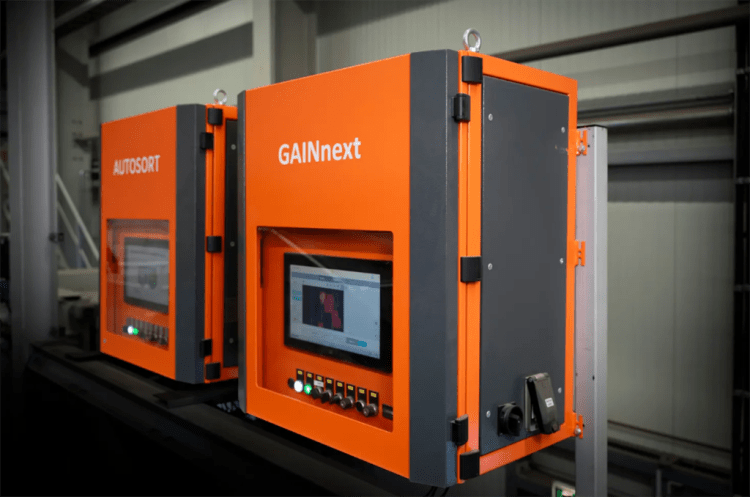
Tomra's Autosort system with Gainnext module combines sensor-based material identification with AI-based object recognition. (photo: Tomra)
At the same time, the industry should further integrate additive manufacturing technologies with recyclates. Combining 3D printing with recycled materials opens the way to products with new functions and applications. Focusing on functionality and pursuing high-value applications, for example in the medical and aerospace sectors, can expand the use of processed plastics.
Building the market and confidence in recyclates
In the market sphere, it is important to disseminate knowledge about recycling and regranulation through different channels in order to increase user confidence in recycled products. Companies should develop demonstration projects that clearly show the performance characteristics and environmental benefits of using secondary materials.
Developing product portfolios that incorporate environmental aspects at the design and user-experience stages is also significant. Tailoring recycled products to user expectations regarding quality and personalisation can help establish pro-environmental consumption as one of the main market trends.
Cooperation along the value chain and good practices
Cooperation between value-chain participants is crucial for overcoming barriers to building a circular economy. Upstream and downstream companies should strengthen collaboration to create stable and efficient systems for collecting, processing and using recyclates.
Cooperation between research and industry also plays an important role, enabling faster implementation of solutions developed in laboratories into industrial practice. In parallel, public authorities should introduce more targeted support mechanisms and develop standards and certification systems for products made from recyclates to reduce market uncertainty and facilitate the standardisation of requirements.
An example of effective cross-sector collaboration is the development of recycling technology for polymethyl methacrylate (PMMA) from end-of-life vehicles. Until recently, recycled PMMA from used vehicles was characterised by unstable quality, which limited its commercial use. A method jointly developed by Mitsubishi Chemical, Hokkaido Auto Dismantler and Honda has solved impurity-related issues, allowing recycled PMMA to achieve quality comparable to virgin material. The polymer has been used for door visors in Honda's new mini electric vehicle, illustrating an implementation based on cooperation between the material producer, dismantling company and vehicle manufacturer.
Outlook: recycling as a mainstream in the plastics industry
Plastics recycling is gradually becoming one of the main development directions of the plastics industry. With further technological advances, recyclates can be expected to offer improved performance at lower production costs, supporting the expansion of applications into high-quality segments. Regulatory support and growing market demand will encourage more companies to enter the recycling field, which will additionally strengthen the scale and dynamics of this segment.
The combined impact of technological innovation, market mechanisms and cross-industry cooperation will be one of the main drivers of further development in plastics recycling. New technological solutions will open up additional opportunities for waste utilisation, while market mechanisms will stimulate demand, creating a feedback loop in which demand drives the development of supply and expanded supply in turn generates new areas of demand. Cross-sector cooperation will support the integration of resources and competences, leading to a more efficient and coherent industrial ecosystem based on the circular flow of materials.

Honda uses recycled PMMA in the door visors of its new mini-EV. (Photo: Mitsubishi Chemical)