Montan wax has long been used as a processing additive in polymers, but its raw material base involves a significant limitation, it is fossil-based and non-renewable. This wax is extracted from lignite, deposits of which formed over millions of years and cannot be replenished on an industrial timescale. According to Clariant, reserves are being gradually depleted, particularly in Germany, where a significant share of this raw material originates. In practice, this means a growing risk of problems with the availability of montan wax in the required quality and quantity. The company also points to the environmental consequences of lignite exploitation, including high greenhouse gas emissions during processing and the impact of open-cast mining on landscapes, forests and biodiversity.
According to the information presented, market effects are already visible. In recent years, the market has reportedly experienced montan wax supply issues resulting from declining raw material availability, translating into higher prices, difficulties in maintaining inventories, greater planning complexity and increased production costs. An additional factor is said to be growing regulatory pressure on fossil-based materials and rising interest in lower-carbon solutions. In this context, Clariant positions the Licocare RBW Vita portfolio, produced from rice bran wax, as an alternative to fossil-based montan waxes. The company states that this solution is based on the non-food fraction of a renewable raw material and features a 98% renewable carbon index and a significantly lower carbon footprint.
Food contact and regulatory status
Materials intended for food contact are among the areas subject to the most stringent safety requirements in the chemical industry. Manufacturers of additives for food packaging, food processing equipment or other food-contact applications must comply with the requirements of multiple regulatory bodies, including the European Food Safety Authority, the FDA and relevant Japanese institutions.
Clariant reports that products from the Licocare RBW Vita family have already obtained selected food-contact approvals under several regulatory frameworks, including FDA, EFSA and Japanese food safety rules, for various polymers and applications. The company places particular emphasis on the Licocare RBW 100–300 series, including RBW 360 and 560 grades, which obtained EFSA approval as an additive at concentrations up to 0.3% in PET, PLA and rigid PVC materials and articles intended for contact with non-fatty foods, at room temperature and below, including hot-fill conditions and heating up to 100°C for up to 2 hours. As stated, the 20th amendment to Regulation (EU) No 10/2011 on plastic materials and articles was published by the European Commission on February 2, 2026, including the listing of these substances in the positive list of Annex I, and entered into force on February 23, 2026.
Diederik Goyvaerts, Market Manager Additives at Clariant, comments: "The current and future montan wax supply challenge presents the market with both a short-term difficulty and a long-term strategic opportunity. Growing supply concerns are already encouraging companies to switch to Licocare RBW Vita products as credible, sustainable alternatives. In addition, the steady progress related to broader food-contact compliance will certainly accelerate this shift."
Saponified grades for engineering plastics
The material also presents two saponified grades, Licocare RBW 360 Vita and Licocare RBW 560 Vita. According to Clariant, these are rice bran waxes that combine lubricating and nucleating functions in engineering plastics, used primarily in injection molding applications. Their role is to combine nucleation and lubrication effects in a single additive.
RBW 360 Vita is recommended for polyamide applications, while RBW 560 Vita is recommended for polyester applications. As an example, the company cites PA 6.6 applications in which cooling cycle reductions of up to 70% were observed, which is said to translate into a marked improvement in production efficiency and faster throughput. Both products are reported to offer high thermal stability at elevated processing temperatures, effectiveness at low dosage levels, the ability to produce smooth surfaces and improved dimensional stability of finished parts while maintaining mechanical properties.
Clariant also emphasizes that the entire Licocare RBW range is based on renewable bio-based feedstock that does not compete with the food chain and is intended to address growing problems with traditional montan wax supply. According to the company, these additives also contribute to reducing carbon footprint, including Scope 3 emissions on the customer side. Both grades mentioned are also said to have food-contact approvals.
Application range and additive functions
Beyond the grades specialized for polyamides and polyesters, the Licocare RBW Vita portfolio is said to include solutions for a broad group of polymers, including polyolefins, polyesters, polyamides, PVC, TPU and other engineering plastics. According to the manufacturer's information, all grades are based on renewable raw materials of biological origin that do not compete with food uses.
From a functional standpoint, additives based on rice bran wax are presented as multifunctional solutions. In polymer processing, they are intended to provide both internal and external lubrication properties, improving melt flow and reducing friction between the molten polymer and hot metallic surfaces. This is expected to facilitate processing and support a smooth surface quality of molded parts.
As nucleating agents, especially in the case of Licocare RBW 360 Vita and RBW 560 Vita, they are intended to support crystallization and accelerate its progress, which may shorten cycle times and improve the mechanical properties of semi-crystalline polymers. As dispersing agents, these additives are intended to function as organic pigment dispersants, improving color consistency and processability while shortening dispersion time during compounding. The manufacturer also points to a favorable chemical structure providing high thermal stability and low volatility.
In the role of release agents, the Licocare RBW Vita range is intended to support part release from the mold by reducing ejection force in injection molding. According to Clariant, this translates into shorter cycles, lower scrap rates and maintained surface quality. A low tendency to migrate is, in turn, expected to support stability of surface properties over time. The company also states that typical use levels in most applications are in the 0.1–0.5% range, which is intended to provide a favorable cost-in-use compared with fossil-based alternatives.
Sustainability aspect
In Clariant's assessment, environmental arguments go beyond regulatory compliance alone. The company states that Licocare RBW Vita products have a 98% renewable carbon index and a significantly lower product carbon footprint compared with fossil-based montan waxes. This is intended to enable manufacturers to pursue environmental goals without giving up required performance parameters.
Among the additional environmental benefits listed are biodegradability and industrial compostability, less disruption to landscapes and biodiversity than in the case of lignite mining, the use of renewable feedstock from agricultural by-products that do not compete with food, and a significant reduction of Scope 3 emissions on the customer side.
In conclusion, Clariant assesses that montan wax supply challenges are structural rather than temporary. As lignite reserves are depleted, supply constraints increase and sustainability requirements grow, manufacturers face a choice between reacting to current disruptions and moving earlier to renewable alternatives. According to the company, Licocare RBW Vita is intended to be a multifunctional solution for formulation simplification, carbon footprint reduction and use in many food-contact areas, while maintaining performance parameters.
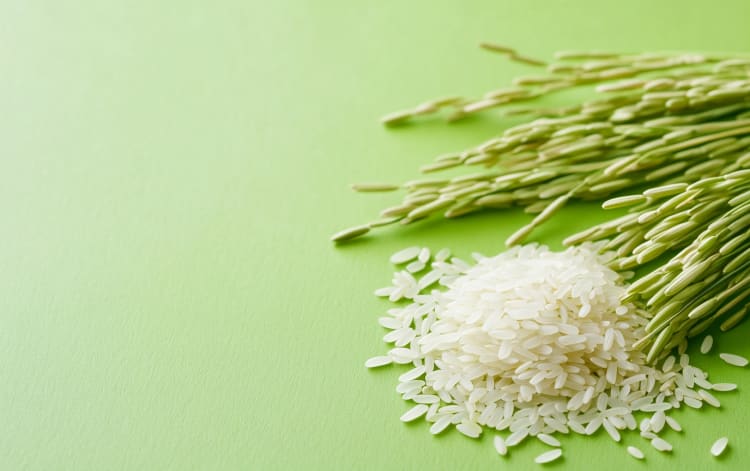
Rice bran wax, a sustainable and more advanced alternative to montan wax.