The Łukasiewicz Center has signed a cooperation agreement with Dassault Systèmes in the area of digital transformation of Polish industry. The cooperation is intended to support the digitization of research and development processes, the implementation of advanced technologies in the economy and the strengthening of employees’ digital competences. These activities are another step by the Łukasiewicz Research Network towards implementing the assumptions of the Network’s Strategy for 2025–2034, which includes, among others, closer integration of the scientific community with business and the development of digital tools used in design and implementation processes.
The agreement covers the strengthening of cooperation in the field of digital development processes in the institutes of the Łukasiewicz Research Network, many of which already use Dassault Systèmes solutions. The technology partner is described as a global leader in virtual twin technologies, used, among others, for modelling and simulation of complex industrial systems. The signing of the agreement is intended to support the creation of an ecosystem of innovative solutions that responds to the challenges of the modern economy and supports its sustainable development, including in sectors that make intensive use of material technologies and plastics processing.
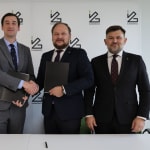
The cooperation agreement was signed by Ireneusz Borowski, Managing Director of Dassault Systèmes in Poland, and Dr. Hubert Cichocki, President of the Łukasiewicz Center. The parties declare their full commitment to developing joint projects that are expected to accelerate the delivery of practical solutions for business and support the technological transformation of Polish industry.
Strengthening digital competences and cooperation with business
A key element of the agreement is the development of digital competences and the further strengthening of cooperation between the institutes of the Łukasiewicz Research Network and business entities. As emphasized by the President of the Łukasiewicz Center, the planned activities are to expand the use of advanced digital tools in research and development projects carried out for industry.
“This agreement is another step towards achieving the strategic objectives of the Łukasiewicz Research Network, including strengthening Łukasiewicz’s cooperation with business entities. Dassault Systèmes technologies are used in many industries, including the aerospace, automotive and medical sectors, which is why I am convinced that our joint activities will deliver tangible results both in the area of research and development and in practical implementations,” said Dr. Hubert Cichocki, President of the Łukasiewicz Center.
It was emphasized that digital tools used in design, simulation and virtual prototyping can accelerate development processes and increase the efficiency of cooperation between research units and enterprises. This applies both to high-tech sectors, such as aviation or automotive, and to areas strongly related to materials engineering as well as the design and manufacture of plastic products.
Context of Polish-French cooperation and virtual twins
President Hubert Cichocki drew attention to the broader political and economic context of the agreement, linking it to decisions by the Polish government regarding the development of cooperation with France.
“Łukasiewicz’s activities are in line with the strengthening of Polish-French relations resulting from the Treaty on Strengthened Cooperation and Friendship between the Republic of Poland and the French Republic signed this year. The intergovernmental agreement covers cooperation between the two countries in the fields of defence, economy and science, and the cooperation between Łukasiewicz and Dassault Systèmes is a tangible example of this,” emphasized Dr. Hubert Cichocki.
Dassault Systèmes, as a provider of virtual twin technology, plays an important role in the digitization of design and production processes. The use of virtual models makes it possible to test concepts, optimize designs and analyse product behaviour under various operating conditions before they are introduced into actual production. This can be relevant for companies from many industrial sectors, including firms using polymers and structural solutions based on plastics.
An innovation ecosystem for industry
The signing of the strategic agreement is intended to support the development of an ecosystem of innovative solutions that responds to the challenges of the modern economy and supports its sustainable growth. The parties indicate that the aim is to streamline the delivery of practical solutions for business and to support the technological transformation of Polish industry by integrating research and technology competences.
“We are pleased to contribute to the development of the Łukasiewicz Research Network and jointly build a new technological quality of Polish science that will have an impact on the development of relations between science and business. We are fully committed to ensuring the success of this cooperation through our virtual twin technology,” said Ireneusz Borowski, Managing Director of Dassault Systèmes in Poland.
The joint activities of Łukasiewicz and Dassault Systèmes are intended to streamline the delivery of practical solutions for enterprises and support the technological transformation of Polish industry. In practice, this means, among other things, broader use of digital environments in research and development processes, product design and preparation for industrial implementation, which is also important for companies operating in plastics processing and related sectors.