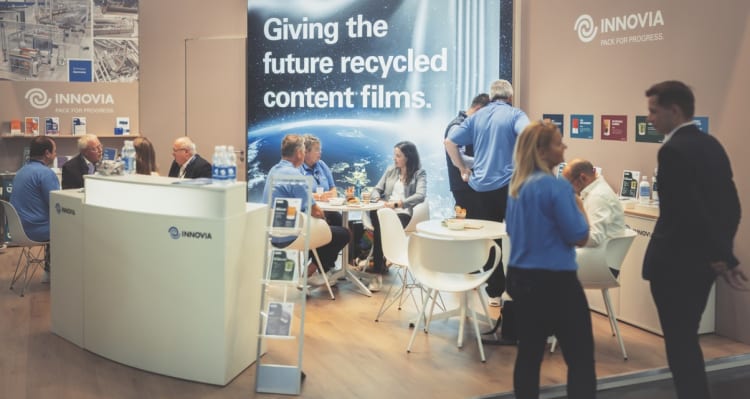
At the Interpack 2026 trade fair in hall 9 at stand F04, Innovia Films, a producer of BOPP films for packaging, label, graphic and tobacco applications, will present a new generation of mono-material polypropylene films. These solutions have been developed with the increasing regulatory requirements of the European Union in mind, as well as with the practical simplification of packaging structures while maintaining required performance parameters.
With the forthcoming implementation of the EU Packaging and Packaging Waste Regulation (PPWR), packaging must quickly adapt to new requirements regarding recyclability and recycled content. The solutions proposed by Innovia are intended to facilitate this transition by reducing material complexity, replacing multi-material laminates with mono-material polypropylene structures and increasing the compatibility of packaging with existing and emerging recycling systems. For the packaging industry, this means the possibility to simplify production processes, limit the use of difficult-to-process laminates and at the same time maintain the required product protection and shelf presentation.
The target development direction is to replace multi-material packaging structures with mono-material polypropylene solutions. Fewer layers translate into simpler lamination and sealing processes, better compatibility with recycling systems and more predictable performance in different packaging formats. As emphasised by Simon Huber, managing director of Innovia Europe, it is crucial to combine sustainability requirements with ease of implementation: "Customers expect greater sustainability without additional complexity. We help them achieve both objectives by offering solutions that are easy to implement and prepared for upcoming market requirements."
Scope of polypropylene film solutions
One of the key areas of the presentation will be the Encore film range, which extends the possibilities of integrating recyclate into high-performance films. Within this offer, raw materials from post-consumer recycling, chemically recycled feedstock for food-contact applications and materials from so-called ocean-bound plastic are available. This gives brands flexibility in meeting their own sustainability targets while maintaining the required quality, consistency and appearance of final products.
Another field is high-barrier polypropylene films, including the latest ultra-high-barrier metallised grades designed to replace aluminium foil or metallised PET in recyclable polypropylene laminates. These solutions provide high barrier properties against oxygen and water vapour, which is crucial for many food and consumer packaging formats, and at the same time support the development of mono-material packaging structures compliant with recycling system requirements.
Combined with compatible printable outer layers and sealant layers within a fully polypropylene structure, these films enable the required product shelf life and stability to be maintained while adapting packaging designs to recyclability guidelines.
Transparent barrier films for thermal processing
Innovia will also present transparent high-barrier films intended for demanding packaging formats such as pouches for retort processing. Polypropylene films in this category are designed as an alternative to coated PET structures traditionally used in high-temperature processes. When incorporated into mono-material laminates, they provide high barrier performance even after retort processing, helping to maintain product quality throughout its shelf life.
These solutions are targeted at applications in which multi-material laminates that hinder recycling have previously dominated, while still meeting requirements for temperature resistance, tightness and protection against external factors.
Solutions for dairy and fresh food packaging
In the dairy packaging segment, Innovia is introducing alternative polypropylene films to replace conventional paper banderoles used around yoghurt cups and similar containers. Combined with polypropylene cups and lids, such solutions support the design of recycling-friendly packaging by creating material-homogeneous packaging systems.
These films are also characterised by increased stiffness and mechanical strength, which enables the design of lighter packaging constructions. They allow a reduction in cup wall thickness without deterioration of structural stability during filling, packaging, transport and handling in the supply chain.
Lidding film technologies for PP containers
An important part of the showcase will also be advanced lidding films designed for polypropylene containers. They represent a recyclable alternative to traditional lids made of PET, paper or aluminium foil. Depending on application requirements, these films can be printed, laminated or coated with sealing layers.
The balanced mechanical properties achieved through Innovia's manufacturing technologies ensure consistent die-cutting parameters and stable behaviour during sealing. This helps converters maintain process efficiency and packaging quality at high production volumes.
Collaboration across the packaging value chain
According to announcements from Alasdair McEwen, who leads Innovia's European packaging division, increasing sustainability expectations require close cooperation across the entire packaging value chain. McEwen stresses that designing packaging for recyclability forces a complete rethinking of material structures: "Designing packaging for recyclability requires the entire industry to rethink the material structures it uses. Our aim is to provide film technologies that make it easier for converters and brand owners to shift to mono-material solutions while still meeting performance requirements."
Visitors to Interpack 2026 will have the opportunity to meet Innovia specialists in hall 9 at stand F04 and learn about the latest polypropylene film solutions for designing recyclable packaging and meeting future regulatory requirements.