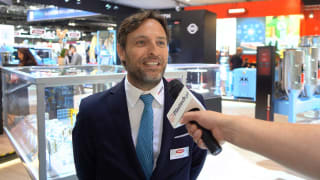
Igus is pursuing a growth strategy based on automation, infrastructure expansion and increasing local manufacturing presence. The total value of the company's global investments amounted to EUR 124.4 million. According to the company, these measures are intended to strengthen supply chains, shorten order lead times and improve delivery reliability. The company indicates that, under conditions of global tensions and economic uncertainty, maintaining innovation capacity remains important for growth and competitiveness. In this context, the company has announced the launch of 227 new products from the motion plastics range. At the same time, it is investing in plants, process automation and the expansion of research facilities, while also extending its international operations through new and existing branches. The aim is to increase customer proximity and provide faster service through local production and assembly.
In 2025, igus increased its revenue to EUR 1.155 million, representing year-on-year growth of 4.4%. The company's three largest sales markets, China, Germany and the United States, together account for around 60% of sales. Global employment reached 5,423, which is 185 more than a year earlier, including 2,044 employees in Germany. In order to reduce dependence on the external labour market by 2027, the company launched its own training factory at its headquarters in Cologne. The cost of this investment amounted to EUR 600,000.
At the innovation centre in Cologne alone, igus invested EUR 42.2 million in 2025, and a further EUR 11.5 million was allocated to equity interests. An additional EUR 70.7 million went to global subsidiaries. The funds were allocated, among other things, to the purchase of land, buildings and modern tools. Artur Peplinski, CEO and member of the Executive Board of igus, emphasises: "Product quality and price are no longer the only differentiating factors. Our customers increasingly need suppliers who can deliver products quickly and, above all, reliably, without having to compromise on product quality."
Automation and logistics in Cologne
One of the key factors in increasing delivery speed is automation. In the new Phase 8 building at the company's headquarters in Cologne, a fully automated small-parts warehouse is being built. The facility is expected to shorten order processing times thanks to the ability to perform up to 1,800 storage and retrieval operations per hour. The company is also developing its own automation solutions intended to relieve employees of repetitive tasks such as unloading injection moulding machines.
The Cologne plant operates 857 injection moulding machines, producing more than one billion components per year. According to the company, in areas such as crimping and soldering, new automation solutions make it possible to reduce lead times by up to 30 times compared with manual processes.

Expansion of research facilities
Igus has also expanded its research laboratory, which the company says is the largest facility of its kind in the industry. It now covers 5,500 square metres. A new building dedicated exclusively to drytech products has increased the research area by 1,500 square metres. As Artur Peplinski notes: "The expansion of research space by 1,500 square metres in the new building, dedicated exclusively to our drytech products, creates the basis for increasing performance and introducing new products such as PTFE-free and bisphenol-free materials."
The number of test stations increased by around 20%. The company states that the number of tests is set to increase from the current 11,000 to around 17,000 per year. Part of the investment also covered the development of online tools for design engineers. These solutions are intended to enable automatic product configuration and simplify the preparation process without the need to exchange design drawings with the sales department.
Local production and new subsidiaries
Igus still manufactures around 95% of its components in Germany, but the company points to the growing importance of local production. In 2025, it expanded its facilities in China, the United States, Poland, Turkey and Japan. The investments included, among other things, larger warehouses and assembly plants. According to the company, the expansion of local production capacity in China and the United States reduced transport weight by around 1.2 million kg in 2025, contributing to lower CO2 emissions.
The company also established new subsidiaries in Australia, Morocco, Ivory Coast and Latvia. These measures are intended to support closer cooperation with customers and better adapt operations to the specifics of local markets.
Sustainability and recycling
Sustainability remains one of the elements of the company's strategy. Igus reports that since 2025, production at its headquarters in Cologne has been carbon-neutral in Scope 1 and 2 emissions. At the same time, the chainge recycling platform is being further developed. To date, 235 tonnes of used cable carriers have been collected through it.
As Artur Peplinski explains: "An important step forward is the new ISO-compliant certification, which allows us to transparently demonstrate to customers the CO2 emission savings resulting from recycling our e-chain systems."
New products and development of the RBTX platform
A key part of the growth plans remains the product portfolio. At Hannover Messe 2026, igus intends to present 227 new products from the motion plastics range. These will include the first drylin C linear guide with rollers, 3D printing materials for the food industry, and the e-spin energy supply system, a solution for cleanrooms designed for long travels, with an ISO Class 1 certificate issued by Fraunhofer IPA. The company is also announcing new solutions for e-mobility with e-tract AC and DC.
Igus also identifies low-cost robotics as one of its growth drivers. As Artur Peplinski says: "Our goal is to democratise automation. Small and medium-sized enterprises with limited budgets and little previous experience should also benefit from automation."
To this end, the company is developing the RBTX online platform. It is intended to serve as a service hub for comprehensive automation solutions. In the future, the platform is to not only bring together components from more than 260 robot manufacturers, but also connect users with suitable integration partners quickly, transparently and independently of the manufacturer. It currently offers around 100 humanoid robot models from 35 manufacturers. Summing up the company's direction, Peplinski states: "We want to show that sustainable growth and technological innovation are possible even in difficult times. By consistently focusing on delivery speed, local presence and automation solutions, we are setting the course for development, for ourselves and for our customers."