The confectionery industry is entering a phase of marked technological and functional transformation, with sustainability as a key dimension. The interpack 2026 trade fair in Düsseldorf underlines this change by dedicating three of its eighteen exhibition halls specifically to processing and packaging technologies for confectionery and baked goods. Manufacturers are thus responding to new consumer habits, modified recipes and rising requirements for sustainable packaging. The market is now demanding not only traditional sweets, but also products with added health benefits, including plant-based and sugar-free items, organic formulations, high-protein snacks and recipes with innovative ingredients that shape taste, colour and texture as a multi-sensory experience.
In parallel, the complexity of requirements for production and packaging processes is increasing. Confectionery belongs to the most demanding food categories in terms of production technology. High fat content, sticky product surfaces, temperature-sensitive formulations and stringent expectations regarding appearance, freshness and shelf life mean that precisely tuned machinery, materials and processes are essential. At interpack 2026, the industry will present solutions developed to address these needs, ranging from sustainable packaging materials and flexible machine concepts to digital added value throughout the value chain.
Dynamic growth of the global confectionery market
The global confectionery market continues to show strong growth momentum. In 2024, analysts estimated the value of the chocolate segment at around 173 billion US dollars. Forecasts indicate that by 2034 this market could exceed 300 billion US dollars, which corresponds to an average annual growth rate of nearly seven percent. According to data from Fortune Business Insights, Europe holds a dominant position, with a projected market share of around 52 percent in 2025.
As the market develops, environmental aspects are gaining in importance. Confectionery is particularly sensitive to oxygen, moisture and fat migration, which is why plastic packaging has long been regarded as virtually indispensable due to its barrier properties. Exhibits at interpack, however, show that this assumption is gradually becoming outdated. Solutions based on barrier papers, monomaterials and recyclable packaging have already moved from niche applications to industrial practice.

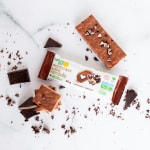
Sweets with added health benefits are in vogue. Image: Nature Zen/unsplash
Functional barrier papers as an alternative to plastic
One example of this trend is functional papers developed by Koehler Paper, an interpack exhibitor. The NexPlus Advanced and NexPlus Seal Coat product lines comprise packaging papers with oxygen, mineral oil and grease barriers, which can be heat- or cold-sealed and are suitable for recycling in the waste paper stream. These materials also enable attractive packaging design. The latest generation features a high-gloss surface, allowing brands to achieve a premium presentation without the use of plastics.
Thanks to the underlying technology, NexPlus Seal Coat paper provides a uniform, high-gloss surface without stress whitening. On packaging machines, the paper can be processed at speeds comparable to plastic films and also allows sealing at lower temperatures. According to the manufacturer, this meets the expectations of many brands seeking high-gloss packaging in the form of a recyclable monomaterial that can be easily disposed of with paper and complies with the 95/5 rule. NexPlus Seal Coat has already been awarded the "Made for Recycling" label by environmental services provider Interzero.
Barrier paper solutions already have initial commercial implementations. Several years ago, the start-up Nucao became the first chocolate producer to launch primary packaging made from NexPlus Advanced paper on the market. Another manufacturer, Vivani, has taken a different approach, using NatureFlex films for its organic chocolates. These films are produced from renewable raw materials by Futamura, also an interpack exhibitor, and are home compostable. Combined with FSC-certified paper wrapping and printing inks free from mineral oils, the packaging becomes both a brand communication medium and a solution with reduced environmental impact.
Machinery adapted to alternative materials
Material changes are accompanied by the development of new packaging machine concepts. Modularity, flexibility and ease of changeover are at the centre of attention. Manufacturers such as Theegarten-Pactec and Rovema are addressing these needs by designing machine platforms capable of processing different packaging materials and formats.
Theegarten-Pactec will present the FPC6 machine at interpack for the first time. This is a high-output flow-wrapping machine for packing chocolate bars, tablets, pralines and other products in tubular bags. The unit is aimed at manufacturers of chocolate and confectionery, producers of muesli and protein bars, functional food and snacks, as well as co-packers and contract packers. The machine covers a wide range of product formats and can handle various seal types, including cold sealing, heat sealing and hot-wire cut-off systems for water-soluble films. This provides a high level of flexibility in the choice of packaging materials.
At the trade fair, the company will also present an additional folding method, referred to as "Smart Bunch", for the CHS confectionery packaging machine, which was first shown at interpack 2023. This extension is intended not only to increase machine flexibility, but also to reduce consumption of packaging material.

A system from a single source: from the FPC6, tubular bags are fed directly into the connected BLM high-performance cartoner. Photo: Theegarten-Pactec
Rovema, in turn, offers the BVC 250 Candy flow-wrapping machine, launched in 2024. This unit can process monomaterials, laminates as well as paper and paper composites, achieving output rates of up to 300 bags per minute. To meet the complex requirements associated with sustainable packaging, the manufacturer collaborates with specialised material suppliers and tests alternative substrates for machinability, sealing behaviour and performance parameters. Recently, the company demonstrated the production of paper bags that can be resealed after opening by simply tucking one part of the packaging inside the other.
Additional packaging features and the growing role of digitalisation
Interpack exhibitors are focusing not only on materials and machine design, but also on the functionality of the packaging itself. Resealability, intuitive handling and improved user experience are moving to the foreground. A technical example of such an approach is the Easylock system from Aplix. This is a sensory hook-to-hook closure made from recyclable polyethylene, which provides both audible and tactile feedback when the package is opened and closed. The solution is highly tolerant of product particles in the closure area, which is an important advantage for confectionery as well.
Digitalisation and supply chain transparency are also gaining importance in the confectionery sector. A new chocolate traceability solution developed by one manufacturer has been recognised with the German Sustainability Award 2026. Using the QR code printed on the packaging, consumers can trace the origin of the cocoa back to the specific farming community that produced it. This is enabled by a tracking tool that integrates data from the raw material source through to the chocolate factory. The use of digital tools in the confectionery industry therefore serves not only to improve efficiency, but also to build consumer trust in the supply chain.
The range of solutions presented at interpack 2026 will also cover sensitive baked goods, for which safe production and packaging require advanced process control and carefully selected materials. The trade fair will take place from 7 to 13 May 2026 in Düsseldorf. Current information on the event is available on the organiser's website at www.interpack.de.

The BVC 250 Candy flow-wrapping machine also produces resealable paper bags. Image: packaging journal