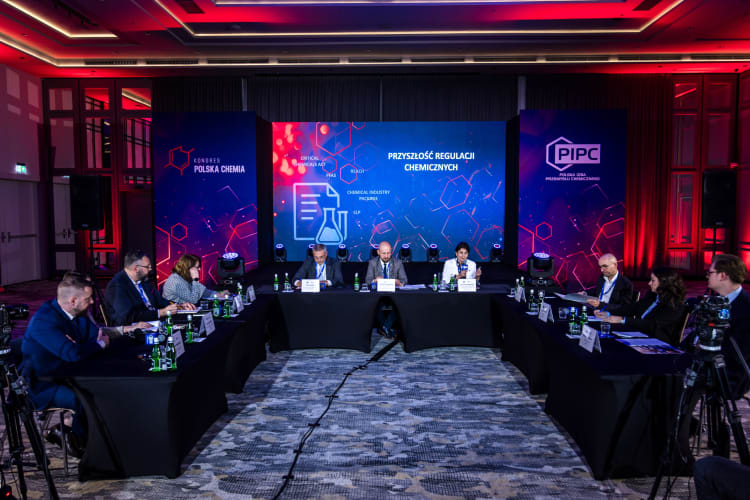
The 13th Poland Chemistry Congress will take place on 11–12 June 2026 in Warsaw, at the Arche Krakowska hotel. Organised by the Polish Chamber of Chemical Industry, the event remains one of the most important annual meetings for the chemical industry in Poland and Central Europe. In its two-day congress format, it brings together representatives of public administration, industry leaders, scientific experts, and companies providing the technological and operational base for the chemical sector across the entire value chain. According to the organiser, this year’s edition is intended to serve as a forum for debate on the resilience, sovereignty and security of the chemical industry, with the emphasis placed not only on diagnosing problems, but also on practical courses of action. Details of the programme and registration are available at kongrespolskachemia.pl.
This year’s discussions are set against a backdrop of persistent geopolitical and trade tensions affecting the operation of European and global value chains. As stated in the event announcement, the chemical industry is among the sectors particularly sensitive to disruptions in access to raw materials, energy and logistics services, while at the same time remaining important for the stability of industries such as energy, defence, construction, pharmaceuticals and advanced technologies. Dr Tomasz Zieliński, president of the management board of the Polish Chamber of Chemical Industry, said that “2026 may prove to be a key year for the European and Polish chemical industry. Ahead of us is the implementation of the Industrial Accelerator Act and elements of the Action Plan for the European chemical industry. At the same time, the Critical Chemicals Alliance has begun its work, with the Polish Chamber of Chemical Industry as an active participant. These initiatives, alongside stable regulatory conditions and access to competitive energy and raw materials, may create real space for the development of innovation, new technologies and investment across the entire chemical value chain. This year’s Poland Chemistry Congress programme clearly shows that the chemical industry is a pillar of Europe’s security and development and an indispensable element of the stable functioning of the entire economy.”
Congress agenda
The programme of the 13th Poland Chemistry Congress covers issues related to European security, market protection, energy transition, regulation, chemicals management and business development in the sector. One of the main blocks will address the role of chemistry as a pillar of Europe’s security, with particular emphasis on defence, cybersecurity and supply chain resilience. In this area, discussions are planned on the resilience of chemical supply chains under conditions of conflict and geopolitical tension, the management of continuity in transport, storage and distribution, as well as cooperation between the chemical and defence industries. The programme also includes topics related to dual-use technologies, the risks of sabotage, cyberattacks and disinformation, and the protection of critical infrastructure, including chemical plants, pipelines, terminals and storage facilities.
A second important block concerns global competition and market protection. The organisers announce a debate on the operation of the European chemical industry under conditions of geopolitical uncertainty and trade disruption, as well as on the relations between the European Union and other regions of the world, including the US, China, India, the Middle East and Mercosur. The programme includes issues such as tariffs, sanctions and anti-dumping instruments, the impact of carbon cost and the CBAM mechanism on competitive conditions, as well as access to critical raw materials. Topics to be discussed also include local content, the “Made in Europe” concept, reindustrialisation and production location models such as reshoring, nearshoring and offshoring.
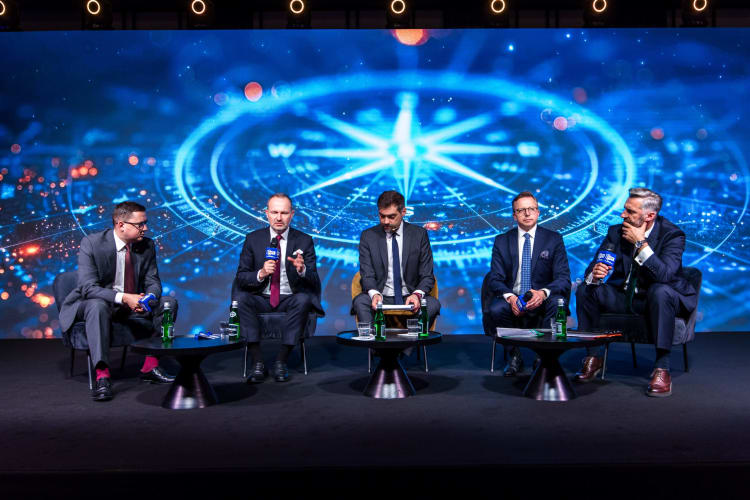
Transition, regulation and competitiveness
An extensive part of the programme is devoted to the energy transition and industrial decarbonisation. The discussions are expected to cover the conditions and limitations of the transition, including the availability of energy and raw materials, emission levels and the regulatory environment. A debate is also planned on the possibility of ensuring competitive energy prices for industry, the relationship between the transition and the risk of deindustrialisation in the context of the ETS revision, and the limits of compromise between decarbonisation and security of supply. The agenda also includes topics concerning the use of renewable energy sources, energy storage and PPAs in chemical plants, the role of natural gas as a transitional fuel, the significance of nuclear power and SMRs for industry, as well as the potential of green hydrogen and CCUS technologies.
A separate area is devoted to the relationship between regulation and real support for industry. Among the announced topics are an assessment of the effects of the Clean Industrial Deal one year after its announcement, the significance of the Industrial Acceleration Act, the issue of regulatory consistency and predictability, and the consequences of overlapping requirements arising from regulations such as REACH, CLP, ETS, IED, RED and PFAS. The organisers also point to the problem of lengthy environmental decisions and their impact on industrial development in the European Union. In this context, the issue of circularity appears as an element of competitiveness, along with the question of whether the current circular economy regulations support the building of long-term raw material autonomy, including in areas such as the Circular Economy Act, chemical recycling and critical raw materials.
The next part of the congress will concern chemicals management in the context of the European debate on competitiveness. The programme includes topics related to strategic chemicals, the first effects of the work of the Critical Chemicals Alliance, the future of the REACH system after 20 years of operation, and the direction of PFAS regulation. Participants are also expected to discuss the changing role of ECHA in light of new regulations and whether the European Union remains a benchmark in the area of chemical safety or is becoming a separate regulatory island.
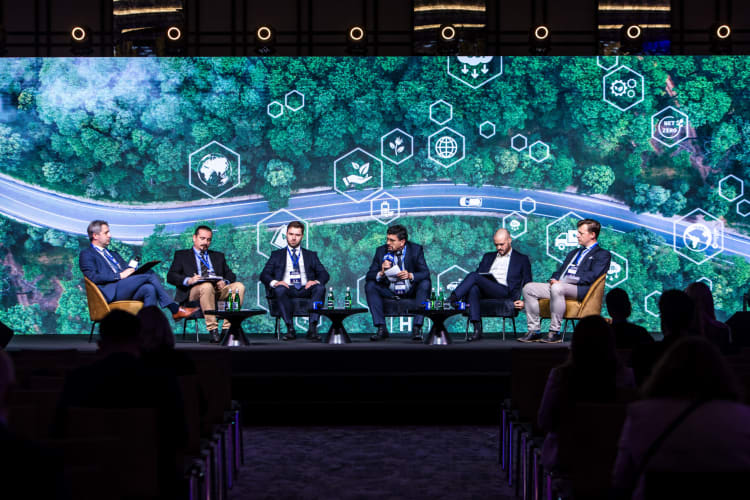
Networking and business development
The congress is intended to serve not only as a forum for strategic discussion, but also as a platform for business contacts for the chemical sector in Poland. The event format has been designed to support direct discussions among representatives of public administration, management boards and executive teams of chemical companies, as well as experts dealing with regulation, environmental protection, ESG, energy, security, technology and digitalisation. Suppliers of technological solutions and financial institutions are also expected to take part in the event. The organiser announces opportunities for networking both in the expo zone and during the networking dinner. These activities are to be supported by a conference app enabling contact with participants and the scheduling of business meetings.
A permanent element of the 13th Poland Chemistry Congress will also be the #PolskaChemiaTalks studio. Within this format, interviews and recordings are to be conducted with representatives of industry, public administration and the expert community. As stated in the event announcement, the format is intended to enable participants to present their companies, positions and proposals, while increasing the visibility of their voice in the debate on the future of the chemical sector.
The programme also includes a Business Development Roadmap for Polish Chemistry block. In this part, discussions are planned on sources of financing for industrial transformation, investment decisions concerning the modernisation, expansion or relocation of plants, as well as on new investment areas such as chemical recycling and the circular economy, CCUS, bioplastics and electromobility. The agenda also includes issues related to investor expectations, the impact of ESG obligations on business operations, models of cooperation between science and industry, and the role of artificial intelligence and automation in building competitiveness. Discussions are also planned on next-generation ERP and MES systems intended to support the integration of production, supply chains and sales.