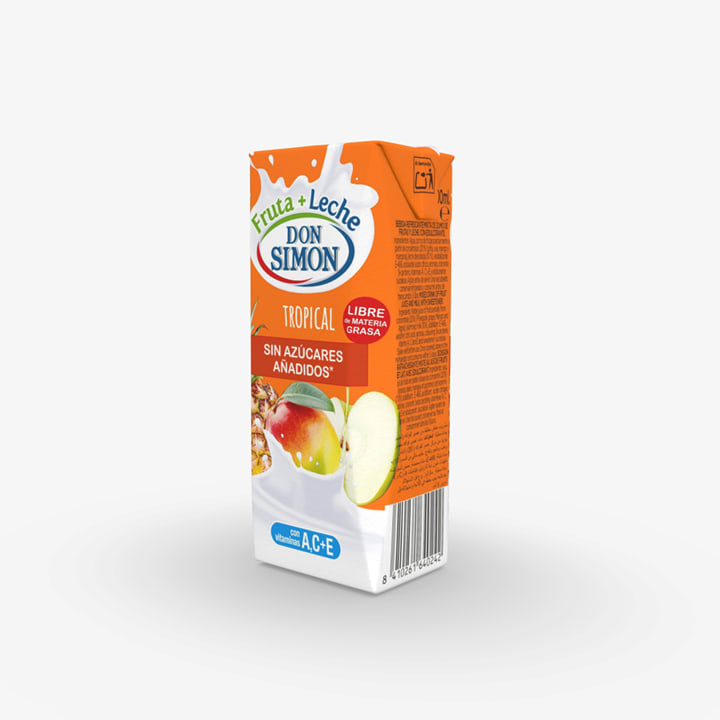
Tetra Pak, in cooperation with the Spanish beverage producer García Carrión, is launching the first aseptic juice packages using a paper-based barrier. This solution is another step towards reducing dependence on fossil-based raw materials in the beverage packaging segment, while maintaining functionality and the required level of product protection. The new Tetra Brik Aseptic 200 ml Slim Leaf package with a paper-based barrier will be used for the Don Simón brand, one of García Carrión's main juice brands on the Spanish market. According to data presented by Tetra Pak and García Carrión, the design of the carton has enabled a significant increase in the share of renewable raw materials and a substantial reduction of the carbon footprint compared to conventional aseptic cartons containing an aluminium foil layer.
New juice carton with a paper-based barrier
The new Tetra Brik Aseptic 200 ml Slim Leaf package with a paper-based barrier is the world's first single-serve juice package using this type of barrier solution and the first of its kind available in Spain. The package contains 80% paper fibres. The combination of the paper-based barrier with plant-based polymers used in the package coatings increases the share of renewable raw materials to 92%.
According to the data presented by the manufacturers, replacing the traditional aluminium foil layer and part of the fossil-based polymers with renewable materials helps reduce the carbon footprint by 43% compared to standard aseptic packages containing an aluminium foil layer and fossil-based polymers. This result was confirmed in a study carried out by Carbon Trust.
"We are proud to lead the transformation towards more sustainable packaging in the juice category. For more than 135 years, García Carrión has remained committed to innovation implemented in a responsible way and with respect for the environment," said Don José García Carrión, president of García Carrión. "This innovation contributes to our mission to reduce environmental impact while providing consumers with products of the highest quality," added Fala Corujo, vice president of García Carrión.
For García Carrión, the new package is part of the implementation of a comprehensive sustainability strategy. This strategy was recognised in 2024 with the Factories of the Future award for activities in the field of sustainability and the circular economy.
Characteristics of the paper-based barrier
The paper-based barrier developed by Tetra Pak is an alternative to the traditional aluminium foil layer used in aseptic cartons. Replacing aluminium with a barrier based on cellulose fibres is intended to support a shift from fossil-based raw materials to low-emission, renewable materials, which translates into a reduction in the carbon footprint of the package.
In combination with the other structural layers of the carton, the paper-based barrier protects the product from oxygen, light, moisture and microorganisms. According to Tetra Pak, the new structure makes it possible to maintain food safety and shelf life at a level comparable to packages that use aluminium foil as the barrier layer.
Aseptic cartons with the new paper-based barrier are fully suitable for collection, sorting and recycling in systems where appropriate infrastructure is available. The solution is also intended to provide additional benefits in later stages of the recycling process, in particular by increasing the recovery rate of cellulose from carton packages while maintaining high quality of both cellulose and non-cellulose fractions.
Direction of fibre-based packaging development
The paper-based barrier technology developed by Tetra Pak is part of a broader concept for the development of food packaging. The aim of this concept is to create a package made predominantly of paper, using only responsibly sourced renewable or recycled materials, with the lowest possible carbon footprint and fully recyclable.
"The joint deployment marks an important step towards packages made entirely from renewable and fully recyclable materials. Working closely with our customers, we demonstrate that sustainable innovation can be implemented at scale across different markets and categories, while maintaining functionality and quality," said Tatiana Liceti, vice president for packaging solutions at Tetra Pak.
The first application of the Tetra Pak aseptic beverage carton with a paper-based barrier took place in Portugal in 2023, in cooperation with a local dairy company. The solution was recognised as a breakthrough innovation in sustainable packaging, receiving the Resource Efficiency award in the Sustainable Packaging News Awards 2024 competition.