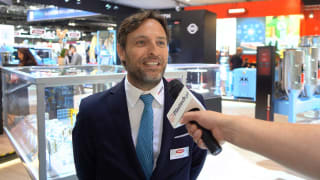
Author: Robert Szyman, Director General of the Polish Association of Plastics Processors
In the procurement policies of many State Treasury companies in recent years, a model has become entrenched that at first glance appears rational and “cost-effective”. In practice, however, it has proven to be one of the most destructive mechanisms for Polish and European industry. This refers to the dominance of a single criterion in procurement processes—price, treated almost as the sole determinant when selecting a supplier.
This way of making procurement decisions ignores the broader economic, social and strategic context.
Stage one: pushing European manufacturers out of the market
The mechanism begins with tenders. Companies from Poland and the European Union, operating in one of the most highly regulated business environments in the world, compete with suppliers from outside Europe, mainly from Asia. Competition that only appears to be equal.
European manufacturers bear high costs of energy, labour, environmental protection, certification, ESG reporting, and adaptation to further climate and social regulations. Meanwhile, their Asian competitors operate with much lower costs, often supported by state subsidies, less stringent environmental and social standards, and economies of scale that European industry cannot quickly replicate. When the only effective selection criterion is price, the outcome of such “competition” is predetermined. Local and EU manufacturers lose, regardless of quality, delivery timeliness or the standards they represent.
Stage two: erosion of domestic industry
Lost tenders mean fewer orders. Fewer orders mean lower revenues. And lower revenues lead to reduced investment, a slowdown in development and innovation work, and pressure to cut costs, including labour costs.
In practice, this means shutting down production lines, abandoning new projects and a gradual loss of competitiveness. Companies that not long ago were exporters begin to lose market share, until they themselves become dependent on imports of components and raw materials. This is a slow but systemic process. It does not happen overnight, but its effects are lasting and difficult to reverse.
Stage three: losses for public finances
The weakening of domestic enterprises very quickly translates into the condition of public finances. A smaller scale of activity means lower revenues from corporate income tax (CIT), personal income tax (PIT) and social security contributions. Every job eliminated in industry is not only a social problem, but also a real loss for the budget. A state that loses revenue faces a choice: cut public spending or increase the tax burden on those entities that still operate in the market. In this way, short-term “savings” resulting from selecting the lowest-priced offer in State Treasury companies generate much higher costs for society as a whole in the long term.
European regulations and global competition
It is worth asking a fundamental question: how is European industry supposed to compete solely on price in a global world, while at the same time being subjected to more and more regulatory obligations?
European companies are required to meet high environmental, social and labour standards, to provide non-financial reporting, to reduce their carbon footprint and to bear the costs of the energy transition. These are valid and necessary goals, but they become a barrier to competitiveness if they are not accompanied by a coherent procurement and industrial policy. On the one hand, responsibility cannot be required, while on the other it is completely ignored in procurement processes, reducing decisions solely to the lowest price.

Robert Szyman, Director General of the Polish Association of Plastics Processors
The specific role of State Treasury companies and other public entities
State Treasury companies are not ordinary market participants. Their decisions have systemic significance. This is not about protectionism or closing the market, but about reasonable and responsible consideration of non-price criteria. Poland has one of the highest shares of state ownership in the economy in the EU, estimated at around 15%, which affects its dynamics and development.
However, the same applies not only to State Treasury companies, but also to the broad public sector—armed forces, hospitals, budgetary units or state institutions. If only the price criterion dominates in these areas, the potential impact on the domestic economy becomes enormous. A product’s carbon footprint, supply chain security and stability, compliance with European environmental and social standards, geopolitical risk, as well as a supplier’s real contribution to the domestic economy—these are criteria that should be taken into account on an equal footing with price.
The strategic choice we face
If we do not change the way we think about procurement in companies with State Treasury shareholding and across the entire public sector, it will provide an additional impulse for deindustrialisation, relocation of production outside Europe and a growing dependence on imports. In the longer term, this means weakening economic resilience, greater vulnerability to crises and fiscal pressure that will affect society as a whole. We need a long-term strategy in which price remains important, but not the only criterion. Without such an approach, Polish and European manufacturers will not be able to compete effectively in the global economy, and we will all bear the costs of this short-sightedness.