Global trade places increasing demands on companies in terms of logistics safety, cargo tracking and regulatory compliance. Industrial packaging for machines, equipment, electronic components and hazardous goods plays a particularly important role. It must meet strict legal requirements, fit into circular economy concepts, reduce resource consumption and waste, and at the same time respond to the ongoing digitalisation of transport processes, including systems based on artificial intelligence. The European Packaging and Packaging Waste Regulation (PPWR) clearly shifts the focus towards closed material loops, verifiable origin of raw materials and the potential for reuse and recycling. In this context, pallets, crates and transport containers are becoming key elements of a functioning circular economy, and packaging manufacturers and logistics service providers must adapt both product design and models of use and return.
Circular economy in industrial packaging
The circular economy has become a key topic across all packaging material groups. In the plastic pallet segment, for example, manufacturer Craemer demonstrates how closed-loop raw material flows can be implemented on an industrial scale using the Zero Virgin recyclate. The company recovers polyethylene from end-of-life products and reprocesses it into heavy-duty pallets such as the new E3-5 Zero Virgin. According to the manufacturer, the quality of such a pallet is comparable to products made from virgin material, and the pallet itself is durable, stable and fully recyclable.
Closed loops for strapping bands and wooden packaging
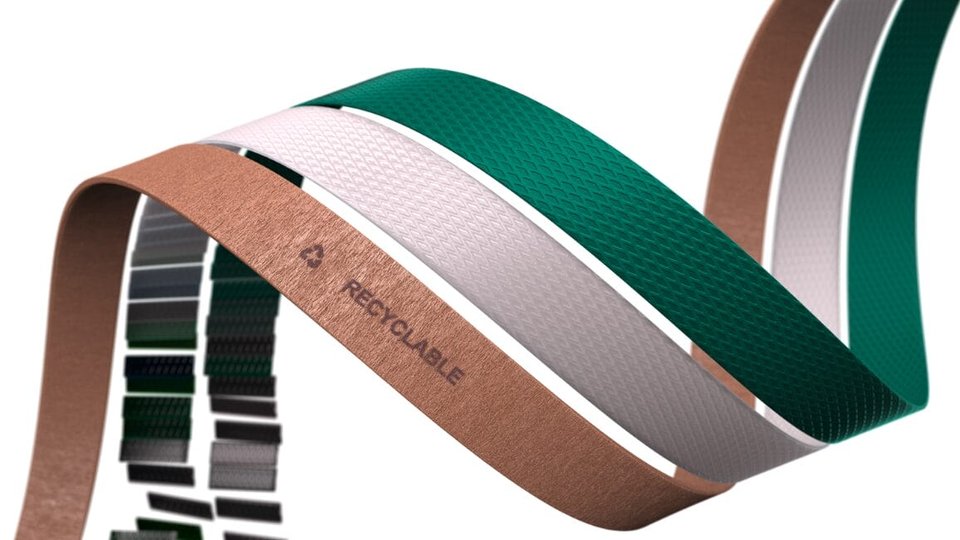
The PPWR sets high requirements for packaging reusability, including stretch film and strapping bands. A group of 13 companies from the strapping industry, including Mosca and Teufelberger, pointed to transport safety risks and ran a campaign to exclude these products from mandatory reuse quotas. In October 2025, the European Commission decided to exclude pallet wrapping and strapping bands from the PPWR’s reuse quotas.
In parallel, Mosca launched the "Loop that!" recycling project. Companies that accumulate strapping waste can sort it by type, shred or compress it and then hand it over to partner Interzero, which collects, pays for and recycles the material. The concept also invites competing manufacturers to cooperate in order to establish a harmonised, industry-wide material circulation system.
In the wooden packaging sector, the German Federal Association for Wooden Packaging, Pallets, and Export Packaging (HPE) presented its own recycling system HPECycle on World Recycling Day 2025. Users of pallets and wooden packaging can return them to regional collection centres after use. At these centres, pallets are professionally inspected, cleaned and, if necessary, repaired so that they can be reintroduced into the economic cycle.
Steel and composite drums with a lower carbon footprint
The category of classic industrial packaging, such as drums, is also evolving towards a lower carbon footprint. Manufacturer Greif has expanded its EcoBalance product line, previously focused mainly on plastics, to include steel drums made from XCarb steel supplied by ArcelorMittal. XCarb steel, produced in Europe with a share of recycled steel, reduces the CO2 footprint by around 60 per cent compared to conventional steel drums.
Another exhibitor, Schuetz, has introduced the Combi drum, which combines the stability of steel with the chemical resistance of plastic. This industrial packaging with double leakage protection is particularly suitable for aggressive and corrosive products. The design is based on a standard painted steel drum equipped with an internal container made of HDPE.
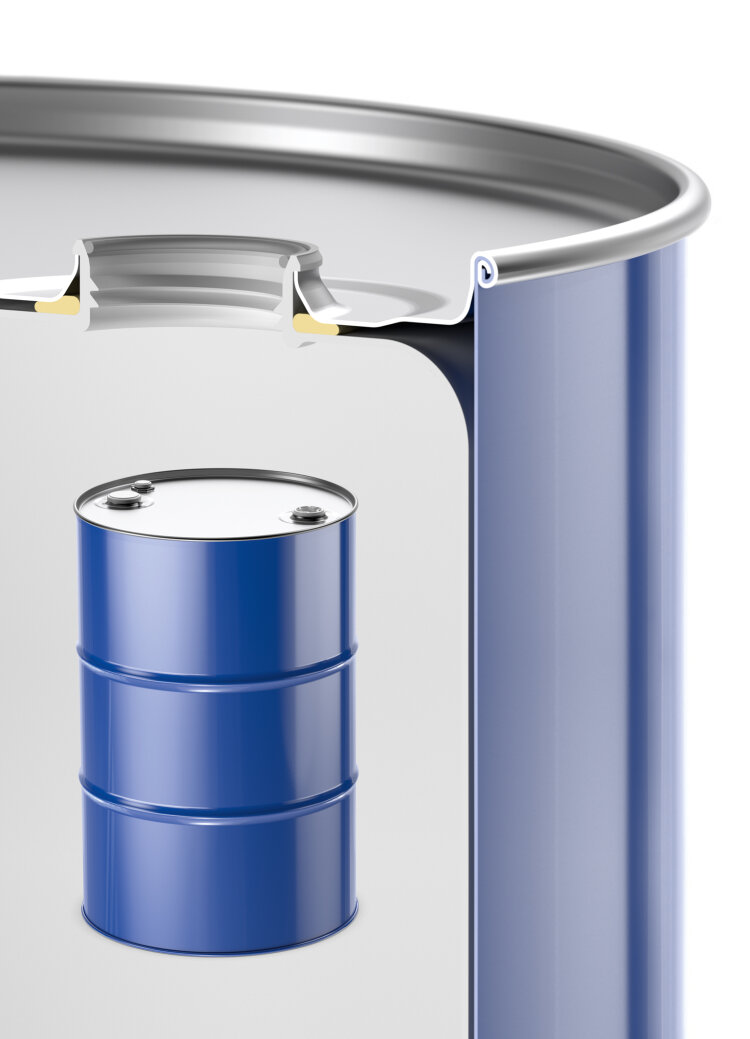
With the Combi steel drum, Schuetz combines the corrosion resistance and chemical resistance of plastic with the stability of steel. Image: Schuetz
Interpack 2026 is set to show the professional audience which material and design solutions in steel, plastics and wood are currently driving the development of industrial packaging.
Labelling and tracking of loads
Transporting goods by sea, rail, road or air places demands not only on the packaging itself, but also on labelling systems. Logistics labels ensure clear identification and management of pallets, drums and IBCs. In this field, Herma and label printing specialist Cab have jointly developed a linerless logistics label solution based on print & apply technology. Initially non-adhesive, silicone-free labels are used, which do not require backing material.
"Our customers are currently worried about the EU Packaging and Packaging Waste Regulation and the Digital Product Passport as their implementation is also going to put labelling technologies to the test," says Frank Debusmann, National Sales Director at REA Elektronik. According to him, direct labelling is the solution if packaging is to be as recyclable as possible from summer 2026. At interpack 2026, the company will be showcasing the new UV laser from the REA Laser product line for marking plastics, films and new mono-material packaging. The REA Laser CL100 model with 100-watt power enables marking at higher speeds than standard CO2 lasers from the REA Laser CL series.
The REA Jet HR NX inkjet printer has also been developed for the requirements of the Digital Product Passport. With its 1-inch cartridge, the device can print codes at a sufficient height, enabling the required identification data to be placed directly on the packaging.
Large-load carriers made from recyclate
In the area of large-load carriers, Cabka has developed the CabFold Hybrid container from scratch, specifically for the storage and dispatch of body and chassis parts. The foldable large-load carrier consists of 94 per cent recycled material and, thanks to its new design, offers the largest internal volume in its class, at 755 litres. Once emptied, the container can be folded, reducing the volume for return transport to less than one third of the original.
Werit will present the Intrabox container series at interpack 2026, made from 60 per cent new PP material and 40 per cent reclaimed PP material. An optional partition wall system enables flexible use, while handle openings ensure ergonomic handling. The containers can be stacked under loads of up to 50 kg and are 100 per cent recyclable at the end of their service life.
Mixing viscous products in IBCs
IBC containers are commonly used for storing and transporting liquids and bulk materials. Many filling products, especially viscous substances such as paints and varnishes, sealants and adhesives, must be stirred inside the IBC immediately before further processing. Schuetz offers a complete solution with its integrated Impeller mixer made of HDPE. The company has recently introduced a new version with a wing profile as an alternative to the previous cup stirrer design.
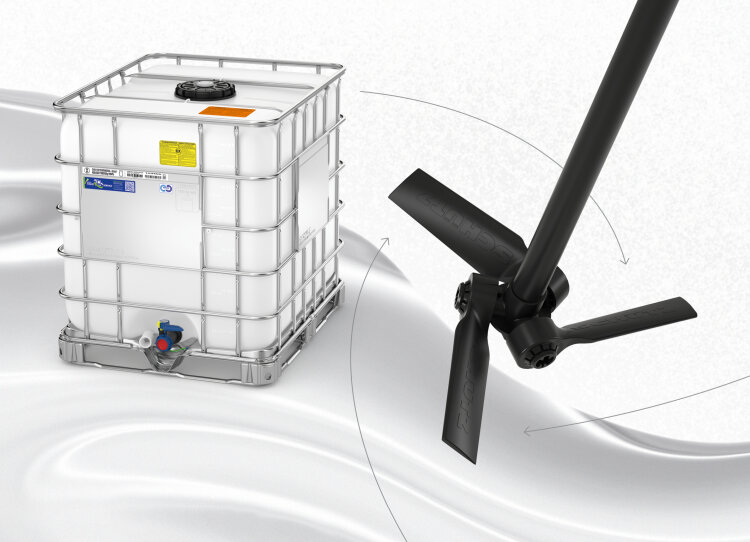
Viscous filling media can be efficiently stirred and homogenised with the Impeller one-way stirrer. Image: Schuetz
Artificial intelligence in day-to-day logistics
Cargo monitoring plays a key role in the transport of industrial goods. Today, artificial intelligence supports the analysis of real-time sensor data, early detection of irregularities and damage, and automatic control of logistics processes. Another area of application is precise measurement of shipment dimensions.
For exhibitor Krones, packaging the machines it produces is a particular challenge. The resulting packages are often irregularly shaped, yet must be measured accurately so that they can be placed on appropriately dimensioned freight pallets and wrapped in shrink film. If the actual dimensions deviate from those specified, there is a risk that the lorry provided will be too small or that the planned freight capacity on a container ship will be insufficient.
For this reason, Krones is now using an AI-based measurement system developed jointly with Telekom MMS. The solution is based on LiDAR (Light Detection and Ranging) technology and uses three time-of-flight cameras to fully scan irregular packages. AI-supported data evaluation reliably recognises even complex and irregular contours and measures them precisely. The system achieves accuracy with an average deviation of less than one centimetre.
Interpack 2026: overview of industrial packaging solutions
From 7 to 13 May 2026 in Düsseldorf, exhibitors at interpack will present how industrial goods can be packed safely and in a more sustainable manner for transport. From steel, plastic and wooden packaging through labelling and direct marking systems to digital solutions for measuring and monitoring loads, visitors will find current solutions in Halls 5 and 6 as well as 11 to 14. Further information on the trade fair is available at www.interpack.de.