AIMPLAS, the Plastics Technology Centre, is coordinating the European IRION research and innovation project aimed at building a more sustainable and resilient green hydrogen value chain. As hydrogen technologies develop in Europe, dependence on critical raw materials is increasing, which generates environmental, economic and supply chain challenges. The IRION project addresses these challenges by implementing a circular economy approach designed to enable the recovery, reuse and reintegration of valuable materials into new technologies.
The key area of work is proton exchange membrane water electrolysers (PEMWE), which use electrical energy to split water into hydrogen and oxygen. This is one of the main technologies for green hydrogen production, based on advanced polymer materials and catalyst coatings. The project pays particular attention to the limited resources of iridium and fluorinated ionomers, which are essential for the proper operation of membranes in these devices. The aim of IRION is to develop and validate sustainable recycling pathways for catalyst-coated components, including membranes, in a way that combines material efficiency with process cost-effectiveness.
The project assumptions include combining technological innovation, comprehensive sustainability assessment and cross-sectoral collaboration. The solutions developed in IRION are intended to be viable from both an environmental and economic perspective, in line with the priorities of the European Green Deal and the Critical Raw Materials Act. In practice, this means, among other things, the development of technologies for the recovery of precious metals from catalytic layers, the reuse of polymer components of membranes and their reintegration into new or refurbished electrolyser modules.
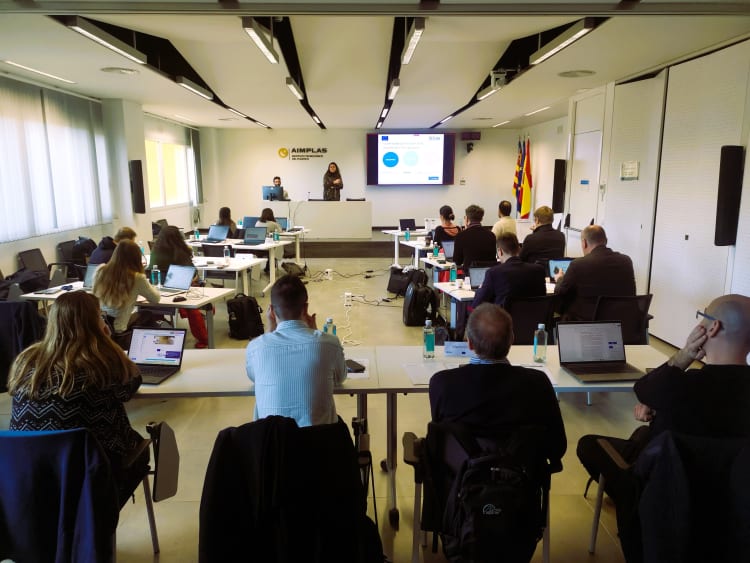
IRION project consortium and scope of work
The initiative was officially launched at the kick-off meeting held on 20 and 21 January 2026 at the AIMPLAS facilities in Valencia. During the meeting, the partners discussed the technical and organisational aspects of the project and planned activities for the first implementation phase. The consortium consists of ten partners from seven European countries: Spain, France, Germany, Italy, Slovenia, the Czech Republic and Cyprus. They combine expertise in polymer chemistry, materials science, engineering, modelling, environmental assessment and sustainable design.
In addition to AIMPLAS, the consortium includes the Fraunhofer Institute for Electronic Nano Systems from Germany, the University of Chemistry and Technology in Prague from the Czech Republic, Strategem Energy from Cyprus, Safina from the Czech Republic, Saint-Gobain Recherche from France, the National Institute of Chemistry NIC from Slovenia, RINA Consulting from Italy and H2Greem from Spain. The partners represent both research and development organisations and industrial entities involved in the development and deployment of hydrogen technologies.
AIMPLAS contributes its expertise in polymeric materials, recycling technologies and process optimisation. The centre supports the development and verification of sustainable recycling routes for catalyst-coated membranes, focusing on efficient recovery and the quality of materials returning to the loop. As Javier Castillo, a researcher in chemical recycling at AIMPLAS, points out: "In the IRION project we aim to close the loop on critical materials in hydrogen technologies, promoting a genuinely circular model that combines sustainability with economic feasibility and strengthens Europe's autonomy."
The project is funded by the Clean Hydrogen Joint Undertaking under the European Union's Horizon Europe programme (HORIZON-JU-CLEANH2-2025-05-01) pursuant to Grant Agreement No. 101251635. This funding is intended to enable the development of solutions suitable for subsequent industrial deployment, which may help reduce the dependence of the European hydrogen sector on imported critical raw materials and improve the environmental performance of hydrogen production technologies.