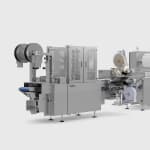
GEA is introducing the PowerPak 5000, a new thermoformer for mid-range food packaging applications. The machine is set to be launched at Interpack 2026. According to the company, it is intended for food producers that need several different packaging formats, reliable daily operation, and scalable automation within a mid-performance range. The system is meant to replace previous GEA thermoformer models in this segment and targets processors looking for a practical balance between performance, operational simplicity, and long-term cost control.
The PowerPak 5000 is intended to address the needs of companies operating in competitive food markets, where product variety, frequent changeovers, and pricing pressure require packaging equipment that maintains output and quality without unnecessary system complexity. The application range includes meat and poultry, fish and seafood, cheese and dairy, bakery products, ready meals, and plant-based food categories.
The design is based on the PowerPak series and GEA’s thermoforming experience. The company positions the model for standard and mid-range applications rather than highly specialized peak-output scenarios. GEA states that the PowerPak 5000 has been developed as a broadly applicable solution for the majority of thermoforming use cases, with emphasis on repeatable output, ease of operation, and predictable lifecycle costs.
In its market context, GEA points to increasing pressure on food producers to improve efficiency while maintaining product quality, shelf appeal, and product diversity at commercially viable price points. In this view, automation is becoming increasingly relevant not only for large-scale processors but also for mid-sized manufacturers and scale-ups. In many plants, the main requirement is no longer maximum theoretical output alone, but a packaging process that combines flexibility, process reliability, and a manageable investment level. The PowerPak 5000 is intended to align with this demand by providing essential performance capability without over-engineering.
Packaging formats and changeover solutions
The machine is designed to support a broad packaging range, including MAP, vacuum, skin, and steam applications. Covering multiple formats on a single platform is intended to help processors handle several product categories and simplify product and format changes. According to GEA, the system has been developed for stable, everyday industrial use. The company highlights a service-friendly design aimed at simplifying cleaning and maintenance, reducing downtime, and supporting repeatable production across shifts and product runs. Tool-free changes are also provided to shorten the time between batches.
Operation, connectivity, and condition monitoring
The PowerPak 5000 is equipped with GEA SmartControl, the company’s interface for operation and monitoring. In practical terms, the operator uses a centralized HMI to manage machine settings, production status, and process adjustments. The operating concept is intended to reduce dependence on highly specialized labor and support more consistent machine performance even when staffing structures change.
The machine is also prepared for connectivity and condition monitoring. GEA InsightPartner refers to the continuous observation of machine status data, such as component behavior, temperature, or operating patterns, to identify potential issues at an early stage and support planned maintenance rather than reactive repair. According to the company, this digital readiness is intended to improve uptime and maintenance planning in plants where unplanned stops affect line efficiency and delivery performance.
The new InsightPartner Notification Service together with its mobile app is intended to provide an integrated solution for delivering real-time machine notifications directly to users. The system enables operators to configure and receive targeted alerts on alarms, KPIs, and maintenance requirements to speed up reaction times, reduce downtime, and improve overall equipment availability. The app is intended to support data-driven decision-making and improve transparency across the production process through access to live data and proactive maintenance insights.
GEA Changeover Assist is a digital solution designed to guide machine operators, including those without extensive machine expertise, through each product changeover. The system provides step-by-step instructions, visual guidance, and intelligent checklists to ensure that all required adjustments and component changes are completed correctly. According to GEA, this is intended to reduce human error, prevent downtime, and minimize material and food waste. The company also points to faster operator onboarding, consistent quality, and fewer unplanned stoppages through checklists that display only the actions that matter.

Modular expansion and optional technologies
A key aspect of the machine is its modular design, intended to enable expansion as production requirements change. In practice, this means functionality can be added selectively rather than investing upfront in a fully customized system. The options listed include PowerHeat, PowerJet, and PowerLabel technologies.
PowerHeat is a heating system for thermoforming applications, designed to improve heating efficiency, particularly when processing mono-material structures. Mono-materials are packaging structures made primarily from a single polymer family, which can simplify recycling compared with multi-material laminates. According to GEA, PowerHeat can reduce energy consumption by 25–30% in relevant mono-material applications. PowerJet is the company’s evacuation and gassing system, which supports pack atmosphere control during vacuum and MAP processes. PowerLabel is a modular labeling concept previously available mainly on larger GEA thermoforming systems.
Industrial-standard components and design assumptions
GEA states that the PowerPak 5000 uses the same industrial component standards applied across the company’s broader thermoforming portfolio, which is intended to simplify spare parts management for the user. The company also highlights lubrication-free bearings intended to reduce maintenance demand and lower contamination risk in food production environments.
In addition, GEA Valve Technology is intended to improve accessibility when adjusting sensitive, product-dependent process parameters such as vacuum and gas-flushing behavior.
The machine frame has been developed according to GEA’s Kinetic Edge Design approach. The intent is to remove protruding edges and unnecessary structural complexity, reduce the number of components, and create a smoother machine layout. In practical use, this is intended to improve accessibility for operators during cleaning, operation, and service.
Presentation at Interpack 2026
GEA announces that it will present the PowerPak 5000 at Interpack 2026 in Düsseldorf, Germany, from May 7 to 13, in Hall 6, Booth C27. At the show, the machine is to be integrated into a mid-range “One-Line Concept” combining the OptiSlicer 7000, OptiLoader 5000, PowerPak 5000, and PowerLabel 7000. According to GEA, the synchronized line is designed for outputs of up to 600 kg/h, with coordinated slicing, loading, packaging, and labeling intended to improve process stability, support consistent quality, and increase overall line efficiency.


