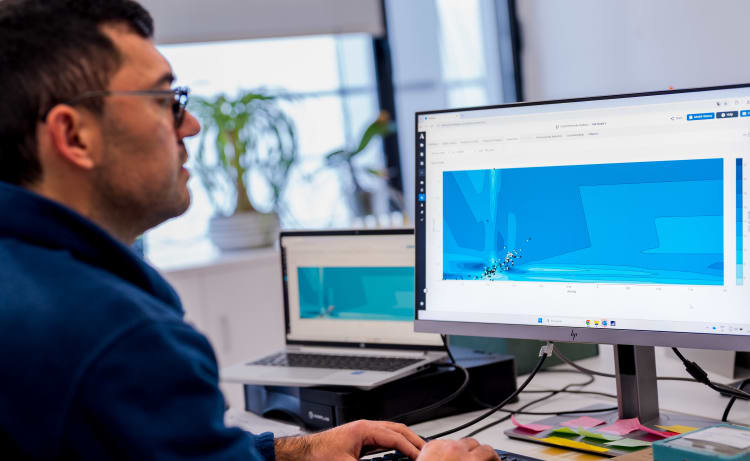
AIMPLAS, the Plastics Technology Centre, is carrying out the Poly-ML research and development project focused on the use of advanced machine learning techniques to predict the properties of polymer materials based on their composition and processing conditions. The models being developed are intended to enable formulation optimisation, reduce the number of experimental tests and increase the efficiency of R&D processes. The initiative is part of a broader digitalisation of the plastics processing industry, shortening the development time of new materials, minimising formulation errors and waste generation, and supporting the tracking of process parameters and final product properties.
The project focuses on the development of predictive models capable of forecasting the mechanical, thermal and physical properties of plastics. With this data-driven approach, faster and more accurate decisions can be made at the earliest stages of material development. This is expected to translate into cost reductions, shorter time to market and lower volumes of waste generated during laboratory testing and processing trials. At the same time, transparency and the ability to fully trace the history of formulations and processing conditions should increase, which supports improvements in quality and production consistency.
Poly-ML is funded by the Valencian Institute of Competitiveness and Innovation (IVACE+i) and the European Regional Development Fund (ERDF). The project involves the companies Tyris AI, which specialises in industrial artificial intelligence applications, and Faperin, a plastics processing company mainly engaged in polypropylene injection moulding for the automotive sector. Faperin provides production process data used to train models and draw technological conclusions, while Tyris AI contributes expertise in the implementation of artificial intelligence tools in industrial environments.
Predictive models accessible to non-programmer users
A key element of Poly-ML is the development of a tool that enables users to build and use predictive models even without programming skills. The aim is to facilitate the adoption of artificial intelligence in the plastics sector by providing solutions that can be operated at plant level by technologists, quality specialists and process engineers. This approach is intended to support the ongoing digitalisation of the industry and strengthen its competitiveness.
"With the Poly-ML project, we are taking an important step towards the real application of artificial intelligence in the design of plastic materials. Our goal is for the models to be validated in industrial environments, which will ensure their reliability and usefulness in real operating conditions," explains Joan Giner, researcher at the AIMPLAS Characterisation Laboratory.
Impact on sustainability, occupational safety and the local economy
Poly-ML is expected to generate measurable benefits in environmental, occupational health and economic areas. From an environmental perspective, the project helps to reduce laboratory waste and the use of hazardous solvents and additives by avoiding inefficient formulations. Fewer trials and formulation corrections also mean lower consumption of raw materials and energy in the development phase of new materials.
In the field of occupational health and safety, reducing the number of experimental tests and contact with chemicals lowers the exposure of technical staff to harmful factors. Risks associated with laboratory work and processing trials are also reduced. From an economic and regional perspective, the project aims to strengthen the competitiveness of the plastics sector in the Valencian Community, support the creation of highly skilled jobs and promote the development of capabilities for autonomous design of new materials.
The initiative is aligned with the RIS3-CV strategy in key areas such as digitalisation, sustainability, the circular economy and collaboration between industrial stakeholders and research centres. In this way, the project reinforces the position of the Valencian Community as a reference region in the application of artificial intelligence to the design of plastic materials.
The project has received support from the Valencian Institute of Competitiveness and Innovation (IVACE+i) under its industrial R&D promotion programmes, co-financed by the European Regional Development Fund.