Sun Chemical UV ink in Aldi, Arla and Polytag project
Sun Chemical is taking part in a UK pilot project with Aldi, Arla, Polytag and Saica Flex. A fluorescent UV ink enables invisible marking of labels on milk bottles and the collection of data on their route through recycling.
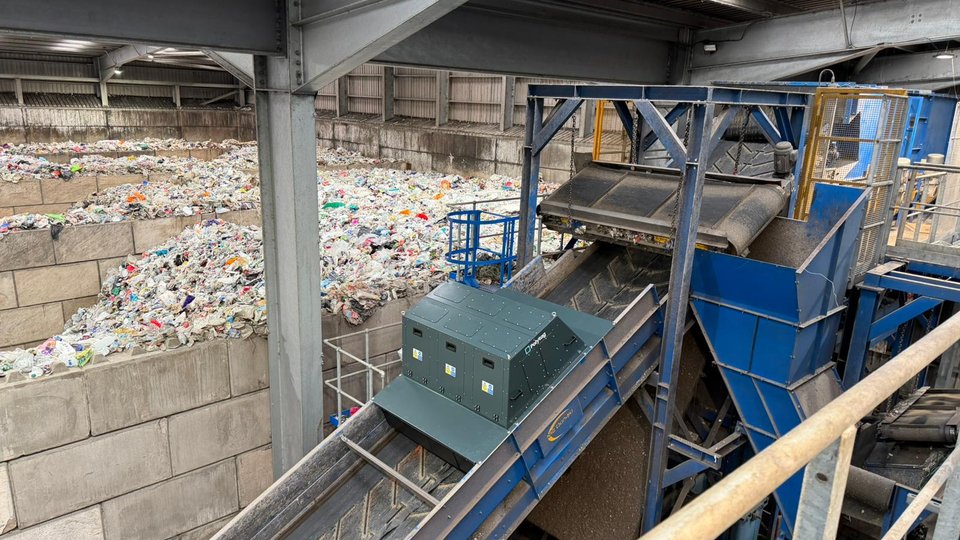
Sun Chemical is one of the partners in a pilot project carried out in the United Kingdom by retailer Aldi, dairy cooperative Arla, the Polytag platform and printer Saica Flex. The project uses a specially developed fluorescent ink from Sun Chemical to apply invisible UV tags to wrap-around labels used on milk bottles. These tags enable identification in the recycling stream and real-time collection of data on the further route of the packaging throughout the product life cycle. This is the first commercial application of Sun Chemical’s ink technology in combination with the Polytag system.
The project builds on cooperation initiated in 2023. The partners aim to increase packaging traceability and better understand the route taken by used milk bottles in the context of recycling. The data collected is intended to support Aldi and Arla in assessing actual recycling levels, making decisions on future packaging solutions and meeting objectives related to sustainable development and the circular economy.
Sun Chemical’s solution as part of the project
As part of the project, UV tags are applied by Saica Flex to wrap-around labels intended for Arla milk bottles sold in Aldi stores. The labels are then applied to packaging at Arla’s Oakthorpe site in the United Kingdom. A key element of the solution is the specially developed fluorescent ink from Sun Chemical. According to the company, it is invisible in normal light and safe for food packaging applications. It has also been tested for its behaviour in recycling processes.
Sun Chemical states that the ink can be applied using standard printing methods, without significant changes to production technology or reductions in printing process speed. This facilitates the economical integration of UV tagging with existing label and packaging production processes.
Stefaan D’hoore, Director of Business Development, Specialty Ink & Coatings at Sun Chemical, says: "This next stage of cooperation demonstrates the capabilities of Sun Chemical’s fluorescent ink technology developed for wrap-around labels. The ink has been tested in accordance with the RecyClass Washing Quick Test and EPBP Quick Test QT 507 procedures, achieving good results. It has been approved for use on labels designed for optimal detection by Polytag detection modules, which are independent of ink type. It helps collect reliable recycling data and does not affect the quality of recovered polymers. This first commercial application of Sun Chemical’s fluorescent ink in combination with Polytag technology is an important step, showing how cooperation across the packaging value chain can increase process transparency and accelerate the transition to a circular economy".
How UV tagging technology works
Invisible UV tags are applied directly to labels using Sun Chemical’s fluorescent ink. When tagged bottles enter the waste stream, they are detected by Polytag’s Plastic Detection Units, installed above conveyors in recovery facilities and sorting plants.
The devices record data in real time, storing it as a barcode. The information is then made available via the Polytag dashboard, giving brand owners and retailers insight into the path their packaging takes after entering the recycling system.
In the 2023 pilot project, UV tags were applied to self-adhesive labels. The current project uses wrap-around labels, providing a larger marking area and increased durability.
Data for Aldi’s strategy and Arla’s packaging development
For Aldi, the project is another stage in using data to implement its sustainability strategy. "The next stage of cooperation with Polytag is an important step forward in this respect. By integrating advanced identification technology with our packaging, we can obtain more detailed information on the life cycle of the materials we use" says Luke Emery, Plastics & Packaging Director at Aldi UK.
Arla, in turn, wants to use the data collected to make more informed decisions on future packaging solutions. "As Europe’s largest dairy cooperative, we aim to better understand how our packaging performs after leaving the point of sale. Through our cooperation with Polytag, we hope to gain valuable insight into the route milk bottles take when they enter recycling. This will help us make more informed decisions on future packaging development and support our continued efforts to increase its circularity" says Helena Delgado Nordmann, Head of Sustainability at Arla Foods UK.
The project is therefore intended to provide both companies with data on the actual presence and path of packaging in the waste management system, supplementing information on its compatibility with recycling processes.
Cooperation across the value chain
The project combines the competences of entities representing different links in the packaging value chain. Sun Chemical supplies the fluorescent ink, Saica Flex is responsible for producing the tagged labels, Arla uses them on milk bottles, Aldi places the products on sale, and Polytag provides packaging identification technology in waste processing installations and a data analysis platform.
"The next stage of implementation, involving the application of labels to milk bottles, demonstrates the scalability and reliability of UV tagging technology. We were pleased to work with Saica Flex on the latest phase of the project. This project also confirms the value of cooperation in bringing innovative packaging solutions to market. At the same time, it represents another step in the development of packaging design, providing brand owners with an easy-to-implement and economical route to obtaining comprehensive recycling information" says Alice Rackley, CEO of Polytag.
Verified data on the packaging life cycle
Data obtained through UV tagging can support brand owners in measuring progress towards environmental objectives and making decisions based on information coming directly from sorting and recycling systems. It can also indicate opportunities to improve packaging design, recyclability and the efficiency of collection and processing.
Polytag is also developing tagging and detection technology in other initiatives. The company recently achieved a 100% detection rate during a project carried out with Citeo, a global leader in packaging compliance, at one of the most intensively operated MRF facilities in Europe, located in France.
Polytag has also published a white paper entitled "An effective EPR system: supporting real recycling through data and innovation", devoted to the use of verified recycling data and its importance for the development of packaging management systems and the circular economy. The publication was produced with the support of Ecosurety and Valpak, as well as the UK retailers Waitrose, M&S and Ocado Retail. It is available at www.polytag.io.
The project shows that a properly developed ink can perform a function that goes beyond the traditional tasks associated with label printing. It becomes part of a system that enables packaging identification and the collection of data on its route through the recycling process.
Project partners
Polytag provides smart packaging and product solutions supporting sustainability activities undertaken by brand owners and manufacturers. The company specialises in GS1-compliant QR codes, data matrices, digital product passports, anti-counterfeiting solutions and tools that provide information on the supply chain.
Polytag provides brand owners and retailers with traceability data needed to meet environmental objectives and implement circular economy principles. Its customers include Lucozade Suntory, Waitrose, M&S and Ocado.
Aldi is the fourth-largest supermarket chain in the United Kingdom. It has more than 1,080 stores and employs over 43,000 people. The chain declares that its aim is to make customers’ everyday lives better and to provide the highest possible value to millions of families in the United Kingdom and Ireland.
According to the consumer organisation Which?, Aldi was the cheapest supermarket in the United Kingdom in June 2026. The chain also received the title of cheapest supermarket of 2025, an distinction awarded to it for the fifth consecutive year.
Arla Foods is one of the largest food companies in the United Kingdom and the country’s largest dairy cooperative. Its leading brands include Lurpak, Arla Cravendale and Arla Protein. Under licence, it also manufactures products offered under well-known brands such as Starbucks, Yeo Valley and Baileys. Arla employs more than 3,600 people in the United Kingdom. Globally, the company employs more than 22,000 people, and its products are available in over 100 countries. Arla is owned by more than 7,265 milk producers from seven European countries: the United Kingdom, Denmark, Sweden, Germany, Belgium, Luxembourg and the Netherlands.
Sun Chemical, part of DIC Group, is a manufacturer of solutions for the packaging and printing industries, colour and display technology solutions, functional products, electronic materials and products for the automotive industry and healthcare sector. Together with DIC, Sun Chemical works to promote and develop sustainable solutions aimed, as it states, at exceeding customer expectations and having a positive impact on the world around it. The total annual sales of DIC Group companies exceed USD 7 billion, and their employment is more than 21,000 people. The group’s companies serve a diversified customer base around the world.
Sun Chemical Corporation is a subsidiary of Sun Chemical Group Coöperatief U.A., based in the Netherlands. Sun Chemical Corporation’s headquarters are located in Parsippany, New Jersey, in the United States. More information about the company can be found at www.sunchemical.com and on its LinkedIn and Instagram profiles.
Read more: