BMT analysis targets PET preform behaviour
Blow Moulding Technologies says PET preforms that meet routine quality specifications can still behave differently during stretch blow moulding. The company points to thermal and blowing behaviour as critical factors in identifying variation before production.
Blow Moulding Technologies is drawing attention to a recurring issue for PET preform producers and bottle manufacturers: preform batches can pass routine inspection yet still perform differently once they enter the stretch blow moulding process. According to the company, standard quality checks such as dimensional measurement, weight control and polarised light testing remain important, but they do not directly show how a preform will behave under production heating and blowing conditions. This gap can lead to situations in which two preforms meet the same specification and pass visual inspection, while showing different heating profiles and different blowing behaviour on the bottle line. The resulting variation may only become visible after preforms have been shipped and introduced into bottle production, when the filling or packaging operation has already inherited the process problem.
Traditional inspection methods are used to identify geometric and material-related issues, but BMT notes that they may not predict actual stretch blow moulding performance. When the relationship between laboratory inspection and factory behaviour is incomplete, manufacturers can face increased machine profiling, more troubleshooting, additional operator interventions and lower process stability. In practice, engineering time may be spent diagnosing production inefficiencies that originated before the preforms arrived at the bottle manufacturing line.
Thermal behaviour and bottle performance
BMT identifies preform temperature behaviour as a central factor in blow moulding performance. If a preform heats differently, it will stretch differently, and if it stretches differently, bottle performance can also change. The company refers to an investigation carried out earlier this year with its THERMOSCAN solution, which examined a bottle production process that had previously operated successfully but then began to show quality variation despite using the same recipe and oven settings.
Further analysis indicated that variations originating in the injection moulding process had affected the thermal behaviour of the preforms and, as a result, created inconsistent blowing performance. In this case, the bottle line itself was not identified as the root cause. The source of the issue was the preform.
BMT also describes a separate case involving a manufacturer that experienced problems with a material batch. The company required an expert process technician to visit the site six times within two months to resolve production challenges. Previously, the same manufacturer had needed only six such visits across an entire year. In addition to the cost of specialist support, the issue led to production downtime while the source of variation was identified and addressed.
These examples, according to BMT, show how difficult such issues can be to diagnose once production is running. Manufacturers may initially focus on downstream equipment, even when the variation was introduced much earlier in the process.
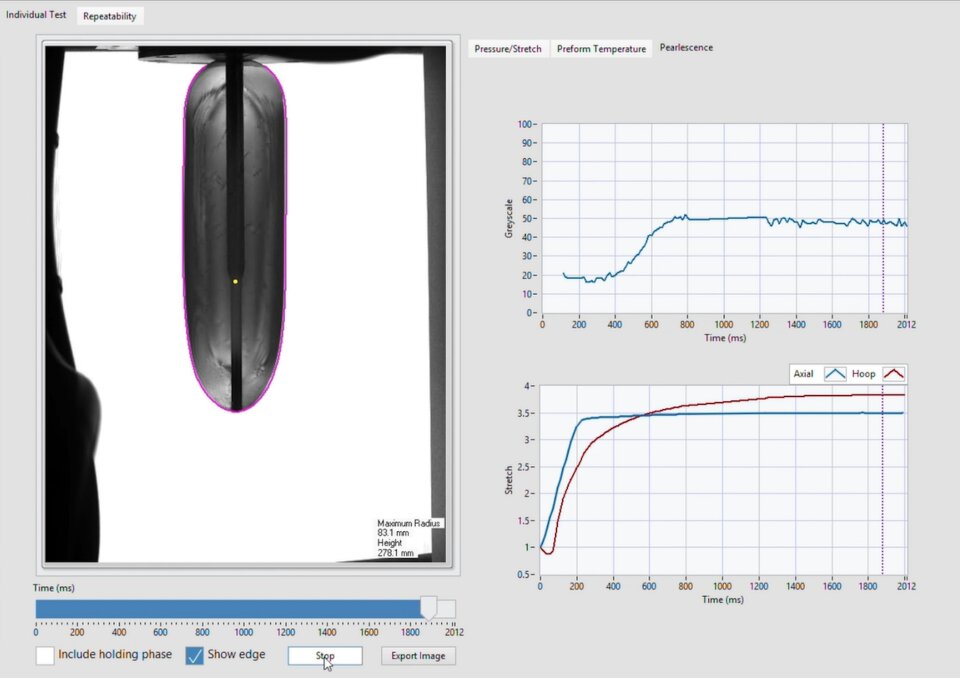
An illustration taken during a preform testing process, showing how material behaviours evolve throughout the blowing process
Assessing variation before production
The issue is becoming more relevant as manufacturers introduce higher levels of recycled PET, bio-based materials and other sustainability-focused innovations. BMT notes that small variations can influence processing performance, making early validation important before full-scale production trials. As the industry seeks to reduce material use, lower carbon emissions and adopt alternative feedstocks, producers must introduce changes without compromising production stability.
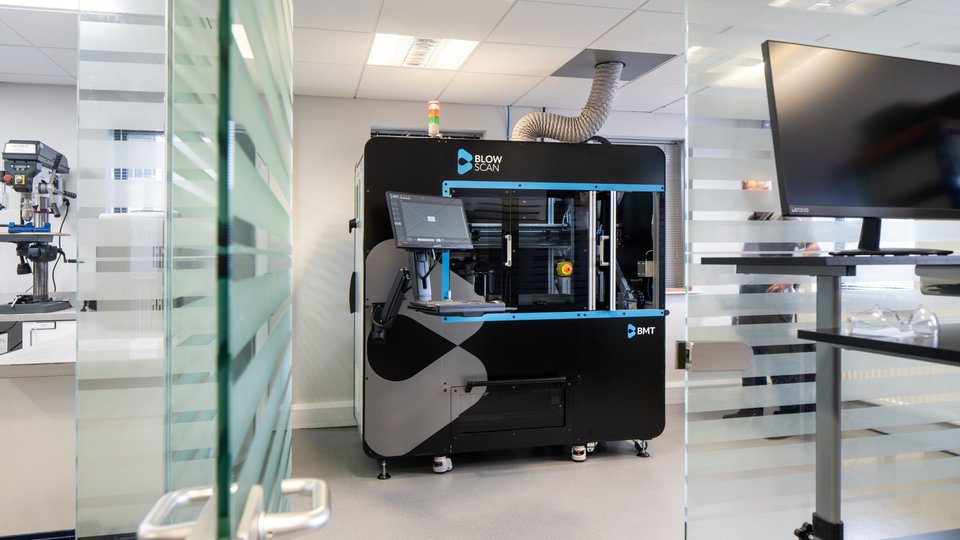
To help manufacturers identify such variation before it reaches production, BMT developed BLOWSCAN. The system assesses heating and inflation behaviour, as well as overall blowing consistency. While existing quality systems can show whether a preform meets a specification, BLOWSCAN is intended to help determine whether it will perform to that specification during the blow moulding process.
This additional quality assurance stage is designed to reduce downstream disruption, improve process stability and increase confidence in preform performance. It compares blowing behaviour against a validated reference, allowing manufacturers to identify differences before they affect bottle production.
"Despite extensive quality checks, manufacturers can still encounter batches that perform differently during blowing," said Josh Turner, Delivery Manager at BMT. "The challenge is that these differences often only become apparent once production has started. By comparing blowing behaviour against a validated reference, manufacturers can identify variation earlier and gain greater confidence that every batch will perform as expected."
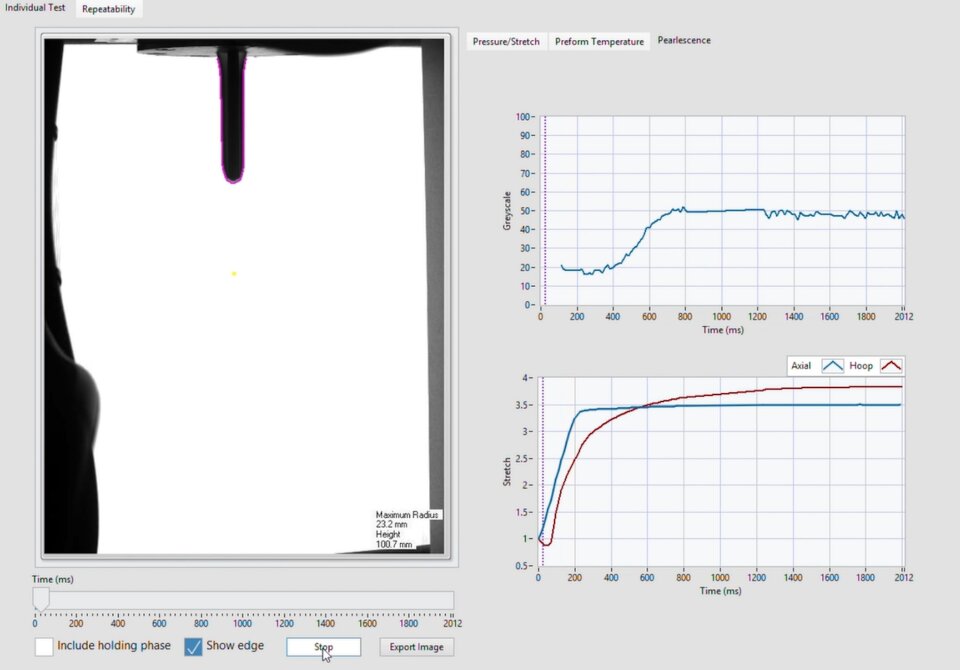
Visual analysis and process data generated by BLOWSCAN provide a quantitative assessment of preform blowing behaviour